go to content go to search box go to global site navigation

Rio de Janeiro

Sights in Rio De Janeiro

‹ Prev

of 5

  1. A

    Cristo Redentor

    Atop Corcovado (which means ‘hunchback’), Cristo Redentor gazes out over Rio, a placid expression on his well-crafted face. The mountain rises straight up from the city to 710m, and at night, the brightly lit, 38m-high statue is visible from nearly every part of the city – all 1145 tons of the open-armed redeemer.

    reviewed

  2. B

    Ipanema & Leblon Beaches

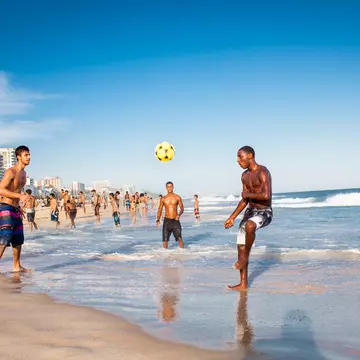
    Although the beaches of Ipanema and Leblon are one long beach, the postos (posts) along them subdivide the beach into areas as diverse as the city itself. Posto 9, right off Rua Vinícius de Moraes, is Garota de Ipanema, which is where Rio’s most lithe and tanned bodies tend to migrate. The area is also known as the Cemetério dos Elefantes because of the handful of old leftists, hippies and artists who sometimes hang out there. In front of Rua Farme de Amoedo the beach is known as Bolsa de Valores or Crystal Palace (this is the gay section), while Posto 8 further up is mostly the domain of favela kids. Arpoador, between Ipanema and Copacabana, is Rio’s most popular surf…

    reviewed

  3. C

    Copacabana & Leme Beach

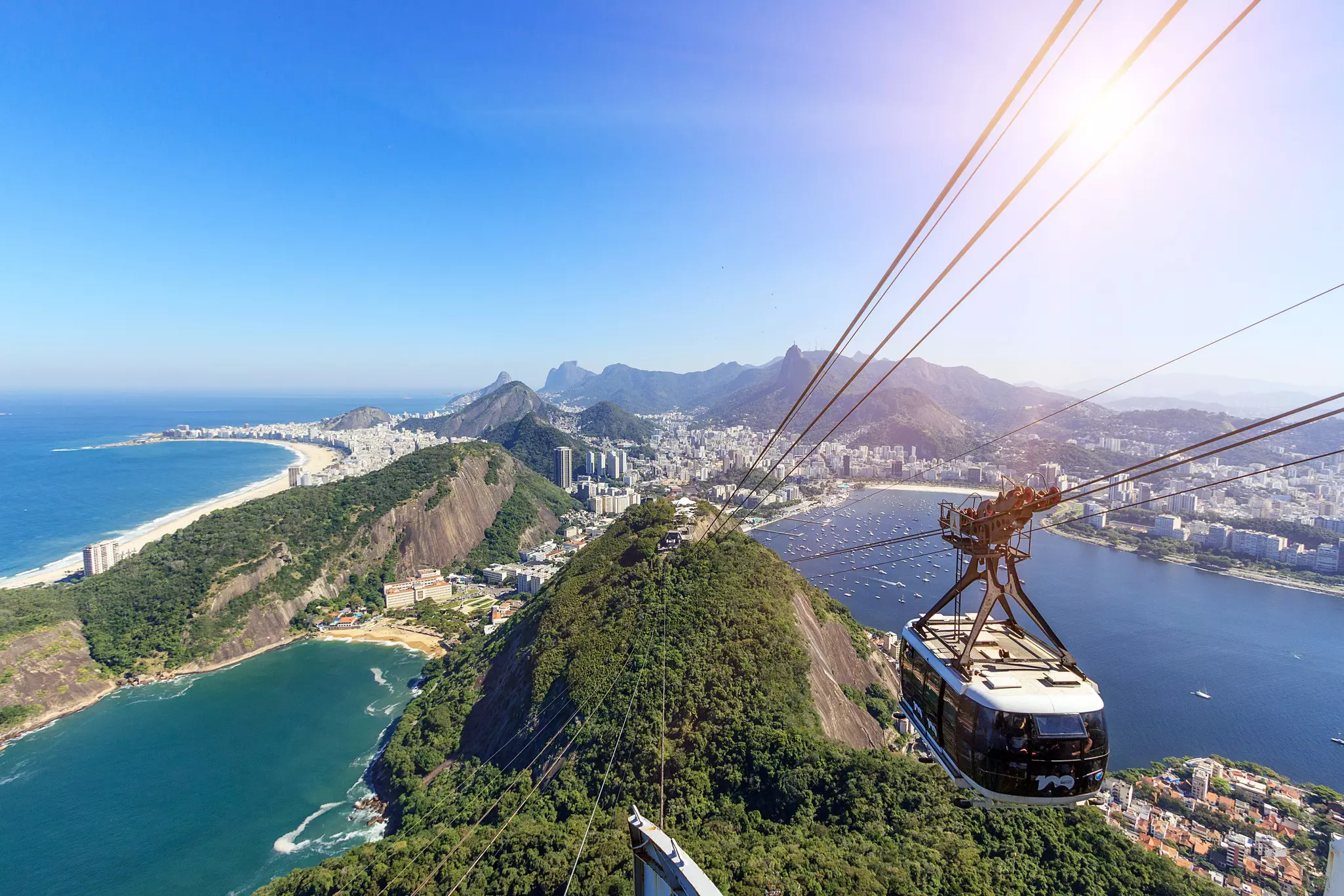
    A magnificent confluence of land and sea, the long, scalloped beach of Copacabana and Leme runs for 4km, with a flurry of activity always stretching along its length: over-amped soccer players singing their team’s anthem, Cariocas and tourists lining up for caipirinhas at kiosks, favela kids showing off their soccer skills, beach vendors shouting out their wares among the beached and tanned bodies.

    As in Ipanema, each group stakes out their stretch of sand. Leme is a mix of older residents and favela kids, while the area between the Copacabana Palace Hotel and Rua Fernando Mendes is the gay and transvestite section, known as the Stock or Stock Market – easily recognized…

    reviewed

  4. D

    Arcos da Lapa

    The landmark aqueduct dates from the mid-1700s when it was built to carry water from the Carioca River to downtown Rio. In a style reminiscent of ancient Rome, the 42 arches stand 64m high. Today, it carries the famous bonde on its way to and from Santa Teresa atop the hill.

    reviewed

  5. E

    Museu Histórico Nacional

    Housed in the colonial arsenal, which dates from 1764, the impressive Museu Histórico Nacional contains over 250,000 historic relics relating to the history of Brazil from its founding to its early days as a republic. The museum is located near Praça Marechal Âncora and features many well-designed displays, from gilded imperial coaches and the throne of Dom Pedro II to massive oil paintings depicting the horrific combat in the war with Paraguay. There’s some attention paid to Brazil’s indigenous population and to curious relics such as the writing quill that Princess Isabel used to sign the document abolishing slavery in Brazil and a full-sized model of a colonial…

    reviewed

  6. F

    Museu Nacional de Belas Artes

    Rio's fine arts museum houses more than 18,000 original paintings and sculptures, some of which date back to works brought over from Portugal by Dom João VI in 1808. One of its most important galleries is the Galeria de Arte Brasileira, with 20th-century classics such as Cândido Portinari's Café. Other galleries display Brazilian folk art, African art and furniture, as well as contemporary exhibits. Guided tours are available in English (call ahead).

    reviewed

  7. G

    Paço Imperial

    The former imperial palace was originally built in 1743 as a governor's residence. Later it became the home of Dom João and his family when the Portuguese throne transferred the royal seat of power to the colony. In 1888 Princesa Isabel proclaimed the Freedom from Slavery Act from the palace's steps. The building was neglected for many years but has been restored and is used for exhibitions and concerts; its cinema frequently screens foreign and art-house films.

    reviewed

  8. H

    Travessa do Comércio

    Beautiful two-story colonial townhouses line this narrow cobblestone street leading off Praça XV (Quinze) de Novembro. The archway, called Arco de Teles, leading into the area was once part of an old viaduct running between two buildings. Today, Travessa do Comércio contains half a dozen restaurants and drinking spots that open onto the streets. It's a favorite spot for Cariocas after work.

    reviewed

  9. I

    Instituto Moreira Salles

    This beautiful cultural center is next to Parque da Cidade and contains an archive of more than 80,000 photographs, many portraying old streets of Rio as well as the urban development of other Brazilian cities over the last two centuries. It also hosts impressive exhibitions, often showcasing the works of some of Brazil's best photographers and artists. Check its website for details of what's on when you're in town.

    The gardens, complete with artificial lake and flowing river, were designed by Brazilian landscape architect Burle Marx. There's also a craft shop and a quaint café here that serves lunch or afternoon tea.

    reviewed

  10. Forte Duque de Caxias

    More commonly known as Forte do Leme, this military base is open to the public on weekends, when visitors can access the forested trail skirting up to the top of Morro de Leme. The short but steep trail passes through Atlantic rain forest and by the ruins of an earlier 18th-century fort that stood here. The views from the top are magnificent.

    reviewed

  11. Advertisement

  12. J

    Centro Cultural Banco do Brasil

    Reopened in 1989, the Centro Cultural Banco do Brasil (CCBB) is housed in a beautifully restored 1906 building. It's one of Brazil's best cultural centers, with more than 120,000 visitors per month. Facilities include a cinema, two theaters and a permanent display of the evolution of currency in Brazil. CCBB hosts excellent exhibitions that are among the city's best. A recent display of African art garnered international attention.

    There is always something going on at the CCBB, from exhibitions, lunchtime and evening concerts, to film screenings, so look at O Globo's entertainment listings before you go. Don't miss this place, even if you only pass through the lobby while…

    reviewed

  13. K

    Jardim Botânico

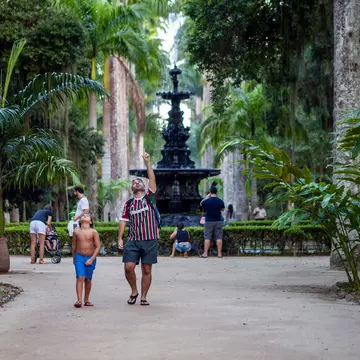
    This exotic 137-hectare garden, with over 8000 plant species, was designed by order of the Prince Regent Dom João (later to become Dom João VI) in 1808. The garden is quiet and serene on weekdays and blossoms with families and music on weekends. Highlights of a visit here include the row of palms (planted when the garden first opened), the Amazonas section, the lake containing the huge Vitória Régia water lilies and the enclosed orquidário, home to 600 species of orchids. Also on-site is the Museu do Meio Ambiente, which opened in 2008 and houses temporary environmentally focused exhibits. English-language tours can be arranged by appointment. A pleasant outdoor café…

    reviewed

  14. L

    Centro

    Rio's bustling commercial district, Centro is a blend of high-rise office buildings with remnants of its grand past still present in looming baroque churches, wide plazas and cobblestone streets.

    reviewed

  15. M

    Parque do Flamengo

    Officially called Parque Brigadeiro Eduardo Gomes, Parque do Flamengo was the result of a landfill project that leveled the São Antônio hill in 1965, and now spreads all the way from downtown Rio through Glória, Catete and Flamengo, and on around to Botafogo. The 1.2 sq km of land reclaimed from the sea now stages every manner of Carioca outdoor activity. Cyclists and rollerbladers glide along the myriad paths, while the many football fields and sports courts are framed against the sea. On Sundays and holidays, the avenues through the park are closed (from 7am to 6pm).

    Designed by famous Brazilian landscaper Burle Marx (who also landscaped Brasília), the park features…

    reviewed

  16. N

    Igreja de Nossa Senhora de Candelária

    The construction of the original church (dating from the late 16th century) on the present site was credited to a ship's captain who was nearly shipwrecked at sea. Upon his safe return he vowed to build a church to NS de Candelária. A later design led to its present-day grandeur. Built between 1775 and 1894, NS de Candelária was the largest and wealthiest church of imperial Brazil. The interior is a combination of baroque and Renaissance styles. The ceiling above the nave reveals the origin of the church. The cupola, fabricated entirely from limestone shipped from Lisbon, is one of its most striking features. Mass is said at 9am, 10am and 11am on Sunday. But be sure to…

    reviewed

  17. O

    Lagoa Rodrigo de Freitas

    One of the city’s most picturesque spots, Lagoa Rodrigo de Freitas is encircled by a 7.2km walking/cycling path. Bikes are available for hire (R$10 per hour) from stands along the east side of the lake, as are paddle boats (R$20 per half hour). For those who prefer caipirinhas (drinks made from sugarcane spirit, crushed lime, sugar and ice) to plastic swan boats, the lakeside kiosks on either side of the lake offer alfresco food and drinks, sometimes accompanied by live music on warm nights.

    reviewed

  18. P

    Palácio Tiradentes

    In the looming building overlooking the bay, the stately Tiradentes Palace today houses the seat of the legislative assembly. Exhibits on the 1st and 2nd floors relate the events that took place there between 1926 and the present. One of its darkest hours was when the National Assembly was shut down in 1937 under the Vargas dictatorship; it later served as his Department of Press and Propaganda. Most information is in Portuguese, though you can listen to a rundown of history in English at the interactive machine in the foyer. The statue in front, incidentally, is not a likeness of Russian mystic Rasputin, but rather that of martyr Tiradentes, who led the drive toward…

    reviewed

  19. Q

    Ponta do Arpoador

    This rocky point juts out into the water and serves as one of Rio's best places for watching the sunset. Throughout the day, you'll spot fishermen casting off the rock, couples stealing a few kisses and photographers snapping that iconic stretch of Ipanema beach stretching off toward the towering peaks of Dois Irmãos. You'll also see large flocks of surfers jockeying for position offshore. Around the western edge of the rock is the tiny, secluded Praia do Diabo (Devil's Beach), a fine place to take in the views – but swim with caution. A very rustic gym is built into the rocks (think barbells with concrete weights and chin-up bars).

    reviewed

  20. R

    Museu do Bonde

    The tiny one-room Tram Museum at the depot close to Largo do Guimarães offers a history of Rio's tramways since 1865 – when the trams were pulled by donkeys. A few photographs, trip-recorders and conductor uniforms are just about the only objects documenting their legacy. Uplifting music plays overhead. The term bonde, incidentally, means just that: bond, indicating the way in which the first electric trams were financed – through public bonds. While you're at the museum, wander down to the old workshop that houses the trams. Cineastes may remember the depot from the opening sequence of the film Orfeu Negro.

    reviewed

  21. S

    Museu de Arte Moderna

    At the northern end of Parque do Flamengo, the Museu de Arte Moderna (MAM) is immediately recognizable by the striking postmodern edifice designed by Alfonso Eduardo Reidy. The landscaping of Burle Marx is no less impressive.

    After a devastating fire in 1978 that consumed 90% of its collection, the Museu de Arte Moderna is finally back on its feet, and now houses 11,000 permanent works, including pieces by Brazilian artists Bruno Giorgi, Di Cavalcanti and Maria Martins. Curators often bring excellent photography and design exhibits to the museum, and the cinema hosts regular film festivals throughout the year.

    reviewed

  22. Advertisement

  23. Bonde

    The bonde that travels up to Santa Teresa from Centro is the last of the historic streetcars that once crisscrossed the city. Its romantic clatter through the cobbled streets has made it the archetype for bohemian Santa Teresa. The two routes currently open have been in operation since the 19th century. Both travel high atop the narrow Arcos da Lapa and along curving Rua Joaquim Murtinho before reaching Largo do Guimarães. From there, one line (Paula Matos) takes a northwestern route, terminating at Largo das Neves. The longer route (Dois Irmãos) continues from Largo do Guimarães uphill and southward before terminating near the water reservoir at Dois Irmãos (Two…

    reviewed

  24. T

    Mosteiro de São Bento

    This is one of the finest colonial churches in Brazil. Built between 1617 and 1641 on Morro de São Bento, the monastery has an excellent view over the city. The simple facade hides a baroque interior richly decorated in gold. Among its historic treasures are wood carvings designed by Frei Domingos da Conceição (and made by Alexandre Machado) and paintings by José de Oliveira Rosa. On Sunday, the High Mass at 10am includes a choir of Benedictine monks singing Gregorian chants.

    To reach the monastery from Rua Dom Gerardo, go to No 40 and take the elevator to the 5th floor.

    reviewed

  25. U

    Parque Guinle

    This handsomely landscaped park is a pleasant refuge from busy Rua das Laranjeiras outside its sphinx-guarded gates. There's a small wooded area, a tiny lake with ducks and always a few Cariocas enjoying a lounge on the grass. Designed by French landscape architect Gochet (with later flourishes by Roberto Burle Marx), the park is also home to the dramatic Palácio das Laranjeiras, the state governor's residence, and currently closed to visitors. The palace overlooks the west side of the park and is partially hidden by the thicket of trees.

    reviewed

  26. Praça XV (Quinze) de Novembro

    The first residents on this historic site were Carmelite fathers who built a convent here in 1590. It later came under the property of the Portuguese crown and became Largo do Paço, which surrounded the royal palace (Paço Imperial). The square was later renamed Praça XV de Novembro after Brazil declared itself a republic on November 15, 1822. A number of historic events took place here: the coronation of Brazil's two Emperors (Pedro I and Pedro II), the abolition of slavery and the overthrow (deposition) of Emperor Dom Pedro II in 1889.

    reviewed

  27. V

    Museu Chácara do Céu

    The former mansion of art patron and industrialist Raymundo Ottoni de Castro Maya contains a small but diversified collection of modern art – formerly Ottoni's private collection, which he bequeathed to the nation. In addition to works by Portinari, Di Cavalcanti and Lygia Clark, the museum displays furniture and Brazilian maps dating from the 17th and 18th centuries. Unfortunately, some of the museum's most valuable pieces were stolen during a robbery in 2006 and never recovered. Beautiful gardens surround the building, and a panoramic view of Centro and Baía de Guanabara awaits visitors.

    reviewed