BrugesThings to do

Things to do in Bruges

‹ Prev

of 5

  1. A

    Begijnhof

    Surrounded by protective walls, these whitewashed cottages - clustered around a central garden carpeted by daffodils in springtime - have an air of tranquil purity. Established as homes for a Catholic order of single and widowed women, there were around 1500 of these begijnhoven (or beguinages) in Belgium in the early 20th century, but only 22 remain. Dating from the 13th century, this is one of the best preserved, and home today to Benedictine nuns. The tiny on-site 't Begijnhuisje museum gives you an insight into a typical cottage. Afterwards, prolong the serenity with a stroll in the swan-filled Minnewater park nearby.

    reviewed

  2. B

    Den Dyver

    Not only are the seasonal dishes at this elegant restaurant individually paired with beers, they're also cooked in Belgium's favourite nectar (such as hare, turnip and cranberry ravioli in Oude Gueuze, served with a Petrus Winterbier). Three-, four- and five-course menus can be ordered with a beer accompanying each course. There's also the option of pairing with wines, but that would be missing the point.

    reviewed

  3. C

    Du Phare

    Tucked into the remains of one of Bruges' original town gates, this off-the-beaten-track tavern serves up huge portions of couscous (and offers free bread, a rarity in Belgium). But Du Phare is best known for its live blues/jazz sessions - check the website for dates. Bus 4 stops out the front.

    reviewed

  4. D

    De Biertempel

    Beer specialist shop where you can even pick up a well-priced bottle of Westvleteren.

    reviewed

  5. E

    Groeningemuseum

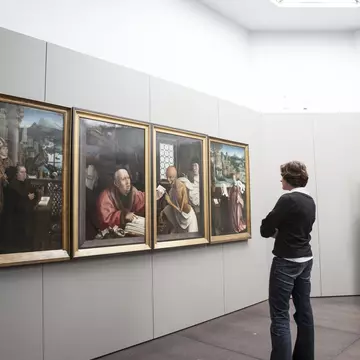
    Bruges' prized collection of art dating from the 14th to the 20th century is housed in the small Groeningemuseum. Highlights of this prized collection of art dating from the 14th to the 20th century are the Flemish Primitives (Room 2), including masterpieces by Jan Van Eyck and Hans Memling. But also look out for works by Hieronymus Bosch (Room 1), and surrealists René Magritte and Paul Delvaux (Room 9).

    Room 1, entitled Municipal Patronage, concentrates on works from the 15th and 16th centuries, many of which were commissioned by the city of Bruges. The gruesome Judgement of Cambyses (1498) by Gerard David depicts the Persian king being led from his throne and flayed a…

    reviewed

  6. F

    Heilig-Bloedbasiliek

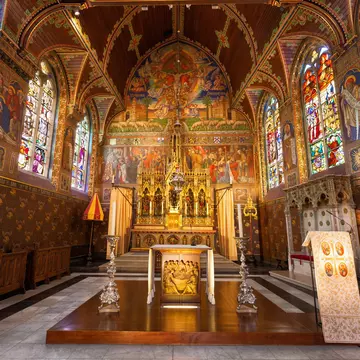
    The Heilig-Bloedbasiliek takes its name from the relic of Christ's blood brought here after the Crusades, sometime between 1150 and 1200. The church has two distinct and highly contrasting sections: the sombre 12th-century lower chapel, built along pure Romanesque lines and almost devoid of decoration, and the much-renovated and lavishly embellished upper chapel, accessed by wide stairs near the lower chapel's entrance.

    In the upper chapel is the silver tabernacle containing the phial that holds a few drops of the holy blood. This relic is still venerated in one-hour services at 10:00 and 15:00 every Friday. On Ascension Day it is paraded through the city in Bruges' bigge…

    reviewed

  7. G

    Kantcentrum

    Watch lace-makers at work at the Kantcentrum. Lace (kant in Flemish, dentelle in French) blossomed in Flanders in the 16th century. Naaldkant (needlepoint lace), which developed in Italy, was predominantly made in Brussels while kloskant (bobbin lace) is believed to have originated in Bruges. The latter requires thousands of painstaking and meticulous movements of bobbins and pins. Each lace-maker had her own patterns, which stayed in the family and were handed down through generations.

    The Kantcentrum is best known for its bobbin lace-making demonstrations - informal gatherings of 20 or so women who congregate (afternoons only) in a small room at the rear of the complex.…

    reviewed

  8. H

    Markt

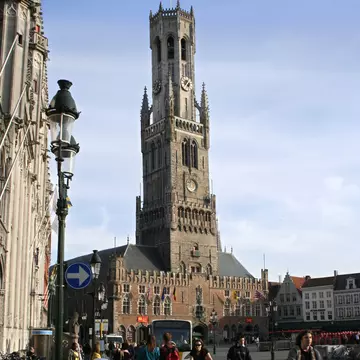
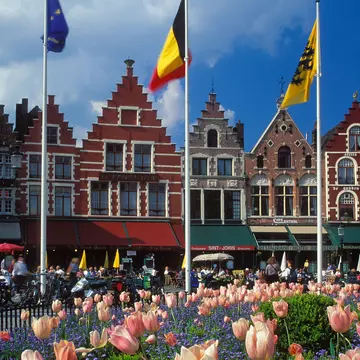
    Bruges' nerve centre is the historic Markt, a large open square flanked by medieval-style buildings and bustling with horse-drawn carriages, open-air restaurants and camera-clicking tourists. Standing tall at its centre is a monument to Pieter De Coninck and Jan Breydel, the leaders of the Brugse Metten, and lording over everything is the fabulous belfry.

    Most of the gabled guildhalls edging the Markt are not original. Notable at Markt 16 is Craenenburg café; in this building the Hapsburg heir Maximilian of Austria was imprisoned by the leaders of the city in 1488 after attempting to restrict their privileges. When Maximilian later became emperor, he took revenge by direc…

    reviewed

  9. I

    Fietsen Popelier

    A recommended bike rental outfit. Children's bikes (same prices as adults') are available, and baby/toddler seats and baskets are provided for free. Helmets can also be hired. No deposits are required for bikes. The cycles here are in excellent condition - never more than six months old, with moulded seats, six gears and good suspension. Some regional cycling maps, including the Riante Polder Route, are sold.

    Stay around town - there's no better way to see a sizable swath of the city in a relatively short time - or head out along the Damse Vaart canal to Damme (30 minutes, 6km one way). Alternatively, the Riante Polder Route is a full-day excursion, clocking up 44km and t…

    reviewed

  10. J

    Museum St Janshospitaal

    The prestigious Museum St Janshospitaal is housed in a restored chapel of a 12th-century hospital. It's home to six masterpieces by Hans Memling, plus many works by lesser-known painters of that time. Memling is noted for the fine quality of the figures in his religious paintings, such as the central panel of the Mystic Marriage of St Catherine triptych (1479) that's presented here.

    Perhaps more enchanting is the reliquary of St Ursula. Shaped like a miniature wooden Gothic church, the reliquary's six painted panels depict the medieval tale of the beautiful St Ursula and the 11,000 virgins who were massacred by the Huns in Germany while returning from a pilgrimage to Rome…

    reviewed

  11. Advertisement

  12. Quasimodo

    Quasimodo is a small company that's been offering two excellent day trips for years. The Triple Treat tour explores Damme plus nearby castles and promises a waffle, beer and chocolate at various establishments around Bruges. The Flanders Fields tour takes in Ypres and its famous WWI battlefields. The price includes all admission charges and a picnic lunch. Reservations are necessary.

    Both trips operate Tuesday to Sunday from April to October. The rest of the year there's a Triple Treat tour on Monday, Wednesday and Friday, and a Flander's Field tour on Tuesday, Thursday and Sunday. Tours don't run between mid-December and mid-February.

    reviewed

  13. K

    Burg

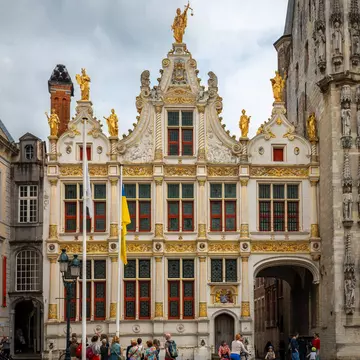
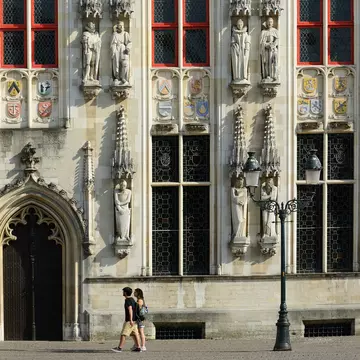
    Smaller but arguably more impressive than the Markt is the adjoining Burg. For more than five centuries the former palace on this majestic site was the seat of the counts of Flanders. The St Donatian Cathedral also stood here until 1799, when religious zealots tore it down. These days the Burg contains the city's most appealing cluster of buildings, plus the contemporary Toyo Ito pavilion, a geometric bunker that sits in a pool of stagnant water opposite the city hall.

    To some it creates an image of lightness, progress, transience and evolution; to others it's simply a form that gets the cold shoulder.

    reviewed

  14. L

    Groenerei

    A short but delightful promenade along a particularly pretty part of the city's canal system. At the corner of Groenerei and Peerdenstraat is a street-corner statue of the Madonna and Child; such elevated statues are common in Flanders, although this one is unusual for its modern features.

    Groenerei peters out into a pedestrian walkway and curves sharply to a bridge. Cross the bridge and turn left, zigzagging your way past Predikherenrei's many terrace tables, to arrive at the confluence of two canals. Here there's a superb view - at its best in the afternoon - of the city's turreted skyline.

    reviewed

  15. M

    Onze Lieve Vrouwekerk

    The Onze Lieve Vrouwekerk is a dark, sober building that dates from the 13th century and is most noted for its art treasures. Of these, the Madonna and Child by Michelangelo is the undisputed gem. This small marble statue (1504) was bought in Italy by a Bruges merchant and was the only work of art by Michelangelo to leave Italy in his lifetime. Although pilfered several times by occupying forces, the statue has always been returned.

    It's also possible to visit the tombs of Charles the Bold (Karel de Stoute) and his daughter, Mary of Burgundy.

    reviewed

  16. N

    Kaffee Pergola

    Follow the fairy lights to this most romantic of outdoor addresses, hidden among greenery beside a quiet and very picturesque stretch of canal right in the centre of Bruges. Book one of the four tables perched along the canal, and settle back to the sound of birdsong and the glow of fading light as evening mellows. A limited range of delicious Belgian specialities is offered, and the service is attentive.

    This place is owned and operated by the discreet top-end Hotel Die Swaene, located across the canal, and though relatively new is highly popular.

    reviewed

  17. O

    Hof Arents

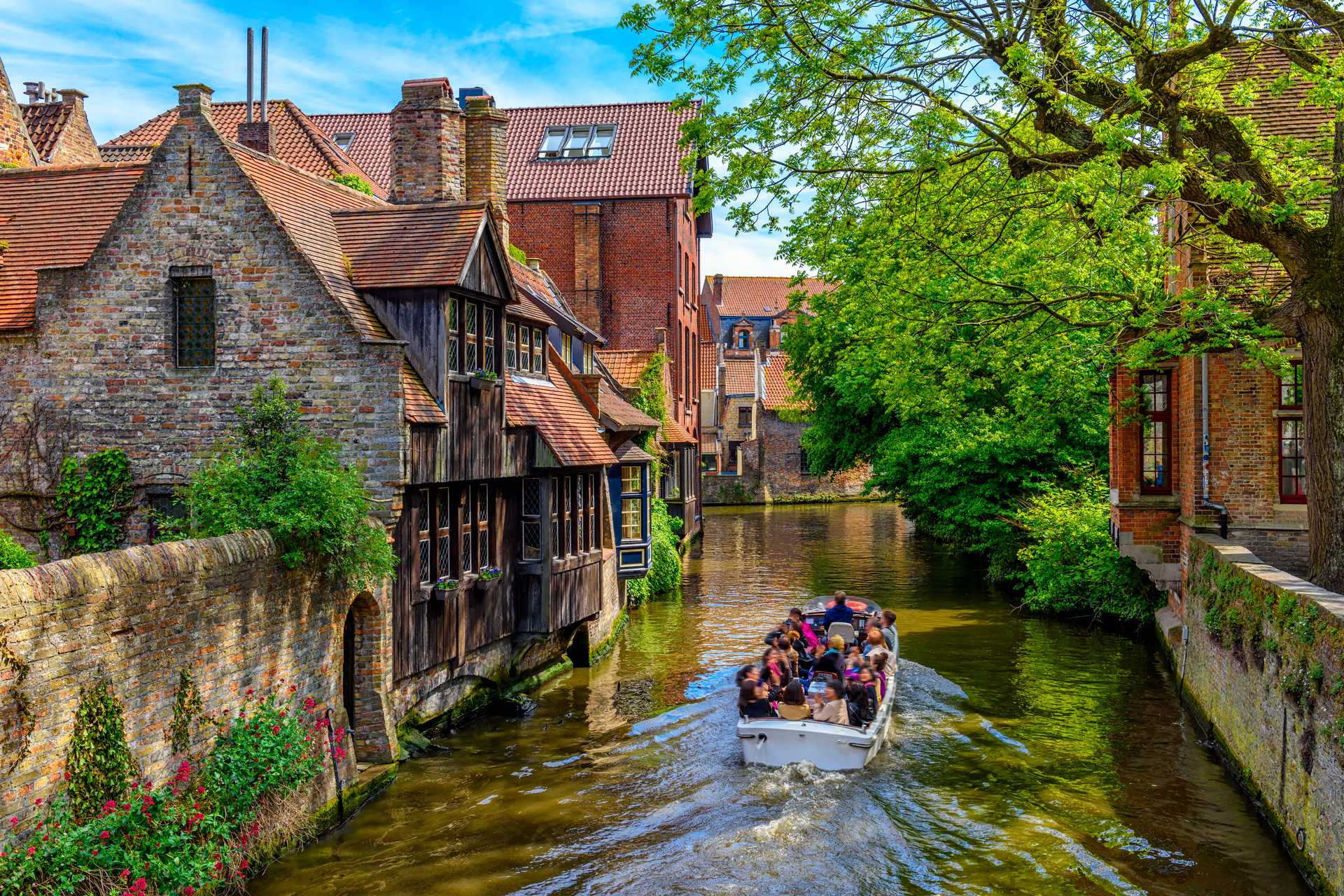
    The tree-lined square at the rear of the Arentshuis is Hof Arents, a tranquil respite from the busy Dijver. Sit and contemplate four sculptures by Rik Poot entitled De Ruiters van de Apocalyps (Riders of the Apocalypse) before exiting the square to discover a tranquil canal lined with timber houses - one of the most picturesque nooks in Bruges. The canal is backed by the humped St Bonifaciusbrug.

    Cross the bridge to notice a tiny window at the back of the Gruuthuse museum - according to local belief, it's Europe's smallest Gothic window.

    reviewed

  18. Canal Tour

    Taking a Canal Tour is a must. Yep, it's touristy, but what isn't in Bruges? Viewing the city from the water gives it a totally different feel than by foot. Cruise down Spiegelrei towards Jan Van Eyckplein and it's possible to imagine Venetian merchants entering the city centuries ago and meeting under the slender turret of the Poortersloge building up ahead. Boats depart roughly every 20 minutes from jetties south of the Burg, including Rozenhoedkaai and Dijver, and tours last 30 minutes.

    Expect queues in summer.

    reviewed

  19. P

    Horse-Drawn Carriage Rides

    The clip-clop of hooves hitting cobblestones resounds constantly in the streets of Bruges. In summer, aim to jump on board between 18:00 and 19:00 - by this time day-trippers have left the city, locals are stirring dinner at home, and most tourists are taking a shower. Bruges' streets take on a semitranquil air at this time of day, and the gold-topped buildings shimmer in the late sun rays. Carriages depart from the Markt, and their route takes 35 minutes (including a pit stop at the Begijnhof).

    reviewed

  20. Q

    Brugse Vrije

    An immense 16th-century chimneypiece draws visitors to the Renaissancezaal (Renaissance Hall). This hall was the alderman's room of the palace of the Liberty of Bruges, a medieval administrative body. Completed in 1531, the chimney's upper section is a detailed oak carving depicting Emperor Charles V alongside an entourage of relatives; black marble and an alabaster frieze adorn the lower part. All in all it's pretty impressive, even without the men's overblown medieval codpieces.

    reviewed

  21. R

    Guido Gezellemuseum

    Flanders' best-known poet is celebrated at the Guido Gezellemuseum. Gezelle became a cult figure among Flemish freethinkers in the early 20th century. He was born in 1830 in this house, which belonged to a noble family - his father was the gardener and Gezelle lived here until age 16, when he left to study at Roeselare (between Bruges and Kortrijk). The museum contains books and documents recalling his life and works, such as The Evening and the Rose, sold at reception.

    reviewed

  22. Advertisement

  23. S

    Jeruzalemkerk

    The onion-domed Jeruzalemkerk is intriguing, built by the Adornes family in the 15th century as a replica of Jerusalem's Church of the Holy Sepulchre. It's a macabre monument. The dark, split-level church is dominated by a gruesome altarpiece (note the skulls and ladders) and the black-marble tomb of Anselm Adornes, whose heart was buried here after he was murdered in Scotland in 1483. To top it all off there's a replica of Christ's tomb, complete with imitation corpse.

    reviewed

  24. T

    Brouwerij De Halve Maan

    This working brewery operated from 1856 until 2000 then was revived in 2005 by Xavier Vanneste, the sixth generation to brew here. Tours show you his family's historical brewing techniques and tools, which sit alongside the high-tech equipment he uses today to make blonde and double-brown Brugse Zot. As a reward for climbing the 'Half Moon' brewery's dozens of narrow steel steps, you get a fabulous view of Bruges' skyline from the rooftop, and a tasting at the end.

    reviewed

  25. U

    2be

    Occupying a 15th-century Gothic mansion, this sleek emporium stocks a tantalising array of artisan chocolates, wines, jenevers, conserves, sweets, biscuits and other 100% Belgian goodies including a superb selection of beers, such as the local Brugse Zot, which you can try at the canalside café. Ask staff to fill you in on the escapades of the resident ghost of Perez de Malvenda, the former Spanish mayor whose house this mansion once was.

    reviewed

  26. V

    Arentshuis

    Occupying a stately 18th-century patrician house formerly owned by the Arents family, the Arentshuis divides into two. The ground floor is reserved for temporary exhibitions while upstairs is given over to the powerful paintings and etchings of Frank Brangwyn (1867-1956), a Bruges-born artist of British parentage. Industrial themes are his strong point, and the exhibition is well worth visiting if you're into sombre paintings of dockyards and the like.

    reviewed

  27. W

    Diamantmuseum

    The slick Diamantmuseum reveals Bruges' medieval role as the first diamond-polishing centre. It's home to the world's two smallest diamond sculptures - tiny profiles of the former King Baudouin and Queen Fabiola, each no more than 3mm in diameter. Even with the aid of a magnifying glass, it takes a sizable imagination to pick the resemblance. Diamond-polishing demonstrations are held at 12:15, and cost an extra around €3.

    reviewed