Montpellier
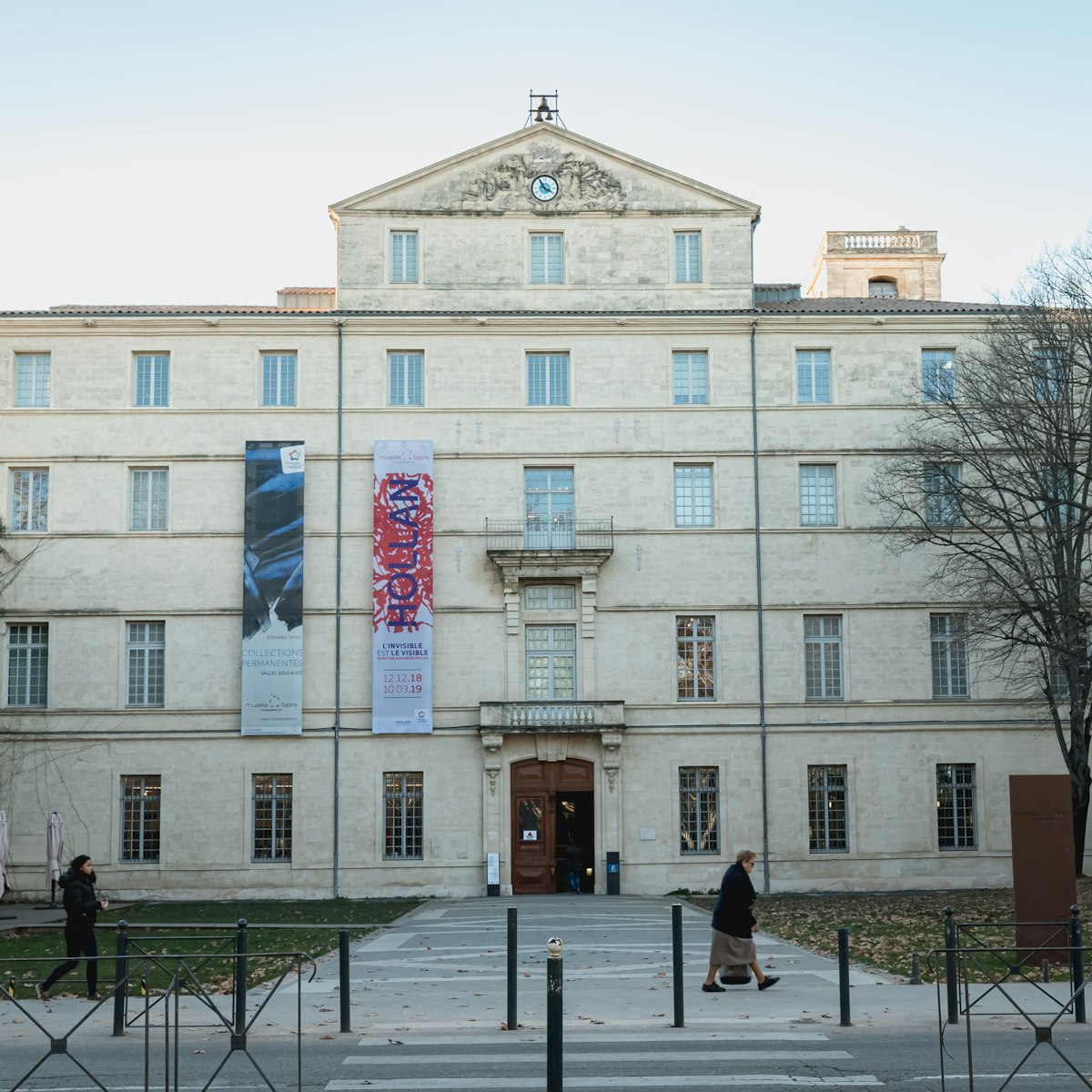
Founded in 1825 by painter François-Xavier Fabre, this exceptional museum houses one of France’s richest collections of European art. The galleries…
Montpellier
Founded in 1825 by painter François-Xavier Fabre, this exceptional museum houses one of France’s richest collections of European art. The galleries…

Hôtel de Cabrières-Sabatier d’Espeyran
Montpellier
Attached to the Musée Fabre is L’Hôtel de Cabrières-Sabatier d’Espeyran, a lavish Montpellier mansion that belonged to local notable Madame Frédéric…
Montpellier
One of Montpellier’s hidden gems, the Jardins des Plantes is the oldest botanical garden in France. Established in 1593, it was used as a model for the…
Montpellier
Built in 1695, Montpellier's 52m-high triumphal arch is dedicated to Louis XIV. The tourist office organises guided tours in summer that take you up 103…
Montpellier
At the eastern end of this wide, tree-lined esplanade is the 1695 Arc de Triomphe. From the Château d’Eau, an elaborate hexagonal water tower at its…
Montpellier
Part of the Odysseum shopping centre, this aquarium recreates nine aquatic environments, from polar waters to tropical forests. Kids will love the…
Montpellier
Noted for its disproportionately tall porch, Montpellier’s monumental Cathédrale St-Pierre began life as a church attached to the 14th-century monastery…
Montpellier
The landmark neogothic St Anne's church, with dazzling stained-glass windows, was deconsecrated in the 1980s and is now a spectacular setting for…
Montpellier
Find this attractive beach a a few kilometres southeast of La Grande-Motte. It features a nature reserve with dune systems. It's exposed to the prevailing…
Montpellier
Plage du Pilou is an appealing and quiet beach that's near the small town of Villeneuve-lès-Maguelone, west of Montpellier.
Montpellier
Four kilometres north of the city centre, this zoo – France’s second-largest, covering 60 hectares – has an enormous population of wild residents that…
Montpellier
This municipal museum has a fairly pedestrian collection of local-interest pieces ranging from furniture to paintings and antique weaponry, but it’s worth…
Hôtel de la Vieille Intendance
Montpellier
The early-17th-century Hôtel de la Vieille Intendance was built during the reign of Louis XIII for the queen mother and his niece Marie Louise d’Orléans …
Montpellier
The Hôtel de Varennes is a harmonious 18th-century makeover of a medieval structure; it now contains the city’s small history museum, the Musée du Vieux…
Montpellier
The Hôtel St-Côme is a suitably grand building for the city’s Chamber of Commerce.