Showing 1-17 of 17 results
-
Casa de los Mártires de Trinidad
This is dedicated to 72 Trinidad residents who died in the struggle against Batista, the campaign against the counterrevolutionaries, and the war in Angola.
-
Casa Templo de Santería Yemayá
The Casa Templo de Santería Yemayá , contains a Santería altar to Yemayá, Goddess of the Sea, and the santeros (priests of the Afro-Cuban religion Santería) in attendance are available for consultations. On the saint's anniversary, March 19, ceremonies are performed here day and night. Ask about Carnaval routine practices and parranda (Afro-Venezuelan dance) in the adjacent courtyard.
-
Estadio Rolando Rodríguez
This stadium, at the southeastern end of Frank País, hosts baseball games.
-
Fábrica de Tabacos
There's a tiny Fábrica de Tabacos, just right past Hotel Ronda on the corner of Colón; it's too small for full-blown tours but you might be able to take a glance at the deft tobacco rollers making cigars.
-
Galería de Arte
Admission is completely free at the 19th-century Palacio Ortíz, which today houses the Galería de Arte, on the southwestern side of Plaza Mayor. Worth a look for its quality local art, particularly the embroidery, pottery and jewelry, there's also a nice courtyard and spiffy bathroom.
-
Iglesia de Santa Ana
Only the shell remains of the Iglesia de Santa Ana, but just across the square is a former Spanish prison (1844) that has been converted into a tourist center, the Plaza Santa Ana (Calle Camilo Cienfuegos). The complex includes an art gallery, handicraft market, ceramics shop, bar and restaurant.
-
Iglesia Parroquial de la Santísima Trinidad
The Iglesia Parroquial de la Santísima Trinidad on the northeastern side of Plaza Mayor, was rebuilt in 1892 on the site of an earlier church. The venerated Christ of the True Cross (1713), on the second altar from the front to the left, is among the many sacred objects sheltered inside. Your best chance of seeing it is during mass at weekdays, Saturday, and and Sunday.
-
Museo de Arqueología Guamuhaya
On the northwestern side of Plaza Mayor is the Museo de Arqueología Guamuhaya, an odd mix of stuffed animals, native bones, and vaguely incongruous 19th-century kitchen furniture. Don't make it your first priority.
-
Museo de Arquitectura Trinitaria
You'll see a public display of wealth in the Museo de Arquitectura Trinitaria, on the southeastern side of Plaza Mayor. It showcases upper-class domestic architecture of the 18th and 19th centuries. The museum is housed in buildings erected in 1738 and 1785 that were joined together in 1819.
-
Museo Histórico Municipal
The showpiece museum here is the grandiose Museo Histórico Municipal, just off Plaza Mayor, housed in a mansion that belonged to the Borrell family from 1827 to 1830. Later the building passed to a German planter named Kanter or Cantero, and it's still called Casa Cantero. Reputedly Dr Justo Cantero acquired vast sugar estates by poisoning an old slave trader and marrying his widow, who also suffered an untimely death.
-
Advertisement
-
Museo Nacional de la Lucha Contra Bandidos
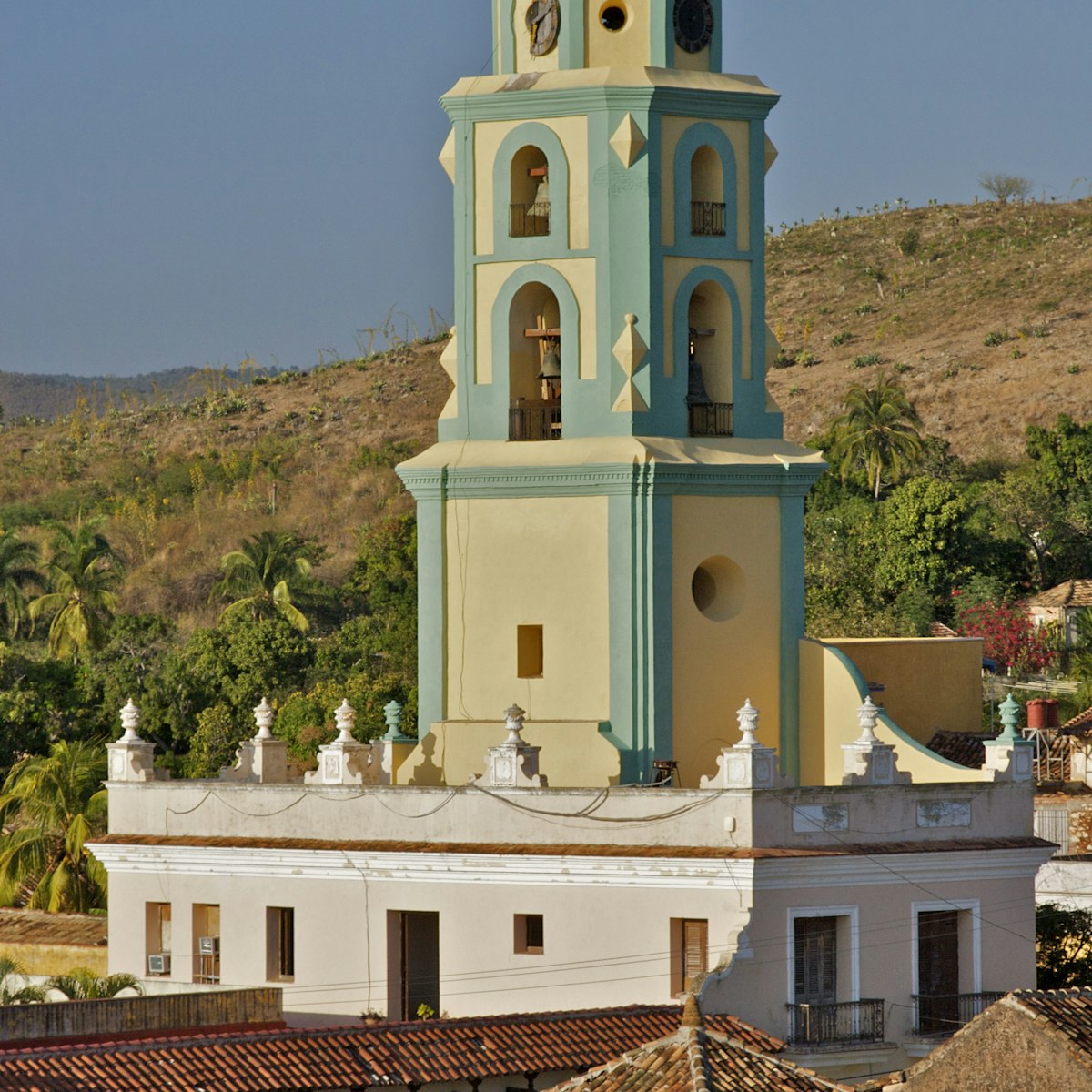
Perhaps the most recognizable building in Trinidad is the quaint yellow bell-tower of the former convent of San Francisco de Asís. Since 1986 the building has housed the Museo Nacional de la Lucha Contra Bandidos. The displays are mostly photos, maps, weapons and other objects relating to the struggle against the various counterrevolutionary bands that operated in Sierra del Escambray between 1960 and 1965. The fuselage of a US U-2 spy plane shot down over Cuba is also on display.
-
Museo Romántico
Located in the Palacio Brunet, the ground floor of which was built in 1740, the upstairs in 1808. In 1974 the mansion was converted into a museum with 19th-century furnishings, a fine collection of china and other period pieces. Pushy museum staff will materialize at your side to guide you for a tip. The shop adjacent has a good selection of photos and books in English.
-
Palacio Ortíz
Admission is completely free at the 19th-century Palacio Ortíz, which today houses the Galería de Arte, on the southwestern side of Plaza Mayor. Worth a look for its quality local art, particularly the embroidery, pottery and jewelry, there's also a nice courtyard and spiffy bathroom.
-
Plaza Mayor
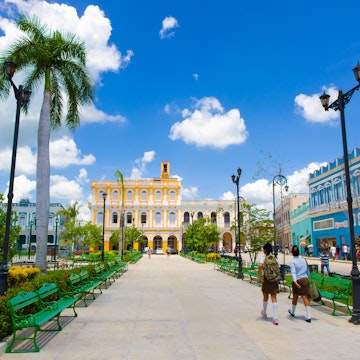
Trinidad's remarkably peaceful main square. It is located in the heart of the casco histórico and is the town's most oft-photographed spot.
-
Plaza Santa Ana
Only the shell remains of the Iglesia de Santa Ana, but just across the square is a former Spanish prison (1844) that has been converted into a tourist center, the Plaza Santa Ana. The complex includes an art gallery, handicraft market, ceramics shop, bar and restaurant.
-
San Francisco de Asís
Perhaps the most recognizable building in Trinidad is the quaint yellow bell-tower of the former convent of San Francisco de Asís. Since 1986 the building has housed the Museo Nacional de la Lucha Contra Bandidos (tel:4121, open from to Tuesday to Sunday).
-
Taller Alfarero
A large factory where teams of workers make ceramics from local clay using a traditional potter's wheel.
Showing 1-17 of 17 results