go to content go to search box go to global site navigation

Vietnam

Things to do in Vietnam

  1. Vietnam Express Northbound

    Vietnam Express Northbound

    10 days (Ho Chi Minh City)

    by Intrepid

    Glide down the Perfume River in Hue, Experience the magic of Halong Bay, Experience the buzz of Ho Chi Minh City, Delve into history at the Cu Chi tunnels, Hit…

    Not LP reviewed

     
    from USD$1,395 LAST MINUTE OFFER $1,186 SAVE $209
  2. All things to do
  3. Dai Nam Theme Park

    There have been many attempts at theme parks in Vietnam, but few have come close to the real deal. However, this has all just changed with the arrival of Dai Nam Theme Park, located about 30km from Ho Chi Minh City on Hwy 13. The roller-coaster is serious stuff with corkscrews and loops, plus there is a sky dive and a log flume. There are plenty of rides for smaller kiddies and a safari park–style zoo with white tigers, white rhinos and other big animals. Plans are afoot to open a huge water park here during 2009. Local bus 18 runs from Ben Thanh to Dai Nam daily.

    reviewed

  4. Nguyen Trung Truc Temple

    This temple is dedicated to Nguyen Trung Truc, a leader of the resistance campaign of the 1860s against the newly arrived French. Among other exploits, he led the raid that resulted in the burning of the French warship Esperance. Despite repeated attempts to capture him, Nguyen Trung Truc continued to fight until 1868, when the French took his mother and a number of civilians hostage and threatened to kill them if he did not surrender. Nguyen Trung Truc turned himself in and was executed by the French in the marketplace of Rach Gia on 27 October 1868.

    reviewed

  5. A

    Thai Hoa Palace

    Built in 1803, Thai Hoa Palace is a spacious hall with an ornate timber roof supported by 80 carved and lacquered columns. It was used for the emperor's official receptions and other important court ceremonies, such as anniversaries and coronations. During state occasions, the emperor sat on his elevated throne and his mandarins paid homage.

    Nine stelae divide the two-level courtyard into separate areas for officials in each of the nine ranks of the mandarinate; administrative mandarins stood to one side while the military mandarins stood to the other.

    reviewed

  6. Rung Tram

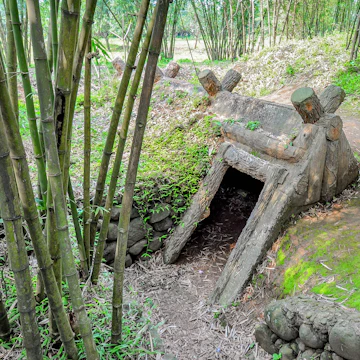
    Southeast of Cao Lanh and accessible by boat tour is the 52-hectare Rung Tram near My Hiep village. The area is one vast swamp with a beautiful thick canopy of tall trees and vines. It’s one of the last natural forests left in the Mekong Delta and by now probably would have been turned into a rice paddy were it not for its historical significance. During the American War the Viet Cong (VC) had a base here called Xeo Quyt, where top-brass VC lived in underground bunkers. But don’t mistake this for another Cu Chi Tunnels – it’s very different.

    reviewed

  7. Tay Phuong Pagoda

    This is also known as Sung Phuc Pagoda and consists of three single-level structures built in descending order on a hillock said to resemble a buffalo. The figures representing ‘the conditions of man’ are carved from jackfruit wood, many dating from the 18th century, and are the pagoda’s most celebrated feature. The earliest construction here dates from the 8th century. Take the steep steps up to the main pagoda building, then find a path at the back that loops down past the other two pagodas and wander through the hillside village surrounding the complex.

    reviewed

  8. Cong Vien Van Hoa Park Sports Club

    The park has an active sports club that is possible to visit. It has 11 tennis courts, a passable swimming pool and a clubhouse, all of which have a faded colonial feel about them. The tennis courts are available for hire at a reasonable fee and hourly tickets are on sale for use of the pool. The antique dressing rooms are quaint, but there are no lockers. There are also Roman-style baths and a coffee shop overlooking the colonnaded pool.

    Other facilities include a gymnasium, table tennis, weights, wrestling mats and ballroom-dancing classes.

    reviewed

  9. Phong Nha Cave

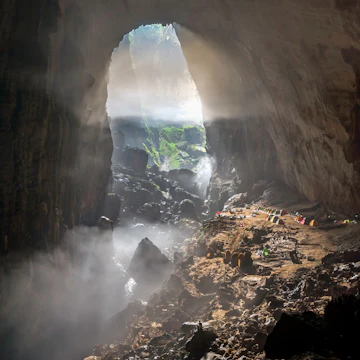
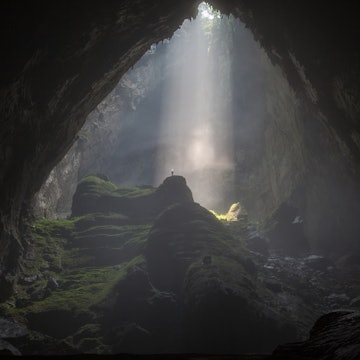
    The largest and most stunning cave in Vietnam is Phong Nha Cave. It was reliably mapped for the first time only in 1990, by an expedition led by the British Cave Research Association. Further exploration has revealed that Phong Nha Cave alone is nearly 55km long, though only the first kilometre is open to visitors. The name means Cave of Teeth, but the ‘teeth’ (stalagmites) by the entrance are long gone. The cave is an incredible otherworldly landscape to explore – except for the garish lights that illuminate certain formations.

    reviewed

  10. B

    Bach Ma Temple

    In the heart of the Old Quarter, the small Bach Ma Temple is said to be the oldest temple in the city, though much of the current structure dates from the 18th century and a shrine to Confucius was added in 1839. It was originally built by King Ly Thai To in the 11th century to honour a white horse that guided him to this site, where he chose to construct his city walls. Pass through the wonderful old wooden doors of the pagoda to see a statue of the legendary white horse, as well as a beautiful red-lacquered funeral palanquin.

    reviewed

  11. Nui Coc Reservoir

    A scenic spot popular with locals, Nui Coc Reservoir is 25km west of Thai Nguyen. It’s a pretty stretch of water and a major drawcard for Hanoi residents looking to get away from it all. On summer weekends it can get particularly crowded. A one-hour, circular motorboat tour of the lake is the thing to do and costs about 250,000d. You can use the water park’s swimming pool for 20,000d, and also rent rowboats. It could be worth a visit if you’re travelling to Ba Be National Park, with your own wheels, and fancy a dip.

    reviewed

  12. Presidential Receiving Room

    The ground-floor room with the boat-shaped table was often used for conferences. Upstairs in the Presidential Receiving Room - the one with the red chairs in it - the South Vietnamese president received foreign delegations. He sat behind the desk; the chairs with dragons carved into the arms were used by his assistants. The chair facing the desk was reserved for foreign ambassadors. The room with gold-coloured chairs and curtains was used by the vice president.

    You can sit in the former president's chair and have your photo taken.

    reviewed

  13. Advertisement

  14. Cu Chi War History Museum

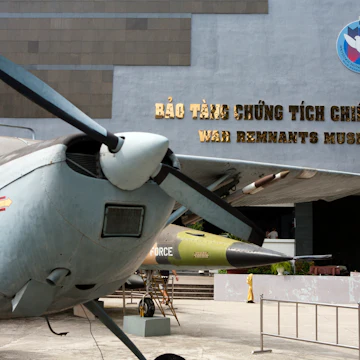
    The small Cu Chi War History Museum is not actually at the tunnel sites but just off the main highway in the central area of the town of Cu Chi. Almost all of the explanations are in Vietnamese. There are a few gruesome photos showing civilians who were severely wounded or killed following American bombing raids, and a list of Viet Cong guerrillas killed in the Cu Chi area. Overall, it’s rather disappointing and doesn’t warrant a visit. Most travellers find Ho Chi Minh City’s War Remnants Museum far more edifying.

    reviewed

  15. National Oceanographic Museum

    Housed in a grand French-colonial building in the port district of Cau Da at the far south end of Nha Trang is the National Oceanographic Museum. It’s attached to the Oceanographic Institute founded in 1923, and signs direct you around the tanks of colourful live marine life and the 60,000 jars of pickled specimens that make up the collection. There are also stuffed birds and sea mammals and displays of local boats and fishing artefacts. Most of the signs have English translations, so a guide is unnecessary.

    reviewed

  16. Bunker of General Giap

    A beautiful body of water, Pa Khoang Lake is 17km east of Dien Bien Phu on the road from Son La, and 4km off the highway. About a 15km drive around the lake’s edge, or an hour’s boat ride plus a 3km forest walk, is the recently restored bunker of General Giap, the Vietnamese commander of the Dien Bien Phu campaign. The network of bunkers, tunnels, sentry boxes and huts here could be better set up for visitors, but make an interesting diversion for those attracted by Vietnam’s legendary military tactician.

    reviewed

  17. Nui Ba Den

    Fifteen kilometres northeast of Tay Ninh, Nui Ba Den rises 850m above the rice paddies, corn, cassava (manioc) and rubber plantations of the surrounding countryside. Over the centuries Nui Ba Den has served as a shrine for various peoples of the area, including the Khmer, Chams, Vietnamese and Chinese, and there are several interesting cave temples here. The summits of Nui Ba Den are much cooler than the rest of Tay Ninh province, most of which is only a few dozen metres above sea level.

    reviewed

  18. C

    Memorial House

    One of the Old Quarter’s best restored properties, this traditional merchants’ house is sparsely but beautifully decorated, with rooms set around two courtyards and plenty filled with fine furniture. Note the high steps between rooms, a traditional design incorporated to stop the flow of bad energy around the property. There are plenty of crafts and trinkets for sale here including silver jewellery, basketware and Vietnamese tea sets and there’s usually a calligrapher or another craftsperson at work too.

    reviewed

  19. Cat Tien National Park

    One of the outstanding natural treasures of the region, the 72,000-hectare Cat Tien National Park comprises an amazingly biodiverse region of lowland tropical rain forest. The hiking, mountain biking and bird-watching are the best in Southern Vietnam. Always call ahead for reservations as the park can accommodate only a limited number of visitors. However, a word of caution, visitors rarely see any of the larger mammals resident in the park, so don’t come expecting to encounter rhinos and tigers.

    reviewed

  20. D

    Old Market

    Despite the name, the Old Market is not the place to find antiques, although it is quite old. This is the place to buy imported food, wine, shaving cream, shampoo and so on. However, if its Vietnamese name, Cho Cu, is written or pronounced without the correct tones it means ‘penis’; your cyclo driver will no doubt be much amused if you ask for this. Perhaps directions are a better bet – the Old Market can be found on the north side of Ð Ham Nghi between Ð Ton That Dam and Ð Ho Tung Mau.

    reviewed

  21. Can Gio Mangrove Forest

    The principal attraction in Can Gio is Can Gio mangrove forest. Formed by sediment deposits from the Dong Nai and Long Tau Rivers, this forest contains a high degree of biodiversity with more than 200 species of fauna and 50 species of flora. However, as with many ‘ecotourism’ activities in Vietnam, Saigon Tourist has got in on the act and turned the experience into a bit of an event. Kayaking in the mangroves is a great concept, but the animal circus just doesn’t do it for us.

    reviewed

  22. Po Ro Me

    Po Ro Me is one of the most atmospheric of Vietnam’s Cham towers thanks in part to its isolated setting on top of a craggy hill with sweeping views over the cactus-strewn landscape. The temple honours the last ruler of an independent Champa, King Po Ro Me (r 1629–51), who died as a prisoner of the Vietnamese. His image and those of his family are found on the external decorations. Note the flame motif repeated around the arches, a symbol of purity, cleansing visitors of any residual bad karma.

    reviewed

  23. E

    Five

    Occupying a tastefully restored old building this intimate restaurant is setting new gastro standards in the Old Quarter. It delivers a contemporary take on fine dining, with a short well-chosen menu of Western food including ravioli, lamb and very fine desserts (try the fig cheesecake). A selection of wines are available by the glass and the service is refined, pleasant and professional. There’s a little deli counter for takeaways, and it’s also great for breakfast: the eggs Benedict is absolutely legendary.

    reviewed

  24. Advertisement

  25. F

    Buddha

    At the top of the hill, behind the Long Son Pagoda, is a huge white Buddha seated on a lotus blossom and visible from all over the city. Around the statue’s base are fire-ringed relief busts of Thich Quang Duc and six other Buddhist monks who died in self-immolations in 1963. The platform around the 14m-high figure has great views of Nha Trang and nearby rural areas. As you approach the pagoda from the street, the 152 stone steps up the hill to the Buddha begin to the right of the structure.

    reviewed

  26. Son My Memorial

    It’s hard to believe that this tranquil rural spot was the setting for one of the most horrific crimes of the American War. On the morning of 16 March 1968, US troops swept through four hamlets in the Son My subdistrict, killing 504 villagers, many of them elderly and children. The largest mass killing took place in Xom Lang (Thuan Yen) subhamlet, where the Son My Memorial now stands. However, it was one of the other hamlets that lent the name the world remembers – the My Lai Massacre.

    reviewed

  27. Tunnels of Cu Chi

    If the tenacious spirit of the Vietnamese can be symbolised by a place, then few candidates make a stronger case than the tunnels of Cu Chi. Cu Chi is a district of greater Ho Chi Minh City and has a population of about 200,000 (it had about 80,000 residents during the American War). At first glance there is little evidence here to indicate the intense fighting, bombing and destruction that occurred in Cu Chi during the war. To see what went on, you have to dig deeper – underground.

    reviewed

  28. G

    Alexandre Yersin Museum

    Dr Alexandre Yersin’s library and office are now an interesting museum. Items on display include laboratory equipment (such as astronomical instruments), books from Yersin’s library, a fascinating 3-D photo viewer and some of the thousand or so letters written to his mother. The model boat was given to him by local fishermen with whom he spent a great deal of his time. Tours of the museum are guided in French, English and Vietnamese, and a short film on Yersin’s life is also shown.

    reviewed

  29. H

    Domaine de Marie Convent

    The pink tile-roofed structures of the hilltop Domaine de Marie Convent, constructed between 1940 and 1942, were once home to 300 nuns. Today the remaining nuns support themselves by making ginger candies and selling the fruit grown in their orchard. The French-speaking nuns are pleased to show visitors around, explaining the work they do for orphans, the homeless and handicapped children. A shop sells handicrafts made by the children and nuns. Mass is celebrated in the large chapel, Sun to Fri.

    reviewed