Banda Aceh
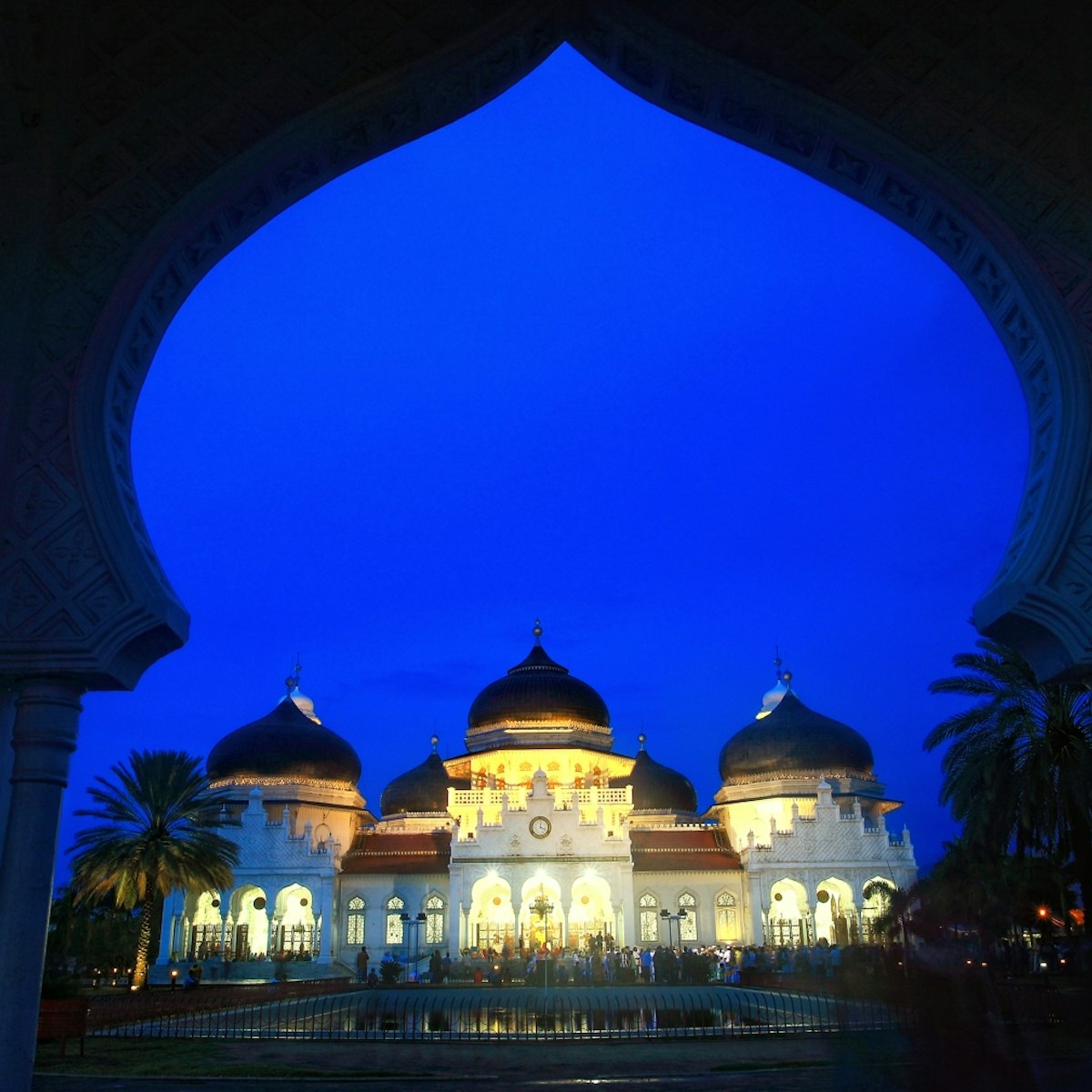
With its brilliant-white walls, ebony-black domes and towering minaret, this 19th-century mosque is a dazzling sight. The best time to visit is during…

©Bas Vermolen/Getty Images
Sumatra's northernmost province, Aceh is both a fiercely proud and prosperous region. It's blessed with rainforests that feature incredible biodiversity, as well as pristine islands popular with beachgoers, divers and surfers alike. However, over the years, this western tip of the Indonesian archipelago has grabbed headlines for all the wrong reasons. Earthquakes, tsunamis, civil war and sharia law are the main associations people have with Sumatra’s northernmost state. With the reconstruction from the 2004 Boxing Day tsunami long completed, post-tsunami Aceh is slowly healing the social wounds incurred by the natural disaster and the previous civil war. Still, while the guns have been laid down and a degree of autonomy has been granted to the province, there are occasional blips on the road to peace, and a prevailing belief in the rest of Sumatra that the people of Aceh are keen to spread their conservative Islamic ways across the whole country.
Banda Aceh
With its brilliant-white walls, ebony-black domes and towering minaret, this 19th-century mosque is a dazzling sight. The best time to visit is during…

Banda Aceh
A visit to this beautifully designed, hard-hitting museum commences with a walk through a dark, dripping tunnel that symbolises the 2004 tsunami waves…
Banda Aceh
In the same compound as the Museum Negeri Banda Aceh, the Rumah Aceh is a fine example of traditional Acehnese architecture, built without nails and held…
Banyak Islands
This largish island with pristine beaches takes a couple of hours to walk around. It's one of the most popular places to stay with several guesthouses set…
Banda Aceh
All that remains of Aceh’s powerful sultanates today is on view at Gunongan. Built by Sultan Iskandar Muda (1607–36) as a gift for his Malay princess wife…
Banyak Islands
The second-largest of the Banyak Islands, Pulau Bangkaru is home to a turtle conservation project, so visits are strictly controlled and you’re only…
Banda Aceh
This state museum displays Acehnese weaponry, household furnishings, ceremonial costumes, everyday clothing, gold jewellery, calligraphy and some…
Banyak Islands
Covered in dense jungle, Pulau Tuangku is the largest of the Banyak Islands. Surfers head to Ujung Lolok, the headland at the south of the island,…
Get to the heart of Aceh with one of our in-depth, award-winning guidebooks, covering maps, itineraries, and expert guidance.