Vardzia

Save

Advertisement

Note: Javascript is disabled in your browser.
To see the gallery in all its glory, you'll need to enable Javascript.

Introducing Vardzia

The drive into the wilderness from Akhaltsikhe towards Vardzia is as dramatic as any in Georgia outside the greater Caucasus. The road follows the course of the upper Mtkvari, passing through narrow canyons and then veering south at Aspindza along a particularly beautiful valley cutting like a green ribbon between arid, rocky hillsides. Thirty-two kilometres from Akhaltsikhe is the village of Rustavi, from where Georgia’s national bard Rustaveli hails. After the unremarkable town of Aspindza, you reach the impressive 10th- to 14th-century Khertvisi Fortress, where the road to Akhalkalaki and Turkey diverges from the Varzia road. Inside the impressive walls is a square keep with rounded corners. According to legend, Queen Tamar held a competition to see who could build the best tower. A master stonemason and an apprentice were the contestants. The apprentice outdid his master, who jumped like a bird from the tower and died impaled on the knife in his belt. From the eastern wall two tunnels lead down to the river: one served the castle’s inhabitants for water, the other for communication.

Advertisement

Nine kilometres from Khertvisi you come to a stone enclosure beside the road, which is an old slave market. Opposite is the turning to the village of Nakalakevi, whose name means ‘a city used to be here’. The city in question was Tsunda, which until the 9th century was the capital of Javakheti. Tsunda’s remains are just east of the north end of the next village, Tmogvi, 1km further along the road: it’s worth stopping to see Tsunda’s beautifully ornamented 12th-century Church of St John the Baptist, with, curiously enough, a medieval stone lavatory next to it.

Two kilometres further along the road, but atop a high rocky hill on the other side of the river (which flows far below in the gorge), is the near-impregnable Tmogvi Castle, which was already an important fortification by the 10th century. About 1.5km past this, up on the left of the road, are the remains of Vanis Qvabebi (Vani Caves), a cave monastery that predated Vardzia by four centuries, with a maze of tunnels inside the rock.

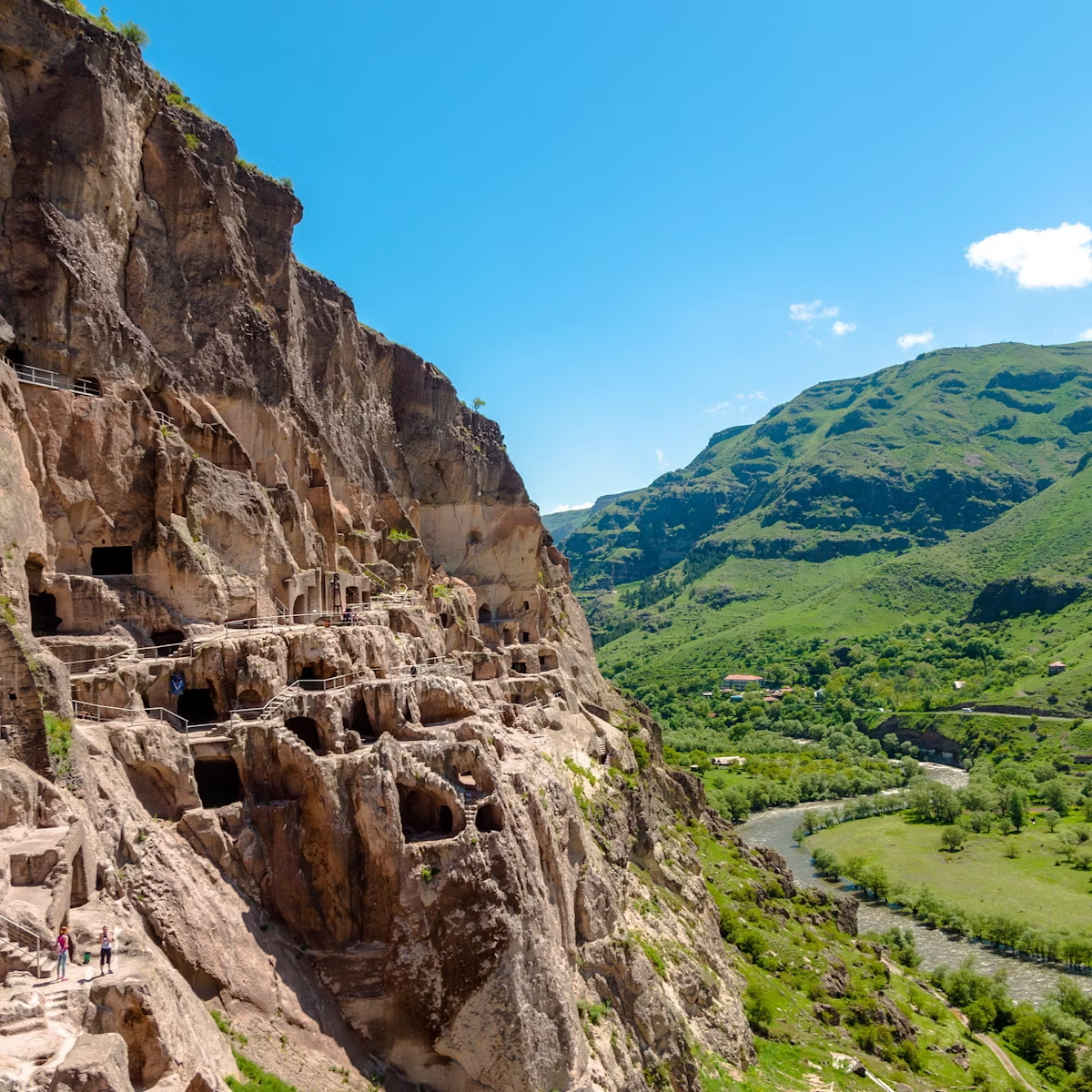
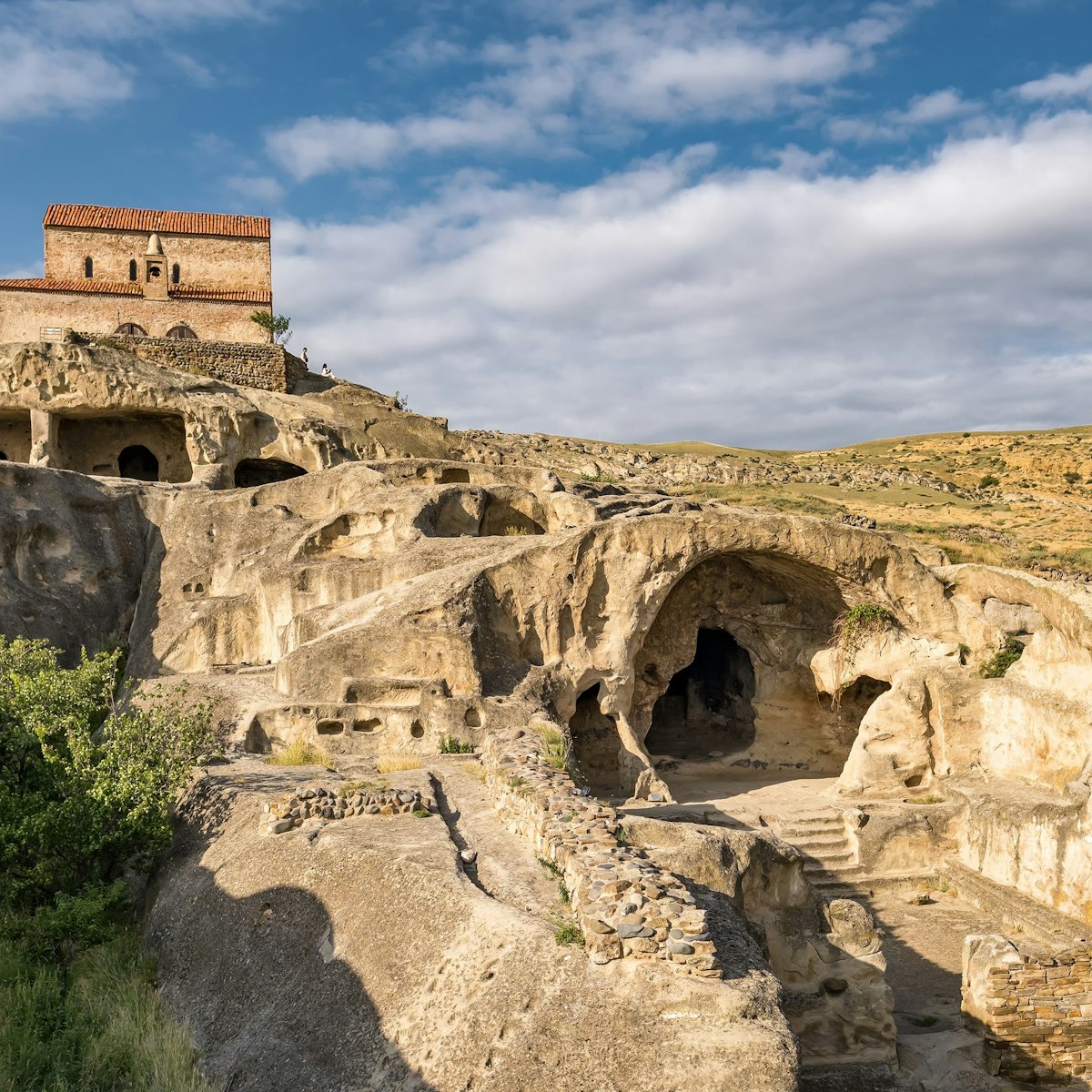
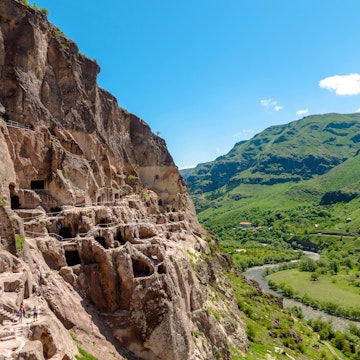
The cave city of Vardzia (admission US$3; 9am-5pm), 16km beyond Khertvisi, is a cultural symbol with a special place in the hearts of Georgians. In the 12th century Giorgi III built a fortification at the site. His daughter, Queen Tamar, established a monastery here, which grew into a virtual holy city housing perhaps 2000 monks, renowned as a spiritual bastion of Georgia and of Christendom’s eastern frontier. The story goes that it was Tamar who, as a child, unwittingly gave the place its name: taken hunting by her father, she strayed from her companions and when called to, answered from the caves ‘Ak var dzia’ (Here I am, uncle).

The remarkable feature of Vardzia as it developed in Tamar’s reign was that the inhabitants lived in dwellings carved out of the rock and ranging over 13 floors, with the Church of the Assumption at the centre. To the west of the church, in the area that developed out of the 10th-century cave village of Ananuri, you can see 40 cave groups with a total of 165 rooms, and six smaller churches. On the east side are 79 cave groups, 244 rooms and six more churches. The total includes 25 wine cellars!

Guides are usually available at the ticket office; though none speak English, they can help show you the most interesting caves for a tip of a few lari.

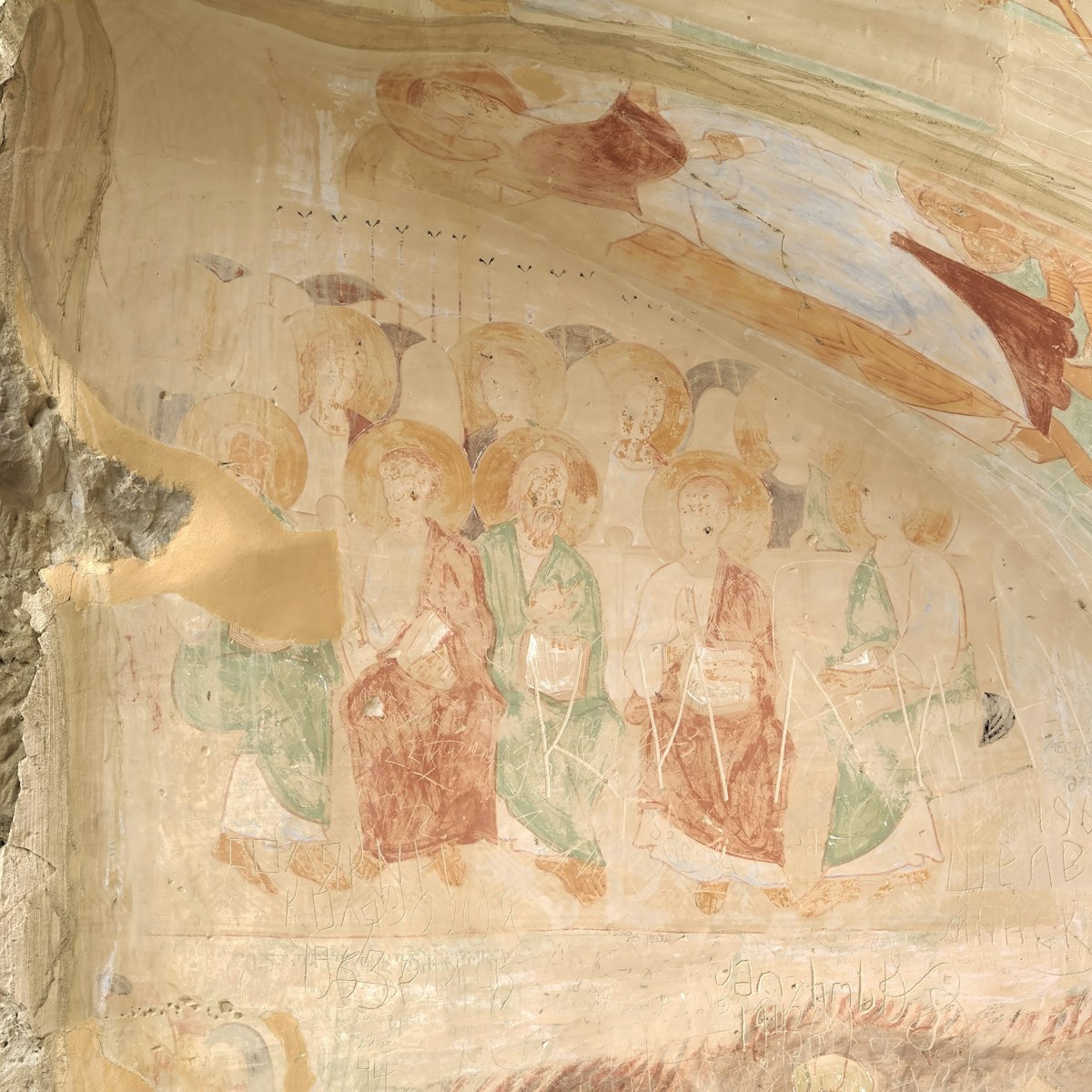
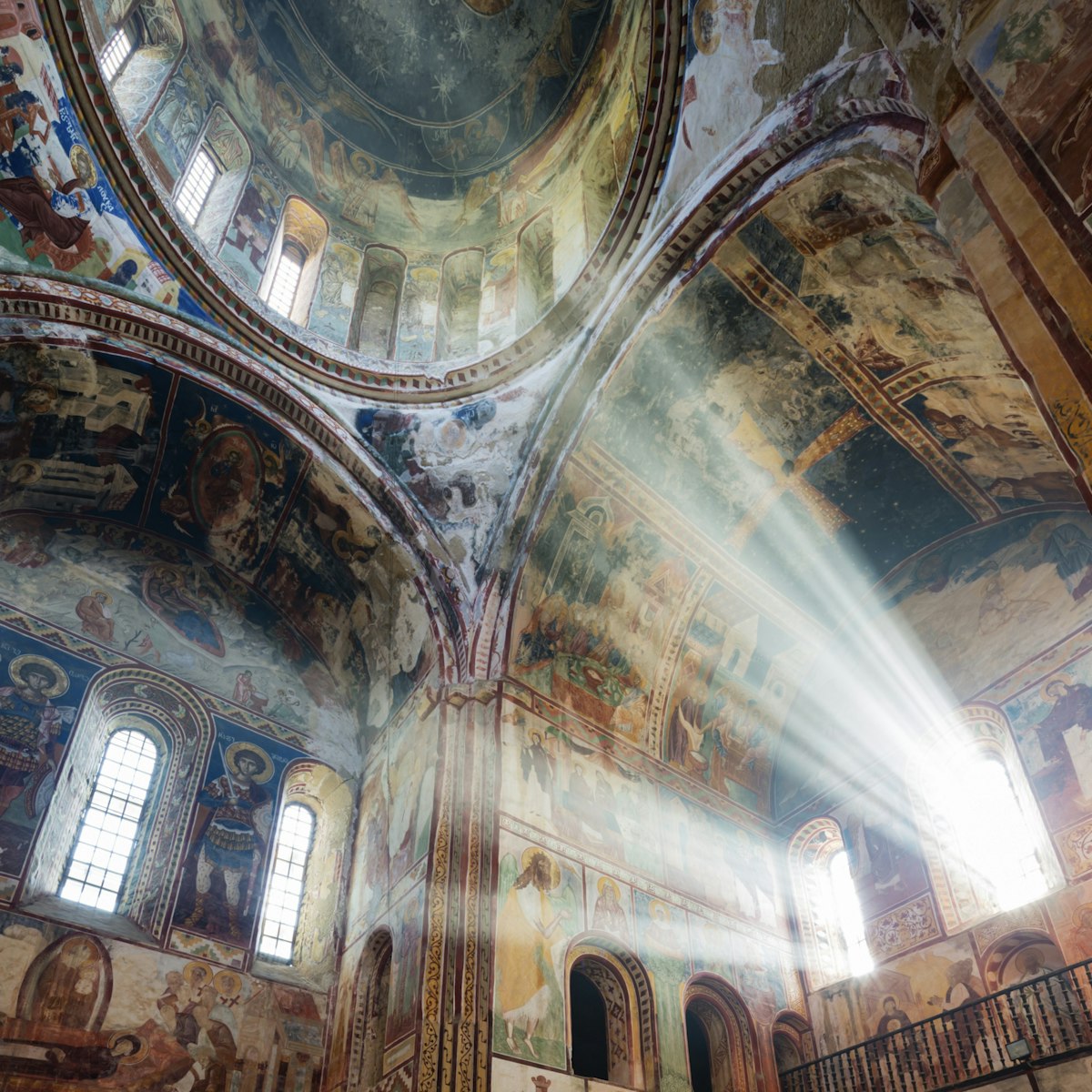
At the heart of the cave complex is the Church of the Assumption, with its two-arched portico. The façade of the church has gone, but the inside is beautiful. Frescoes portray many New Testament scenes, and on the north wall depict Tamar before she married (shown by the fact that she is not wearing a wimple) alongside her father, Giorgi III. These were painted between 1184 and 1186, the period of the church’s construction. The door to the left of the church door leads into a long tunnel (perhaps 150m) which climbs steps inside the rock and emerges well above the church.

Vardzia suffered a major earthquake in 1283, which shook away the outer walls of many caves. As Georgian power suffered successive waves of invaders, the monastery itself declined. In 1551 the Georgians were defeated by the Persians in a battle in the caves themselves and Vardzia was looted. Today Vardzia is again a working monastery and you may meet some of its inhabitants during your visit.

Last updated: Mar 2, 2009

Hotels & Hostels

Check out all our reviewed and recommended accommodation and book online.

Find hotels & hostels

Travel Insurance

Going to Georgia? Make sure you're covered.

Get a quote

See all travel services

Advertisement