Gonder Sights

Royal Enclosure

  • Address
    • Royal Enclosure Area
  • Price
    • admission Br50, personal video cameras Br75, licensed guide, around Br30
  • Hours
    • 08:30-12:30 & 13:30-17:30

Correct these details

Lonely Planet review for Royal Enclosure

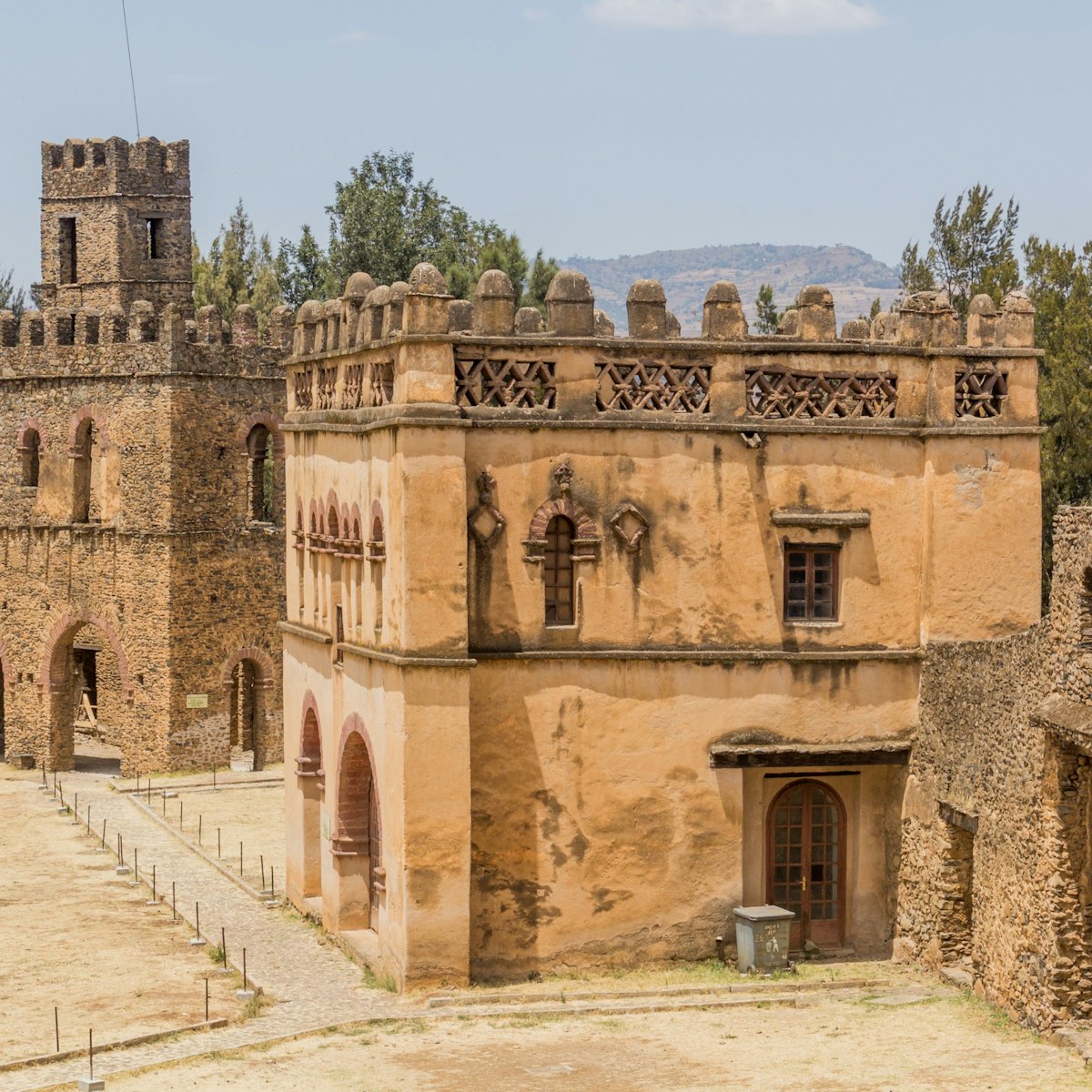
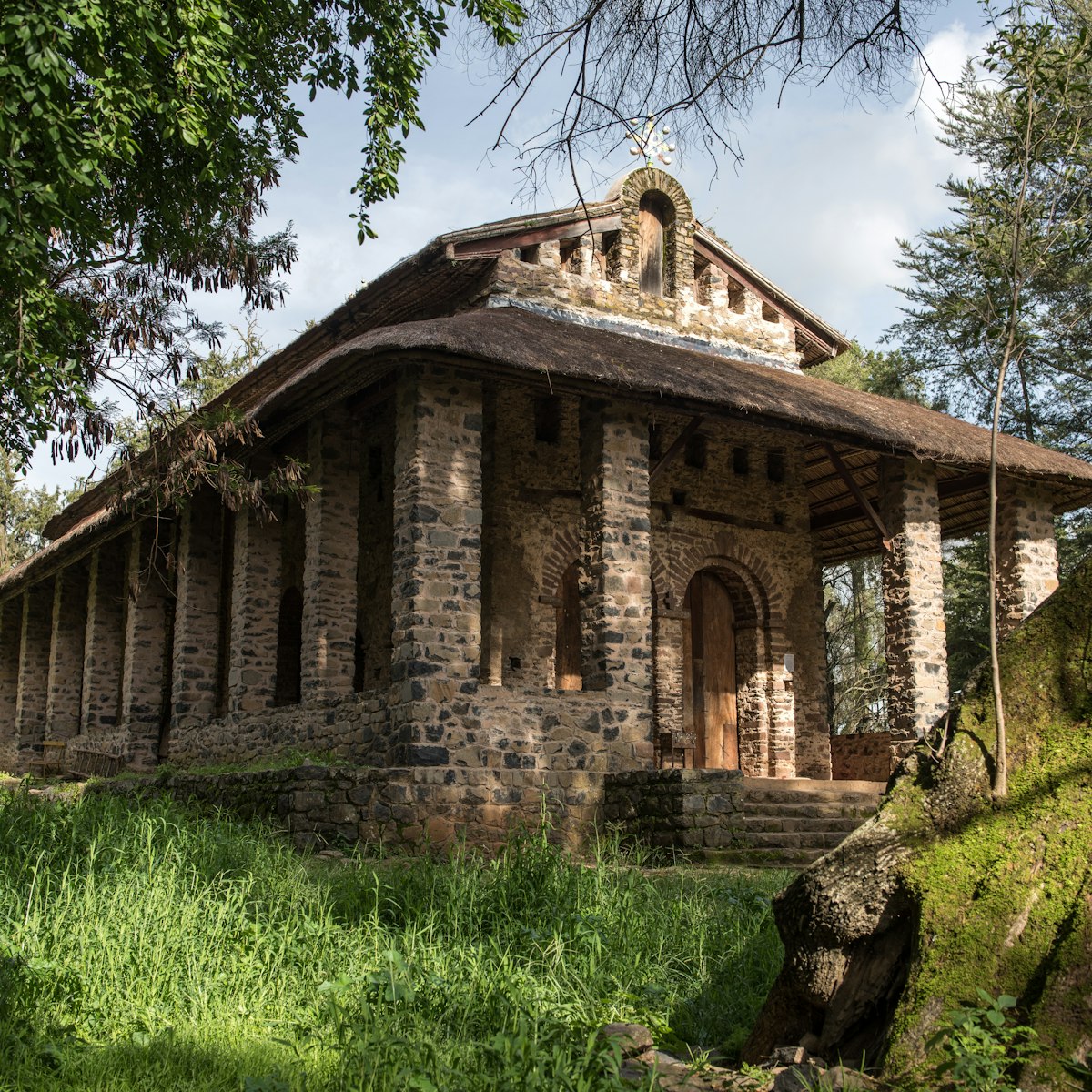
It's hard not to notice Gonder's impressive Royal Enclosure, with its castles and high stone walls sitting streetside. The entire 70,000-sq-metre site (also known as Fasil Ghebbi) was declared a World Heritage site by Unesco in 1979.

Free 90-minute guided tours (a tip will be expected) are worthwhile and available weekdays. On weekends, you can hire a local licensed guide near the gate.

Almost completely restored with the help of Unesco, Fasiladas' Palace (in the compound's south) is the oldest and most impressive castle. It stands 32m tall and has a crenulated parapet and four domed towers. Made of roughly hewn stones, it's reputedly the work of an Indian architect, and shows an unusual synthesis of Indian, Portuguese, Moorish and Aksumite influences.

The main floor was used as a dining hall and formal reception area; note the recessed Star of David above several doorways, which trumpet Fasiladas' link to the Solomonic dynasty. The small room in the northern corner boasts its original beam ceiling and some faint frescoes.

On the 1st floor, Fasiladas' prayer room has windows in four directions, each overlooking Gonder's important churches. On the roof, religious ceremonies were held, and it was from here that the emperor addressed his people. Above Fasiladas' 2nd-floor bedroom was the watchtower, from where it's possible to see all the way to Lake Tana.

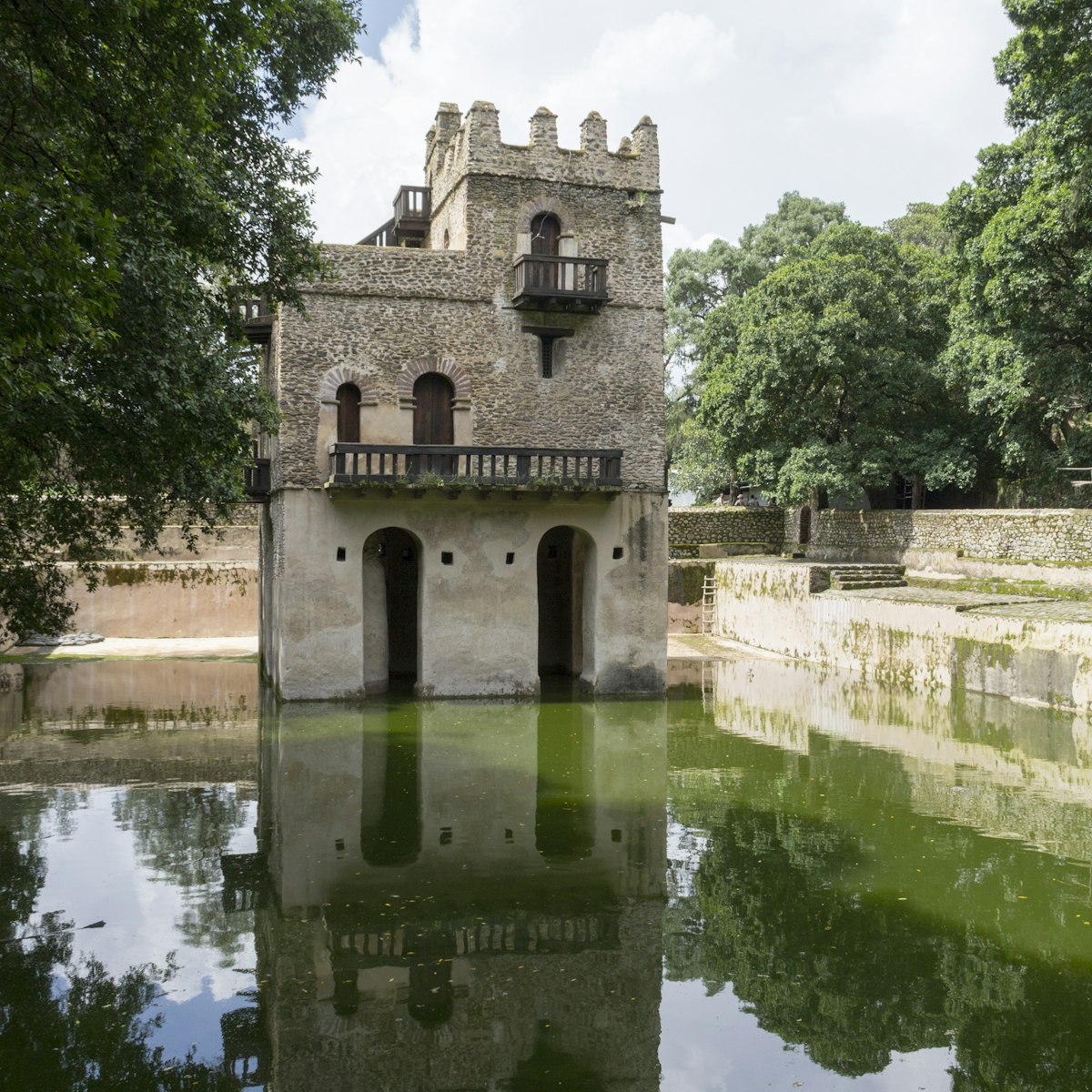
Behind the castle's eastern corner are various ruined buildings, including the remains of the kitchen (domed ceiling) and water cistern (thought by some to be a pool).

To the palace's northeast is the saddle-shaped palace of Iyasu I. The son of Yohannes I, Iyasu I (r 1682-1706) is considered the greatest ruler of the Gonderine period. Iyasu's Palace was unusual for its vaulted ceiling. The palace used to be sumptuously decorated with gilded Venetian mirrors and chairs, and gold leaf, ivory and beautiful paintings adorning the walls. Visiting travellers described the palace as 'more beautiful than Solomon's house'. Although a 1704 earthquake and British bombing in the 1940s have done away with the interior and roof, its skeletal shell reeks of history.

North of Iyasu's Place are the relics of its banquet hall and storage facilities. To the west is the quadrangular library of Fasiladas' son, Yohannes I (r 1667-82), which was sadly renovated and plastered over by the Italians. Although only the tower and walls remain of Fasiladas' archive, which sits northwest of the library, the beauty of the large arched doors and windows remains. It was once an impressive palace decorated with ivory.

The compound's northern half holds vestiges of Emperor Dawit's Hall and House of Song, in which many religious and secular ceremonies and lavish entertainments took place. Dawit (r 1716-21) also built the first of two Lion Houses (the second was built by Selassie) where Abyssinian lions were kept until 1992.

When Dawit came to a sticky end (he was poisoned in 1721), the Emperor Bakaffa (r 1721-30) took up the reins of power and built the huge banqueting hall and the impressive stables.

Between the stables and Dawit's Hall rests the Turkish bath (wesheba), which apparently worked wonders for those suffering from syphilis! Inside, some of the original cow-horn clothes hooks still protrude from the walls. At the southern end you'll see the fire pit and the ceiling's steam vents.

Bakaffa's consort was responsible for the last castle, known as Mentewab's Castle, a two-storeyed structure that's now part of an Ethiopian cultural heritage project. Note the Gonder cross being used as a decorative motif.


Traveller reviews for Royal Enclosure (0)

  • Avatar
    To write a review sign in, register or   Connect_light_large_long
    Add your experience
    Say more…