
go to content go to search box go to global site navigation

Parque Nacional Corcovado

Advertisement

Introducing Parque Nacional Corcovado

Famously labeled by National Geographic as ‘the most biologically intense place on earth’, this national park is the last great original tract of tropical rain forest in Pacific Central America. The bastion of biological diversity is home to Costa Rica’s largest population of scarlet macaws, as well as countless other endangered species, including Baird’s tapir, the giant anteater and the world’s largest bird of prey, the rare harpy eagle. Its amazing biodiversity has long attracted the attention of tropical ecologists, as well as a devoted stream of visitors who descend from Bahía Drake and Puerto Jiménez to explore the remote location and spy on a wide array of wildlife.

Advertisement

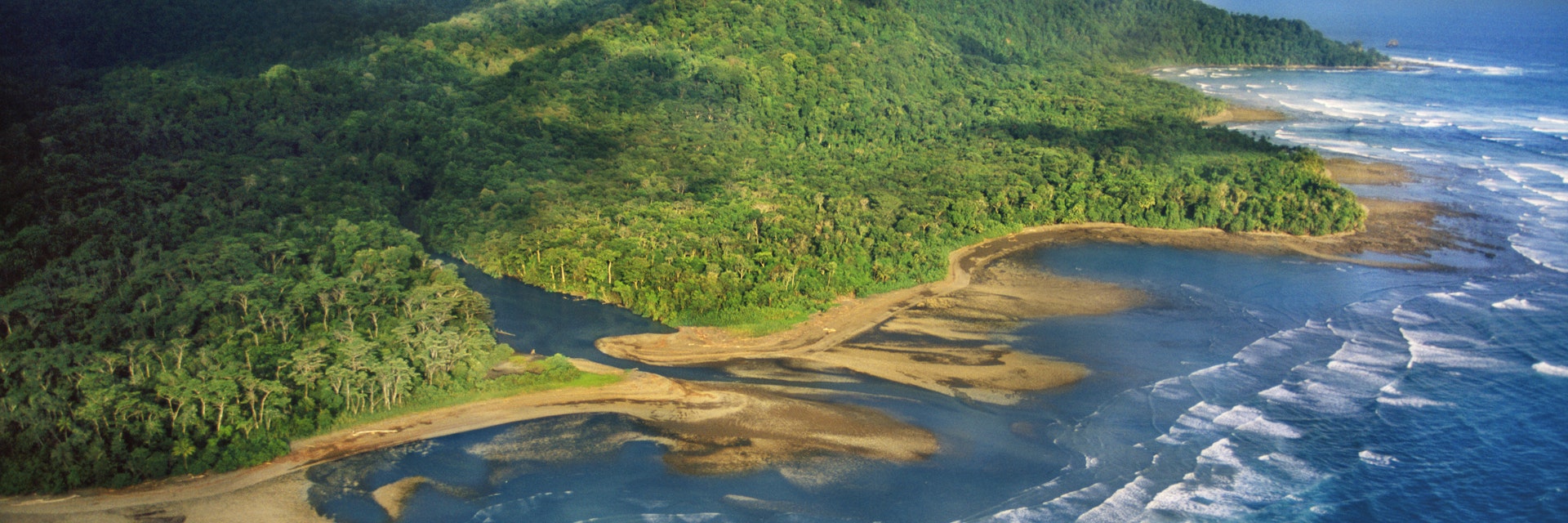
The 42, 469-hectare park is nestled in the southwestern corner of the Península de Osa and protects at least eight distinct habitats, ranging from mangrove swamps to primary and secondary rain forest to low altitude cloud forest. The most accessible and visible habitat is the 46km of sandy coastline.

Because of its remoteness, the park remained undisturbed until loggers invaded in the 1960s. The destruction was halted in 1975 when the area was established as government-administered parklands. The early years were a challenge as park authorities, with limited personnel and resources, sought to deal with illegal clear-cutting, poaching and gold-mining, the latter of which was causing severe erosion in the park’s rivers and streams.

Unfortunately, poaching remains a severe problem in Corcovado. The highest-profile victims are the highly-endangered Central American jaguar and its main food source, the white-lipped peccary. Heavily-armed hunters gun down peccaries en masse and sell their meat, resulting in a drastic 85% decline in their populations in the last five years. Jaguars, suffering from a diminishing food supply, prey on domestic animals in the area, making them a target of local residents (not to mention the fact that jaguar pelts and bones fetch hefty sums as well). Minae has stepped up its police patrols but has been unable to curb the poaching.

Meanwhile, the Fundacíon Corcovado spearheaded a local effort to propose Parque Nacional Corcovado as a Unesco World Heritage Site, in recognition of its stunning aesthetic appeal and scientific importance. Sadly, ongoing reports of uncontrolled hunting highlighted the government’s inability to protect and preserve this valuable site, and the nomination was temporarily withdrawn.

Last updated: Mar 2, 2009

In our shop

See all shop products

Hotels & Hostels in Parque Nacional Corcovado

See all hotels and hostels in Parque Nacional Corcovado

Travel Insurance

Going to Costa Rica? Make sure you're covered.

Get a quote

See all travel services

Advertisement