Potosí
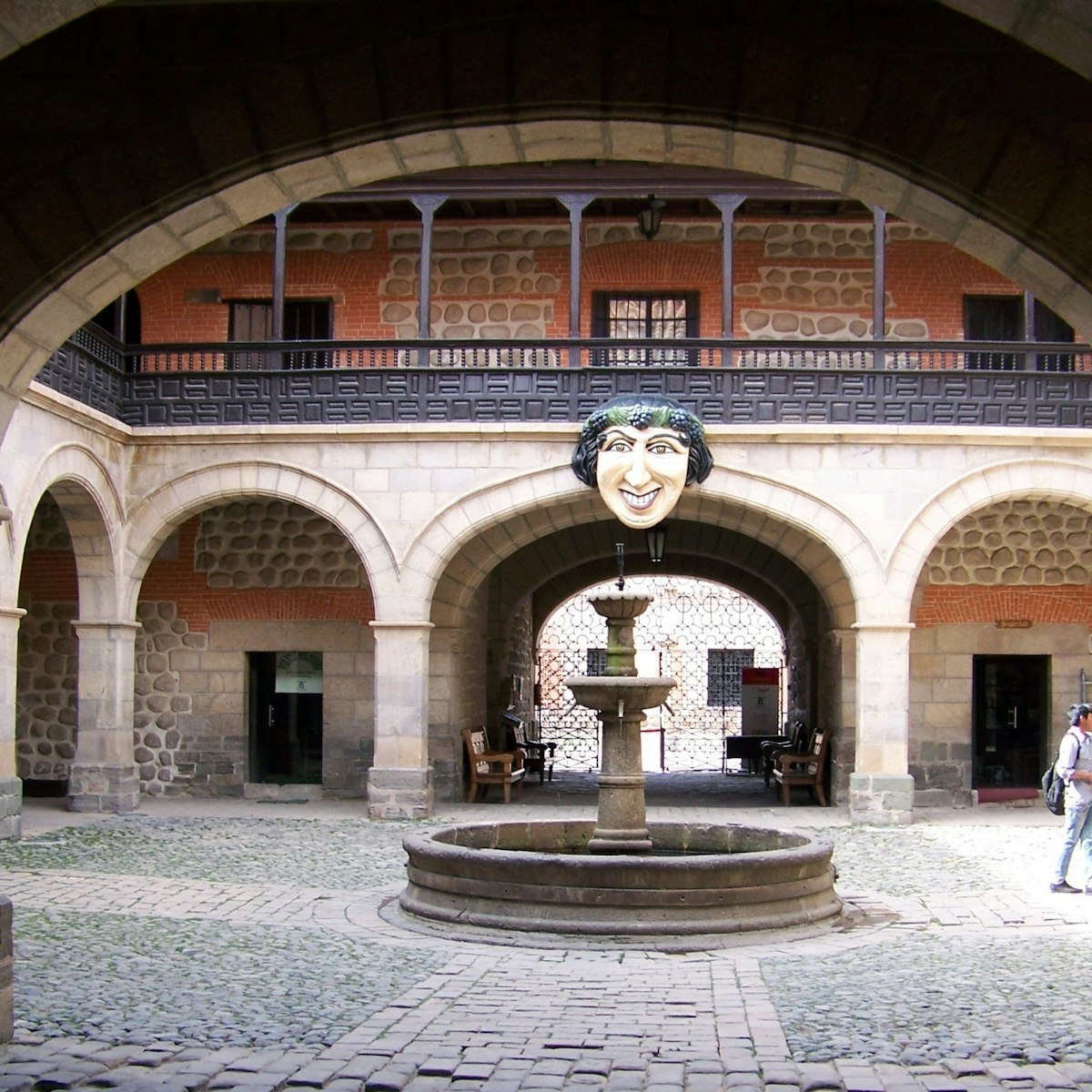
The National Mint is Potosí’s star attraction and one of South America’s finest museums. Potosí’s first mint was constructed on the present site of the…
Potosí
The National Mint is Potosí’s star attraction and one of South America’s finest museums. Potosí’s first mint was constructed on the present site of the…

Museo y Convento de Santa Teresa
Potosí
The fascinating Santa Teresa Convent was founded in 1685 and is still home to a small community of Carmelite nuns who have restored the sizable building…
Potosí
The Lagunas de Kari Kari are artificial lakes (ranging from an elevation of 4500m to 5025m) constructed in the late 16th and early 17th centuries by 20…
Potosí
Belief in the curative powers of Tarapaya (3600m), the most frequently visited hot-springs area around Potosí (21km northwest of the city), dates back to…
Museo y Convento de San Francisco
Potosí
This convent, founded in 1547 by Fray Gaspar de Valverde, is the oldest monastery in Bolivia. Owing to its inadequate size, it was demolished in 1707 and…
Iglesia y Museo de San Lorenzo de Carangas
Potosí
The ornate mestizo baroque portal of this church, probably one of the most photographed in Bolivia, is an explicit expression of the mezcla (mixture)…
Potosí
Construction of La Catedral was initiated in 1564 and finally completed around 1600. The original building lasted until the early 19th century, when it…
La Capilla de Nuestra Señora de Jerusalén
Potosí
This church is a little-known Potosí gem. Originally built as a humble chapel in honor of the Virgen de Candelaria, it was rebuilt more lavishly in the…
Potosí
The ornate and beautiful bell tower, on what remains of the former Jesuit church, was completed in 1707 after the collapse of the original church. Both…
Potosí
An architecturally notable home that once housed lay sisters of the Franciscan order. It has three separate and widely spaced doorways with finely…
Potosí
Constructed between 1555 and 1687, the restored Iglesia de la Merced has a carved pulpit, a gorgeous wooden ceiling and a beautiful 18th-century silver…
Potosí
Visit the bell tower of Potosí's central cathedral for nice views of the city. The side entrance is hard to spot.
Potosí
On the banks of the Río Huana Mayu, in the upper Potosí barrios of Cantumarca and San Antonio, are some fine ruined examples of the ingenios (smelters)…
Potosí
North of the Iglesia de San Agustín, Calle Quijarro narrows as it winds between a wealth of colonial buildings, many with doorways graced by old family…
Potosí
The rather ordinary-looking Iglesia de San Martín was built in the 1600s and is today run by the French Redemptionist Fathers. Inside is an art museum,…
Potosí
Potosí's elaborate colonial architecture merits a stroll around the narrow streets to take in the ornate doorways and facades, as well as the covered…
Potosí
On Calle Junín, between Matos and Bolívar, this especially lovely and elaborate doorway, flanked by twisted columns, once graced the home of the Marqués…
Potosí
The former church and convent of Iglesia de San Bernardo is most notable for its spectacular facade of un-dressed boulders. The cavernous interior now…
Potosí
This passageway, an extension of Calle Ingavi, east of Junín, wends around a series of angular turns, displaying some interesting architectural quirks…
Esquina de las Cuatro Portadas
Potosí
This intersection, at the corner of Quijarro and Modesto Omiste, has been dubbed the Esquina de las Cuatro Portadas because of its four colonial doorways.
Potosí
City Hall is housed in an elaborately designed colonial-era building with an ornately carved portal occupying the western side of Plaza 10 de Noviembre.
Potosí
Parts of this 17th-century church, recently restored, served as a prison from 1860 to 2000.