go to content go to search box go to global site navigation

Istanbul

Things to do in Istanbul

  1. A

    Çemberlitaş

    Next to the Çemberlitaş tram stop, in a plaza packed with pigeons, you'll find one of the city's most ancient monuments: a column known as the Çemberlitaş (Hooped Column) that was erected by Constantine to celebrate the dedication of Constantinople as capital of the Roman Empire in 330.

    The column was placed in what was the grand Forum of Constantine and was topped by a statue of the great emperor himself in the guise of Apollo. It lost its crowning statue of Constantine in 1106 and was damaged in the 1779 fire that ravaged the nearby Grand Bazaar. Recently restored, it is a strange-looking remnant of the city's early Byzantine past.

    Also in this vicinity is the…

    reviewed

  2. B

    Soğukçeşme Sokak

    Running between the Topkapı Palace walls and Aya Sofya, this cobbled street is named after the Soğuk Çeşme (Cold Fountain) at its southern end. It is home to a row of faux-Ottoman houses functioning as a hotel as well as an undoubtedly authentic restored Byzantine cistern that now operates as the hotel restaurant.

    In the 1980s, the Turkish Touring & Automobile Association (Turing) acquired a row of buildings on this street and decided to demolish most of them to build nine re-creations of the prim Ottoman-style houses that had occupied the site in the previous two centuries. What ensued was a vitriolic battle played out on the pages of İstanbul's newspapers, with…

    reviewed

  3. C

    Fethiye Museum

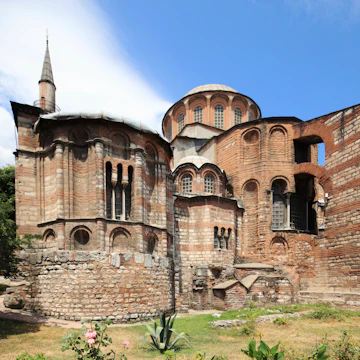
    Not long after the Conquest, Mehmet the Conqueror visited this 13th-century church to discuss theological questions with the Patriarch of the Orthodox Church. They talked in the southern side chapel known as the parecclesion, which is now open as a small museum. The chapel was added to the church in the 14th century and is decorated with gold mosaics.

    The most impressive of the mosaics are the Pantokrator and 12 Prophets adorning the dome, and the Deesis (Christ with the Virgin and St John the Baptist) in the apse.

    The building itself was extended several times over the centuries before being converted to a mosque in 1573. It was named Fethiye (Conquest) to commemorate…

    reviewed

  4. D

    Anadolu Kavağı Kalesi

    Anadolu Kavağı is where the Bosphorus excursions ferry finishes its journey. It's a pleasant spot in which to wander and have a seafood lunch at one of the touristy places on the square in front of the ferry terminal. Perched above the village are the ruins of Anadolu Kavağı Kalesi, a medieval castle that originally had eight massive towers in its walls. First built by the Byzantines, it was restored and reinforced by the Genoese in 1350, and later by the Ottomans.

    Two more fortresses built by Sultan Murat IV in the 17th century are north of here. It will take you 30 to 50 minutes to walk up to the fortress from the town. Alternatively, taxis wait near the fountain…

    reviewed

  5. E

    Miniaturk

    We can’t explain why this new museum has been such a hit with locals. Marketed as a miniature park that showcases ‘all times and locations of Anatolia at the same place at the same time’, it’s a bizarre tiny town stocked with models of Turkey’s great buildings – everything from the Celsus Library at Ephesus to Atatürk International Airport – set in manicured lawns dotted with fake rocks blasting a distorted recording of the national anthem. Children aren’t interested in the models but love the miniature train that traverses the paths and the playground equipment. It’s tacky and only really interesting as a demonstration of how greatly Turks revere their heritage, even…

    reviewed

  6. F

    Zinhan Kebap House at Storks

    Zinhan’s regal position next to the Galata Bridge means that every İstanbullu knows it. Unfortunately (for them, that is) most haven’t eaten here. If you buck this trend, you’ll enjoy an excellent meal on one of the most impressive roof terraces in the city – the views from here are simply sensational. Best is the fact that there are lots of tables in prime positions, meaning that you won’t have to book weeks ahead. You’ll sit on comfortable chairs at huge, well-spaced tables to enjoy tasty mezes such as hummus pastırmalı (hummus with pastırma ) and sophisticated kebap dishes such as ali nazik (spicy kebap on a bed of broiled eggplant salad with garlic…

    reviewed

  7. G

    Gül Mosque

    This mosque started life as the 11th-century Church of St Theodosia. Legend has it that one day before the Conquest, worshippers filled the church with rose petals in St Theodosia's honour and prayed for her intervention against the Ottomans. Their prayers went unanswered, but the invaders renamed the building Gül (Rose) Mosque after the petals they found on entering.

    But legends, however evocative, are rarely true. In reality, the building was used as a shipyard warehouse after the Conquest and wasn't converted into a mosque until the reign of Beyazıt II (r 1481–1512). The central, extremely high, dome is an Ottoman addition and the pretty minaret dates from the rule…

    reviewed

  8. H

    Monastery of Christ Pantokrator

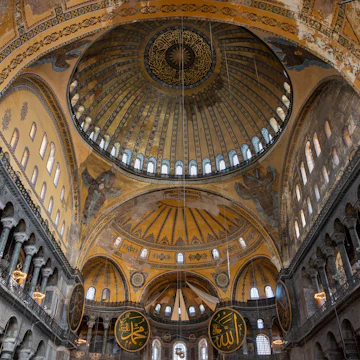
    This Byzantine monastery originally comprised two churches, a library, a cistern, a hospital and a chapel, but only one church and a cistern remain. The church was dedicated to Islam after the Conquest. One of the finest examples of Byzantine religious architecture in İstanbul, it is the second-largest surviving Byzantine religious structure in the city after Aya Sofya.

    The monastery was commissioned by Empress Eirene in 1118 (she features in a mosaic at Aya Sofya with her husband Emperor John II Comnenus), who wanted to give succour to 'poor, sick, and suffering souls'. Building works were completed after her death. The north and south churches, dedicated to Christ…

    reviewed

  9. I

    Develi

    Develi opened its first restaurant in Kuruluş in 1912, but its most popular outlet is located at Samatya, in the shadow of Theodosius’ Great Wall. The succulent kebaps here come in many guises and often reflect the season – the keme kebabi (truffle kebab) is only served for a few weeks each year, for instance. Prices here are extremely reasonable for the quality of food that is on offer and the service is exemplary – request a table on the roof terrace, which has great sea views. To get here from Sultanahmet, take a taxi.

    reviewed

  10. J

    Ahrida Synagogue

    Sephardic Jews, driven from Spain by the judges of the Inquisition, found refuge in the Ottoman Empire in the late 15th and early 16th centuries and many settled in this quarter of the city. Some of their descendants still live here and speak the native Spanish dialect of Ladino. Like all other religious ‘nations’ within the empire, the Jewish community was governed by its supreme religious leader, the Chief Rabbi, who oversaw its adherence to religious law and who was responsible to the sultan for the community’s good conduct. Today, you’ll need to contact the current Chief Rabbinate of Turkey at least 24 hours in advance if you wish to visit this synagogue,…

    reviewed

  11. Advertisement

  12. K

    Church of SS Peter & Paul

    Tucked away in one of the steep streets below Galata Tower you’ll find the small grey-and-white doorway to the courtyard of the Church of SS Peter and Paul. A Dominican church originally stood on this site, but the building you see today dates from the mid-19th century. It’s the work of the Fossati brothers who also designed the Dutch and Russian consulate buildings (both in Beyoğlu). Like many other Latin churches in the city, its courtyard design reflects the Ottoman ruling that Latin churches could not be built directly fronting onto a road or on top of a hill (the Church of St Mary Draperis on İstiklal Caddesi is another example of this). The church backs onto a…

    reviewed

  13. Tarabya

    Originally called Therapia for its healthy climate, the little cove of Tarabya on the European shore has been a favourite summer watering place for İstanbul's well-to-do for centuries, though contemporary developments such as the horrendous multi-storey Grand Hotel Tarabya right on the promontory have poisoned some of its charm. For an account of Therapia in its heyday, read Harold Nicolson's 1921 novel Sweet Waters.

    Nicholson, who is best known as Vita Sackville-West's husband, served as the third Secretary in the British Embassy in Constantinople in 1912 to '14, the years of the Balkan wars, and clearly knew Therapia well. In the novel, the main character Eirene, who…

    reviewed

  14. L

    Burç Ocakbaşı

    We promised a shopkeeper friend that listing this unassuming ocakbaşı in the Grand Bazaar wouldn’t lead to it being overrun by tourists. Now we’re worried that we may have been overly optimistic. He was concerned that the usta (master cook) at his favourite lunch spot – a previously well-guarded secret – would end up being too busy to pay proper attention to the juicy cuts of Gaziantep-style meats and delicious dolmas that he serves to the locals (the southeastern region of Gazientep is considered one of Turkey’s culinary hotspots). We sincerely hope this won’t be the case. You can pull up a stool or ask for your kebap to be a durum (wrapped in bread) to go.

    reviewed

  15. M

    Çiya Sofrası

    Known throughout the culinary world, Musa Dağdeviren's lokanta showcases dishes from the region surrounding the chef/owner's home city of Gaziantep. While standards in the kitchen seemed to have fallen in recent times, it's still a great place to try Turkish regional specialties. Its next-door kebapçı (kebaps TL15-35) sells a huge variety of tasty meat dishes. Neither sells alcohol.

    reviewed

  16. N

    Mikla

    Local celebrity chef Mehmet Gürs is a master of Mod Med, and the Turkish accents on the menu here make his food memorable. Extraordinary views, luxe surrounds and professional service complete the experience. Try the delicious Trakya Kıvırcık lamb dishes, consider a finale of the pistachio and helva ice cream and be sure to have a drink at the bar beforehand.

    reviewed

  17. O

    Şemsi Ahmed Paşa Mosque

    This charming mosque complex on the waterfront was designed by Mimar Sinan and built in 1580 for one of Süleyman the Magnificent's grand viziers, Şemsi Ahmed Paşa. It is modest in size and decoration, reflecting the fact that its benefactor (whose tomb has an opening into the mosque) only occupied the position of grand vizier for a couple of months.

    reviewed

  18. P

    Tekfur Sarayi

    The Byzantine palaces that once crowded Sultanahmet Square are all gone, so is the great Palace of Blachernae, which was also in this neighbourhood. Only the Tekfur Sarayı remains. Though the building is only a shell these days, it is remarkably preserved considering its great age.

    Built in the late 13th or early 14th century and located close to the end of Theodosius' wall, it was a large three-storeyed palace that may have been an annex of the Palace of Blachernae. Later uses were not so regal: after the Conquest it functioned in turn as a menagerie for exotic wild animals, a brothel and a poorhouse for destitute Jews. To see it, wander into the sportsground next door.…

    reviewed

  19. Q

    Sultan Selim Mosque

    The sultan to whom this mosque was dedicated (Süleyman the Magnificent's father, Selim I, known as 'the Grim') was by all accounts a nasty piece of work. He is famous for having killed his father, two of his brothers, six of his nephews and three of his own sons. Odd, then, that İstanbullus love his mosque so much.

    The reason becomes clear when a visit reveals the mosque's position on a terrace with spectacular views of the Golden Horn – picnic spots don't come much better than this.

    Topping one of İstanbul's six hills, the mosque is located in the fascinating Çarşamba district, one of the city's most conservative enclaves. Women in black chadors and men with long…

    reviewed

  20. R

    Dolmabahçe Harem-Cariyeler

    This pink building houses the harem and concubines' quarters, which are not as lavish as the Selamlık but still worth touring. Though relatively cramped and plain by Dolmabahçe standards (which isn't saying much), they have some bizarre features, including the huge ornate bed used by Sultan Abdül Aziz, who was known by his subjects as Güresçi (the Wrestler) due to his great size, considerable strength and predilection for the sport.

    The tour passes through a post-circumcision resting hall, a couple of hamams and the Blue Hall, the sultan's reception hall in the harem. Note the hand-painted ceilings throughout and the amazing wallpaper in Atatürk's bedroom.

    reviewed

  21. S

    Church of St Mary of the Mongols

    Consecrated in the 13th century and saved from conversion into a mosque by the personal decree of Mehmet the Conqueror, this is the only church in İstanbul to remain in Greek hands ever since Byzantine times. It was named after Princess Maria Paleologina, an illegitimate daughter of Emperor Michael VIII Paleologos.

    Maria was sent from Byzantium to marry Hulagu, the Great Khan of the Mongols, in 1265. By the time she arrived in his kingdom he had died (we guess it was a very long trip), so she was forced to marry his son Abagu instead. On Abagu's death she returned to Byzantium and retired to a convent attached to this church.

    The church is usually open on weekends. If the…

    reviewed

  22. Advertisement

  23. T

    Aqueduct of Valens

    Rising majestically over the traffic on busy Atatürk Bulvarı, this limestone aqueduct is one of the city's most distinctive landmarks. Commissioned by the Emperor Valens and completed in AD 378, it linked the third and fourth hills and carried water to a cistern at Beyazıt Meydanı before finally ending up at the Great Palace of Byzantium.

    The aqueduct was part of an elaborate system sourcing water from the north of the city and linking more than 250km of water channels, some 30 bridges and over 100 cisterns within the city walls, making it one of the greatest hydraulic engineering achievements of ancient times. After the Conquest it supplied the Eski (Old) and…

    reviewed

  24. U

    Azapkapi Sokollu Mehmet Paşa Camii

    This pretty mosque, designed by Sinan and built in 1577, is unusual in that it and the minaret are raised on a platform. Like Sinan's Rüstem Paşa Camii over the Golden Horn (also on a raised platform), it was commissioned by Sokollu Mehmet Paşa, a grand vizier of Süleyman the Magnificent. Today it's overshadowed by the approach to Atatürk Bridge and seems to almost shrink back from the traffic mayhem of Tersane Caddesi.

    Still, it's well worth a visit, particularly for its fine marble mihrab and mimber. Look for the attendant if the mosque is locked; a tip is expected. Don't miss the nearby rococo fountain (sebil) built by Saliha Valide Hatun, mother of Mahmut I.

    reviewed

  25. V

    Mavra

    Serdar-ı Ekrem Caddesi is one of the most interesting streets in Galata, full of ornate 19th-century apartment blocks, avant-garde boutiques and mellow cafes and bars. Mavra is the best of these, offering tasty cheap food and good tea and coffee amid decor that is thrift-shop chic. There's always good music on the turntable here, too.

    reviewed

  26. W

    Nuruosmaniye Mosque

    Facing Nuruosmaniye Kapısı, one of several gateways into the Grand Bazaar, this mosque was built in Ottoman-baroque style between 1748 and 1755. Construction was started by order of Mahmut I and finished by his successor Osman III.

    Though it was meant to exhibit the sultans' 'modern' taste, the baroque building has very strong echoes of Aya Sofya, specifically the broad, lofty dome, colonnaded mezzanine galleries, windows topped with Roman arches and the broad band of calligraphy around the interior. Despite its prominent position on the busy pedestrian route from Cağaloğlu Meydanı and Nuruosmaniye Caddesi to the bazaar, it is surprisingly peaceful and contemplative…

    reviewed

  27. X

    Şehzade Mehmet Mosque

    Süleyman the Magnificent built this mosque between 1543 and 1548 as a memorial to his son, Mehmet, who died of smallpox in 1543 at the age of 22. It was the first important mosque to be designed by Mimar Sinan. Although not one of his best works, it has a lovely setting, two beautiful minarets and attractive exterior decoration.

    Among the many important people buried in tile-encrusted tombs here are Prince Mehmet, his brothers and sisters, and Süleyman's grand viziers, Rüstem Paşa and İbrahim Paşa.

    reviewed