go to content go to search box go to global site navigation

The Netherlands

Sights in The Netherlands

  1. A

    Frans Hals Museum

    The Frans Hals Museum is a must for anyone interested in the Dutch masters. Kept in an almshouse where Hals spent his final, impoverished years, the collection focuses on the 17th-century Haarlem School, which is regarded as the pinnacle of Dutch mannerist art. Eight group portraits by Hals detailing the companies of the Civic Guard are the museum’s pride and joy, revealing the painter’s exceptional attention to mood and psychological tone. Don’t miss his two paintings known collectively as the Regents & the Regentesses of the Old Men’s Almshouse (1664). Among other treasures are ceiling-high illustrations of the human anatomy with biblical and mythological…

    reviewed

  2. Keukenhof Gardens

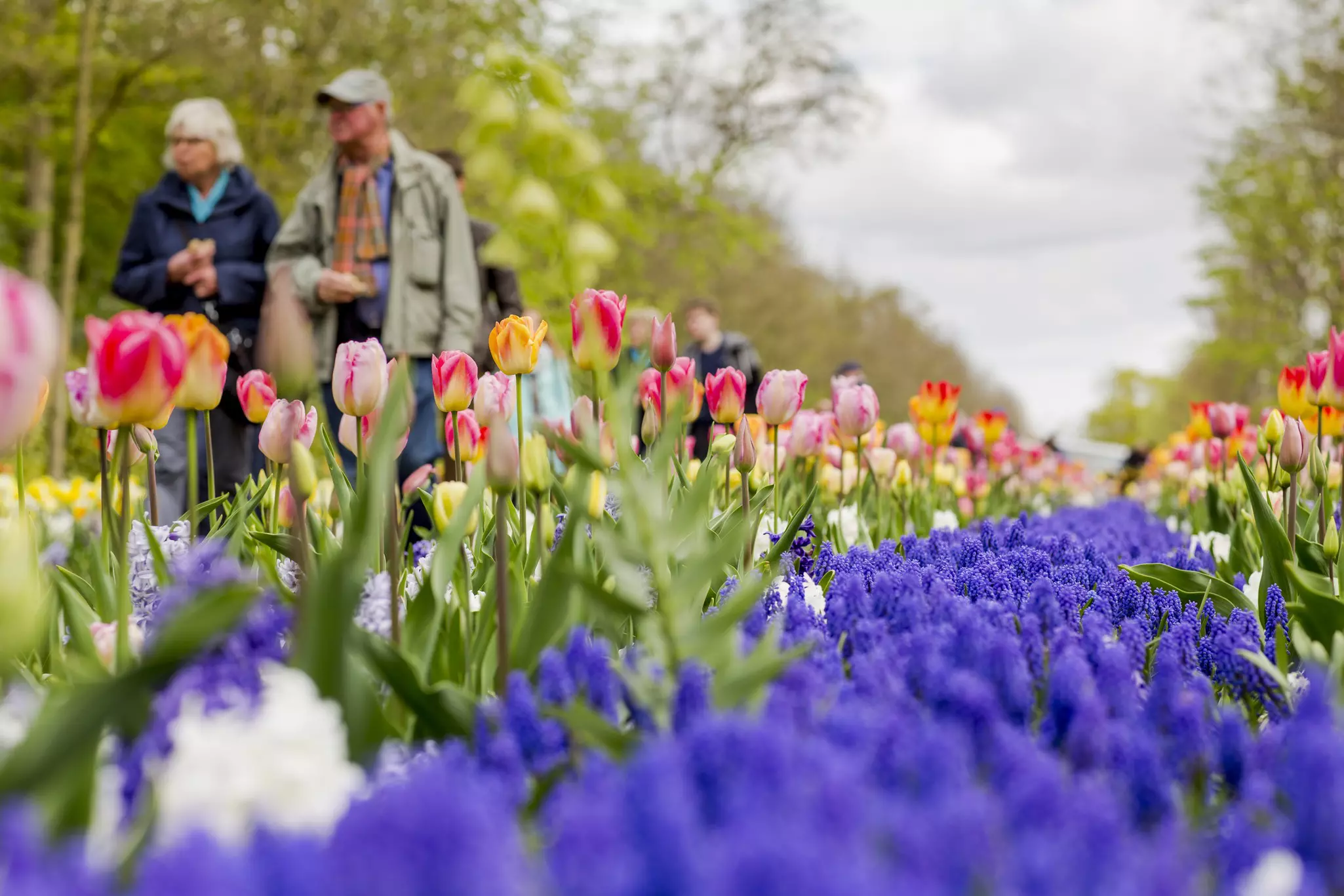
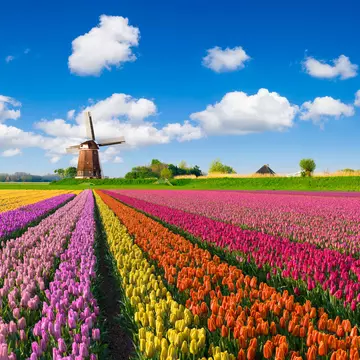
    The Keukenhof is the world's largest bulb garden. It is seen by 800,000 people each year, but its beauty is something of an enigma, unfurling for just two months each year. Nature's talents are combined with Dutch precision to create a garden where millions of tulips, daffodils and hyacinths bloom every year, perfectly in place.

    The gardens stretch on and on and there are greenhouses full of more delicate varieties of flowers besides the ephemeral tulips. You'll forgive the presence of thousands of other tourists - little can detract from the rainbow of natural beauty. Wandering about can easily take half a day. From the edges of the gardens, you can see the stark beauty…

    reviewed

  3. B

    Oosterpark

    Oosterpark was laid out in 1891 to accommodate the nouveau riche diamond traders who found their fortunes in the South African mines, and it still has an elegant, rambling feel. On the south side, look for two monuments: one commemorates the abolition of slavery in the Netherlands in 1819; the other, De Schreeuw (the Scream), honours free speech and, more specifically, filmmaker Theo van Gogh, who was murdered at the southeast corner of the park in 2004. Another (living) monument to Van Gogh is the Spreeksteen, an open-forum ‘speakers’ corner’ established on the park’s east side in 2005 – scheduled talks (almost always in Dutch) are held on Sundays at 1.30pm.

    reviewed

  4. Hofjes

    Haarlem is a peaceful city at the rowdiest of times, but even such a serene place needs its fair share of oases. Collectively known as Hofjes - leafy courtyards enclosed by rows of sweet little homes - these green spaces initially served as monastery gardens in the Middle Ages.

    Eventually they took on broader roles for hospitals and inns, or as refuges for orphans, widows and the elderly. These private squares also give clues about Dutch social concerns and the origins of the modern welfare state. Most hofjes date from the 15th to the 18th centuries and are open to viewing on weekends only, but you can usually take a discreet peek any time. Ask the tourist office for its…

    reviewed

  5. C

    Amstelpark

    South of the ringway, in the suburb of Buitenveldert, lies the vast Amstelpark, the grounds of an international flower show in 1972. The park is a paradise for kids, with a petting zoo, minigolf, pony rides and a playground. In summer a miniature train chugs its way around the park. Other attractions include rose and rhododendron gardens, and art exhibitions are held in the Glazen Huis (Glass House), the Orangerie and the Papillon Gallery. Just outside the south edge of the park you’ll see a windmill called the Riekermolen. In a field southwest of the mill you’ll find a statue of a sitting Rembrandt, who made sketches here along the riverbank. To get there, take the…

    reviewed

  6. D

    Westerkerk

    The Westerkerk is the main gathering place for Amsterdam’s Dutch Reformed Church community. Rembrandt, who died bankrupt in 1669 at nearby Rozengracht, is buried somewhere in the church – perhaps near the grave of his son Titus, where there’s a commemorative plaque. A highlight is the bell tower, Amsterdam’s highest church tower at 85m. It’s topped by the imperial crown that Habsburg emperor Maximilian I bestowed to the city’s coat of arms in 1489. The climb (186 steps) during the 60-minute tour is steep and claustrophobic, but there are periodic landings where you can rest while the guide describes the bells and other workings of the massive carillon.

    reviewed

  7. E

    Sarphatipark

    This diverse little park was named after Samuel Sarphati (1813–66), a Jewish doctor, businessman and urban innovator. The grounds are a mix of ponds, gently rolling meadows and wooded fringes. In the centre you’ll see the Sarphati memorial (1886), a bombastic temple with a fountain, gargoyles and a bust of the great man himself. Water is pumped to the fountain via an underground pipe from a canal hundreds of metres away. Sarphati’s diverse projects (waste- disposal service, slaughterhouse, factory for cheap bread, trades schools, the Amstel Hotel and a mortgage bank) exasperated the dour city council, though many of these ventures survive to this day.

    reviewed

  8. Maritime & Beachcombers Museum

    The Maritime & Beachcombers Museum is a real winner. Its extraordinary variety of junk recovered from sunken ships and the shore is mind-boggling – and both tragic and comic . In the outdoor section there are demonstrations by rope-makers, fish-smokers and blacksmiths, while the indoor displays cover everything from underwater archaeology to windmill technology. Reede van Texel, which the museum translates accurately as Texel Roads, has nothing to do with asphalt but rather is a vast and amazingly detailed model of the shipping lanes and ports as they existed in the 17th century. Two hours will float away here just like a lost bottle at sea.

    reviewed

  9. F

    Oude Kerk

    It is the city’s oldest surviving building (from 1306) built to honour the city’s patron saint, St Nicholas (the inspiration for red-suited Saint Nick). In one of Europe’s great moral contradictions, the tower, arguably Amsterdam’s most beautiful, commands a magnificent view – one that includes the Red Light District. But maybe the view’s no contradiction at all: some of the 15th-century carvings on the choir stalls are downright naughty. There’s also a stunning Müller organ, gilded oak vaults and stained-glass windows from 1555. As in the Nieuwe Kerk, many famous Amsterdammers are buried under worn tombstones, including Rembrandt’s first wife, Saskia van…

    reviewed

  10. G

    Oostindisch Huis

    This is the former office of the mighty VOC, the Dutch East India Company (which was the very first multinational). You could easily walk past it, as there’s no sign or plaque to identify it. This sweeping complex, built between 1551 and 1643, was attributed in part to Hendrick de Keyser, the busy city architect. On the Kloveniersburgwal side you can see that the gables defy convention by tilting backwards, making them seem much larger. Pass through the carved Tuscan entrance vault to reach the grand inner courtyard, and on the opposite side you’ll spy a small VOC emblem above the door. The mighty VOC sailed into rough waters and was dissolved in 1798.

    reviewed

  11. Advertisement

  12. Sint Pietersberg Tunnels

    Much of Maastricht is riddled with defensive tunnels dug into the soft sandstone over the centuries. The best place to see old tunnels is Sint Pietersberg, a Roman fort 2km south of Helpoort. This is a really beautiful area, pastoral and peaceful - the fort is an arresting sight peeking over the charming hillside - and it's a very relaxing walk from town. If you must, take bus 29, which goes past the fort from Vrijthof.

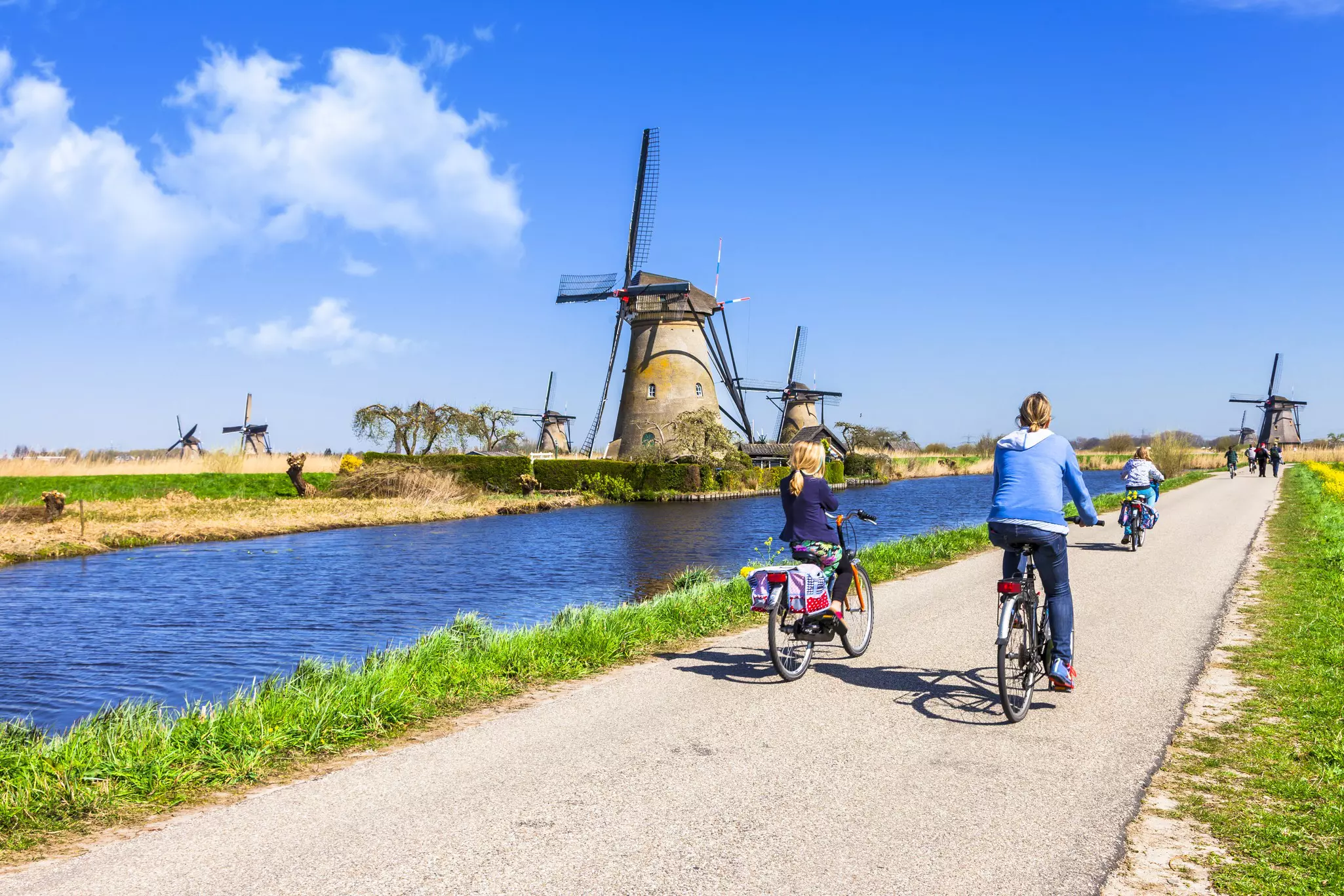
    The Romans built the Northern Corridor System Tunnels throughout the hills over a period of 2000 years; at one stage, the tunnels extended under the Netherlands-Belgium border. Thirteen species of bats have been found living below the surface.

    reviewed

  13. H

    Amstelkerk

    The unique pinewood Amstelkerk was erected in 1668 as a noodkerk (makeshift church) under the direction of the city architect, Daniël Stalpaert. The idea was that the congregation would have somewhere to meet while a permanent church arose next to it. Plans for a stone church were abandoned in the 1840s, and the Amstelkerk’s square interior was updated with neo-Gothic alterations, including a pipe organ. The building now houses the offices of a local city restoration group, and is a popular concert venue. The seats under the shady plane trees at the adjacent bar-restaurant NEL are a wonderful place to nurse a drink.

    reviewed

  14. I

    Oudegracht

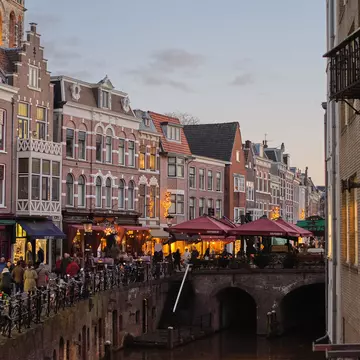
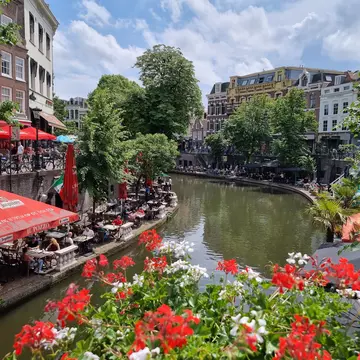
    Scene of many a wedding photo, the photogenic bend in the Oudegracht is illuminated by lamplight in the evening; hundreds sit outside cafés here by day. South of this point is where the canal is at its most evocative, and the streets are quieter, stretching 1km to the southern tip of the old town.

    A section of the Singel called the Stadsbuitengracht has its own turn as a lovely canal on the eastern side of the old quarter, where it follows many parks built on the site of the old fortifications. Stroll down beside this canal and back north through Nieuwegracht, a peaceful stretch of plush canal houses and towering, grand old elms.

    reviewed

  15. J

    Tropenmuseum

    The Tropenmuseum is the star attraction. It houses a three-storey collection of colonial artefacts, presented with insight, imagination and a fair amount of multimedia. You can stroll through an African market or a Central Asian yurt (traditional felt hut), see ritual masks and spiky spears, and listen to recordings of exotic musical instruments. There’s a children’s section, a great gift shop and two cafes serving global foods. It’s a grand place to spend a lazy Monday, when many other museums are closed. The attached Tropeninstituut Theater screens films and hosts music, dance and plays by visiting international artists.

    reviewed

  16. K

    EnergeticA

    Housed in a former power station, this quirky museum has a bewildering array of whizz-bang equipment that conjures up visions of mad scientists. Galleries are named for key pioneers (Marconi, Minckelers), and the soaring main hall is filled with steamship engines, gas streetlamps, antique lifts (elevators) from Vienna and Paris and high-voltage generators that send lightning between enormous V-shaped prongs.

    There's also an early refrigerator that resembles a brass cement-mixer. Its guides are volunteers, some of them retired engineers, and they'll enthusiastically escort you through centuries of technological history.

    reviewed

  17. L

    Olympic Stadium

    The grand Olympic Stadium was designed by Jan Wils, a protégé of famous architect HP Berlage, and is functionalist in style. The arena was built for the 1928 summer Olympic Games, and has a soaring tower from which the Olympic flame burned for the first time during competition. The stadium is classified as a national monument; today it hosts sporting events and concerts. Much of the housing in southwest Amsterdam originates from the time of the 1928 games. Many of the streets and squares in the area bear Greek names like Olympiaplein and Herculesstraat. Trams 16 and 24 go from Centraal Station direct to the stadium.

    reviewed

  18. M

    Golden Bend

    The Golden Bend is about the most prestigious stretch of real estate in Amsterdam, a monument to the Golden Age, when precious goods swelled in cellars of homes already stuffed with valuables. The earliest mansions date from the 1660s, when the Canal Belt was expanded south. Thanks to some lobbying at city hall, the gables here were twice as wide as the standard Amsterdam model, and the rear gardens were deeper. The richest Amsterdammers lived, loved and ruled their affairs from here. Apart from the museum Kattenkabinet, the homes are opened to the public only on Open Monument Day (Open Monumentendag).

    reviewed

  19. N

    Museum Boijmans van Beuningen

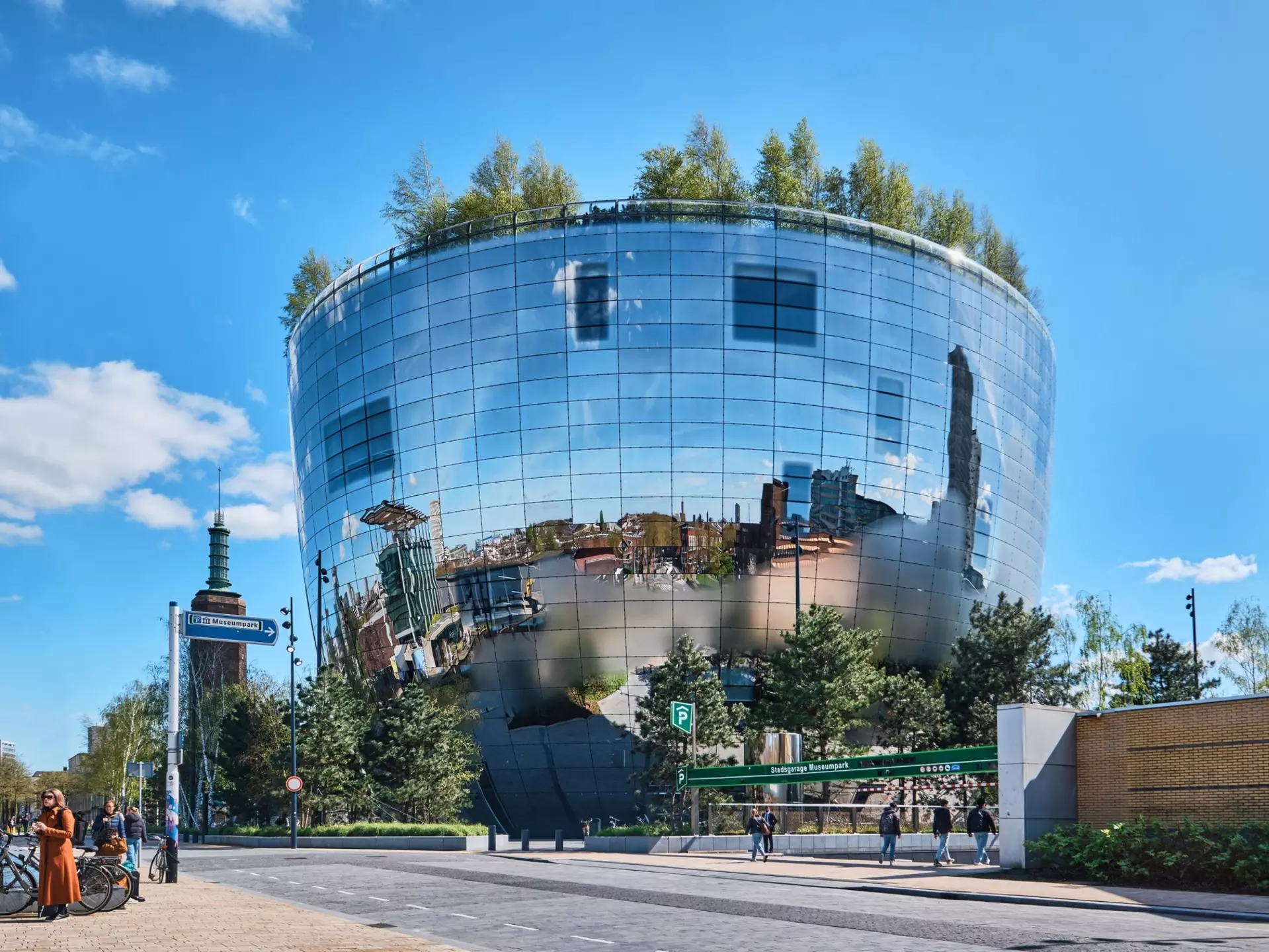
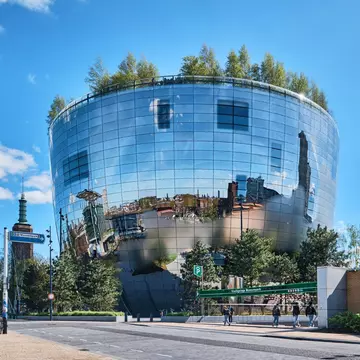
    Among Europe’s very finest museums, the Museum Boijmans van Beuningen has a permanent collection spanning all eras of Dutch and European art, including superb old masters. Among the highlights are The Marriage at Cana by Hieronymus Bosch, the Three Maries at the Open Sepulchre by Van Eyck, the minutely detailed Tower of Babel by Pieter Brueghel the Elder, and Portrait of Titus and Man in a Red Cap by Rembrandt. Renaissance Italy is well represented; look for The Wise and Foolish Virgins by Tintoretto and Satyr and Nymph by Titian.

    reviewed

  20. O

    Scheepvaarthuis

    The imposing Scheepvaarthuis was built in 1916 for a consortium of shipping companies. Utilising the street layout to resemble a ship’s bow, this remarkable building was the first true example of Amsterdam School style. The prowlike front is crowned by a statue of Neptune, his wife and four female figures that represent the points of the compass. The window frames, entrances and interior walls display nautical imagery such as anchors and sailing ships. The building is now refurbished as a luxury hotel. Step inside to admire the intricate wrought ironwork and stained glass of the majestic central stairwell.

    reviewed

  21. P

    Paleis Van Justitie

    This authoritative (Amsterdam's Court of Appeal) pile began life in 1666 as an orphanage, designed for 800 occupants, but by the early 19th century more than half the city's 4300 orphans were crammed in here. A royal decree finally relocated them to other towns, amid cries that children were being stolen. The building's current scowl, in sober neoclassical, is from an 1829 renovation after the orphanage was closed.

    You can wander inside, but as a rule you won't get beyond reception unless you have, er, official business. The court is due to move into a fancy new office in Westerdokeiland in 2010.

    reviewed

  22. Advertisement

  23. Rietveld-Schröderhuis

    The Rietveld-Schröderhuis is a Unesco-protected landmark built in 1924 by Utrecht architect Gerrit Rietveld. Inside and out, the entire structure conforms to the principles of De Stijl architecture – as form really does follow function here. Only six colours are used: red, blue, yellow, white, grey and black. Visits must be booked in advance through the website, by phone or through the Centraal Museum. Visits here are included in the museum admission, but the guided tour (adult/child €16/11, which includes a shuttle from Centraal Museum) is best.

    reviewed

  24. Q

    Montelbaanstoren

    The lower part of this striking tower was built to strengthen Amsterdam’s eastern defences in 1512. Positioned on the old city wall, it gave sentries a good view of suspicious characters on the wharves along Oude Schans. The octagonal base and open wooden steeple were added in 1606 to dampen the bells on the clock after the neighbours complained. Just a few years later the tower began to list under the weight, but residents attached cables and pulled it upright. The elegant tower has two sets of bellworks, four clock faces and a nautical vane like the one on the top of the Oude Kerk.

    reviewed

  25. R

    Mozes en Aäronkerk

    This neoclassical Catholic church, built in 1841 on the northeastern corner of Waterlooplein, shows that this wasn’t exclusively a Jewish area. It replaced the ‘clandestine’ Catholic church that occupied two houses named Mozes and Aäron in what is now the rear of the church along Jodenbreestraat (note the wall tablet of Moses above the street corner). Despite its impressive organ, it is no longer used as a church, but rather by social, cultural and educational organisations, which often hold exhibitions. Otherwise, the church is generally closed to the public.

    reviewed

  26. S

    Museum Willet-Holthuysen

    This sumptuous residence, now part of the Amsterdams Historisch Museum, is named after the widow who bequeathed the property to the city in the late 19th century. Highlights include paintings by Jacob de Wit, the place de milieu (centrepiece) that was part of the family’s 275-piece Meissen table service, and the intimate French-style garden with sundial – you can also peek at the garden through the iron fence at the Amstelstraat end. Be sure to borrow the notebook from the front desk, with details that make the house come alive (how meat was roasted and windows were cleaned).

    reviewed

  27. T

    Frankendael

    As early as the 18th century, wealthy Amsterdammers would spend their summers in plush country retreats south of Plantage on a tract of drained land called Watergraafsmeer. The last survivor of this era is Frankendael, an elegant Louis XIV-style mansion that sparkles from its recent restoration. The house backs onto a formal garden that’s open to the public, but be sure to view the forecourt with its gushing fountain and statues of Bacchus and Ceres. The property is swathed in a larger landscape garden with walking paths, decorative bridges and the remains of follies.

    reviewed