
Advertisement
Amsterdam
Golden Age canals lined by tilting gabled buildings are the backdrop for Amsterdam's treasure-packed museums, vintage-filled shops and hyper-creative drinking, dining and design scenes.

Dutch_Photos / Shutterstock
Latest Stories
- Catherine Le Nevez|Apr 17, 2026Amsterdam's 8 best neighborhoods: find your perfect base
- Barbara Woolsey|Mar 23, 202619 things to know before traveling to Amsterdam
- Sasha Brady|Mar 20, 2026How to have a perfect weekend in Amsterdam
- Catherine Le Nevez|Jan 15, 2026How to see tulips around Amsterdam in 2026
Book


Trusted Partner
Stay connected in Amsterdam
Holafly eSIM provides unlimited mobile data with no hidden fees, giving you peace of mind wherever you travel. Stay connected even after your plan ends with Always On. Use code LONELYPLANET for an exclusive discount.
Take your Netherlands trip with Lonely Planet Journeys
Time to book that trip to The Netherlands
Lonely Planet Journeys takes you there with fully customizable trips to top destinations – all crafted by our local experts.


Top places to visit in Amsterdam
Discover the best attractions in Amsterdam from must-see sights to unexpected hidden gems.
-
 Attraction in AmsterdamVondelpark
 -
 Attraction in AmsterdamVan Gogh Museum
 -
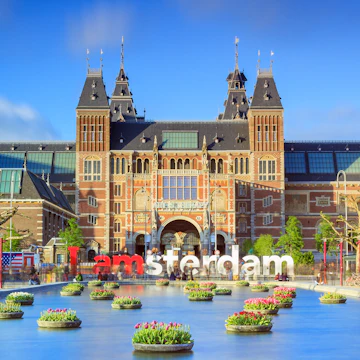 Attraction in AmsterdamRijksmuseum
 -
 Attraction in AmsterdamArtis Royal Zoo
 -
 Attraction in AmsterdamStedelijk Museum
 -
- Attraction in AmsterdamJoods Historisch Museum
- Attraction in Amsterdam NoordNieuwendammerdijk
Advertisement
Travel Guides
Amsterdam travel tips from Lonely Planet experts
Find practical guidance from our team of contributors around the world who bring their decades of first-hand travel experience to your next trip.
Best Things to Do
Cutting-edge design, canal cruises, exciting nightlife, lush parks and fascinating history: here are Amsterdam's best experiences.
Read full article
Best Time to Visit
Amsterdam is great all year round but the crowds...not so much. Here's how to pick the perfect time for your budget and needs.
Read full article
Things to Know
Get key tips on what to know about Amsterdam before your visit, from getting around to blending in with the locals.
Read full article
Transportation
Whether by tram, on foot, in a car or (of course) atop a bicycle, Amsterdam is a breeze to get around. Here’s all you need to know about transport options.
Read full article
Best Neighborhoods
Our guide to Amsterdam's neighborhoods will help you find the perfect place to stay.
Read full article
Day Trips
Craving more canals? Ardent for architecture? Looking for family fun? You’re in luck, with this list of six easy day trips to take from Amsterdam.
Read full article
Money and Costs
While Amsterdam may be one of Europe's most expensive destinations, it's also one of its most beloved. Stick to a budget and don't miss a thing.
Read full article
Traveling with Kids
With its beautiful urban parks, child-focused museums and stroller-friendly trams, Amsterdam is a surprisingly great option for a family holiday.
Read full article
5 Shops
Amsterdam's creative and free-spirited energy is evident in its selection of independent shops.
Read full article
Advertisement
Get a book. Get inspired. Get exploring.

in partnership with getyourguide
Book popular activities in Amsterdam
Amsterdam and beyond
-
 destinationMedieval Centre & Red Light District
 -
 destinationAmsterdam Noord
 -
 destinationDe Pijp
Advertisement