May 23, 202615 min read
19 of the best beaches in South AfricaSponsored by
Nov 17, 2025
15 MIN READ

Writer
Writer
It's no secret that South Africa is one of the world’s top safari destinations for spotting the Big 5.
You could come here only to go on safari and think South Africa was the best country ever. But wait – there’s so much more to this fascinating realm at Africa’s southernmost tip.
South Africa’s ethnic and cultural diversity influences its cuisine and art in exciting, unexpected ways. Its scenery is stunning, from wave-crashed shorelines and wildflower-carpeted deserts to wildlife-filled bushveld and tropical forests. The country has cosmopolitan cities, charming wine towns and important cultural traditions. Apartheid’s struggles are faced head-on at several important sights.
You can hike, surf, kayak, fish, whale watch, horseback ride, dive with sharks and crocodiles and stargaze under some of the planet’s darkest skies. The only problem is how to even begin planning a visit to this immensely blessed, multifaceted land. Start planning your trip with this list of the top things to do in South Africa.
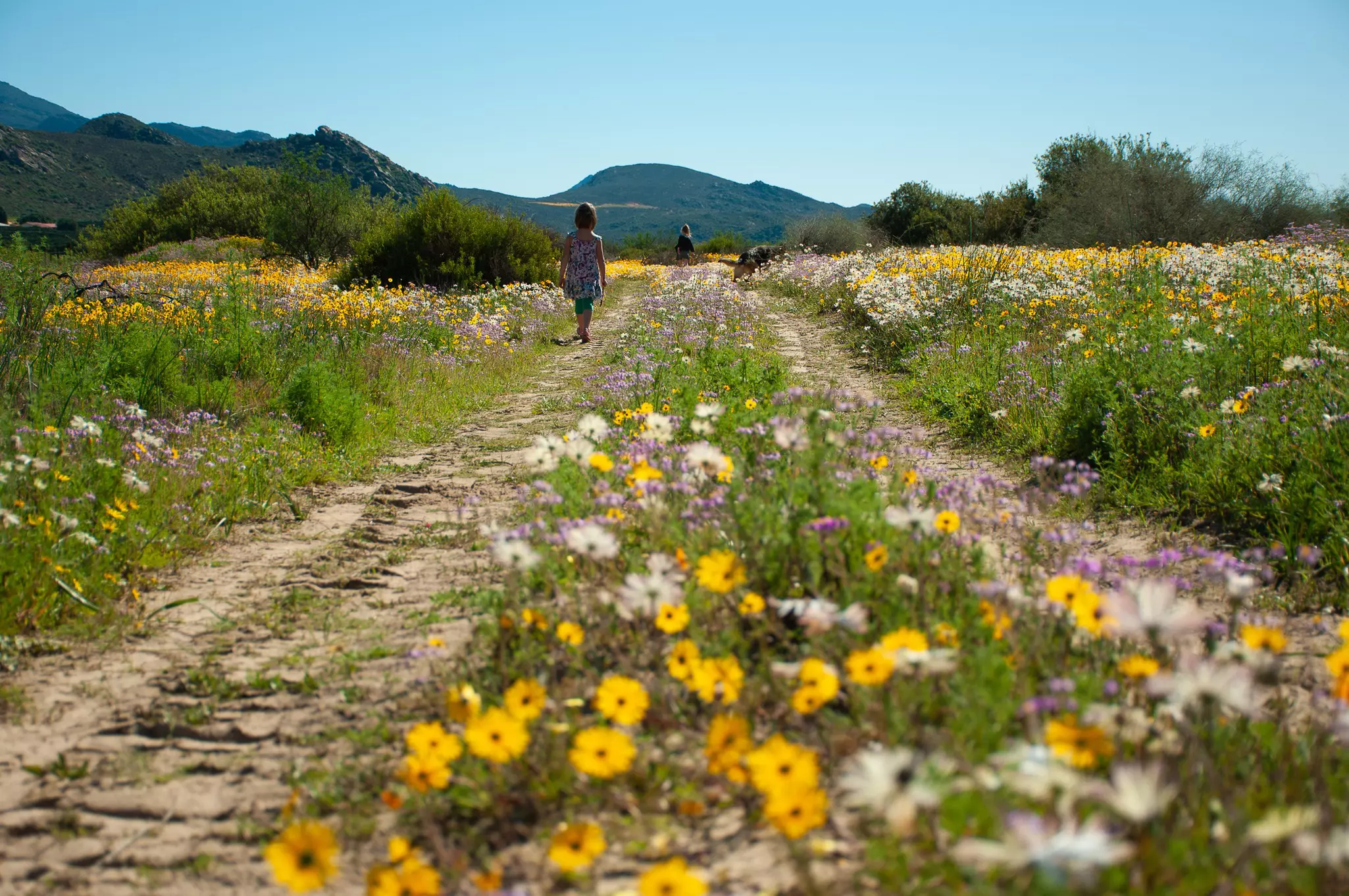
Most of the year, the remote region known as Little Namaqualand is parched, a seemingly sunbaked wasteland in South Africa’s Northern Cape. But for a short period in July, as winter rains begin to fall, the area bursts to life with billions of blooms. Endless carpets of flowers in every hue cover its diverse topography, from desert plains to fertile valleys to towering mountains.
But what truly sets this spectacle apart is the sheer variety of flowers; more than 3500 species grow here. More than half rare or endemic, meaning they live nowhere else on Earth. The Arctotis, commonly called the African daisy, is the standout. Gazania glows with hot yellow and orange petals, and Carpobrotus, commonly known as pigface, creeps along the ground.
The best places to take in the ephemeral flowery show are Richtersveld, with a backdrop of yawning canyons and jagged mountains; Skilpad Wildflower Preserve west of Kamieskroon, part of the bigger Namaqua National Park and a fabulous spot to gaze at the famed Nama daisies; and the 14,973-hectare (37,000-acre) Goegap Nature Reserve outside Springbok, with some 600 indigenous plant species.
Planning tip: Accommodations in the park (primarily campsites and chalets) are in high demand during this short blooming season. Either book reservations as soon as they open (usually 11 months in advance), or find places to stay in the nearby towns of Kamieskroon and Garies.
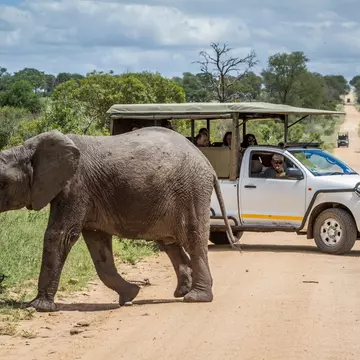
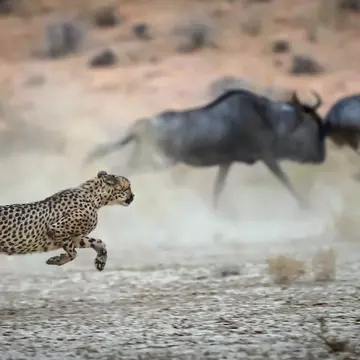
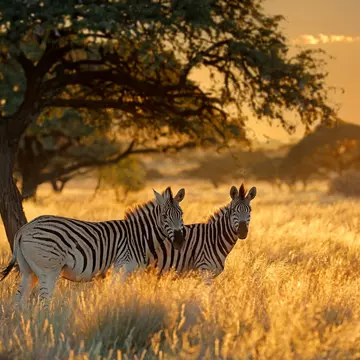
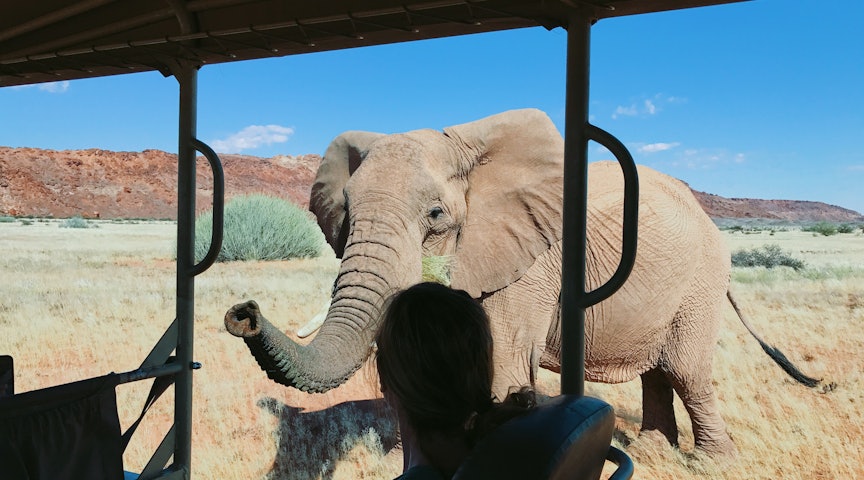
As the early morning sun rises over the bushveld, a herd of elephants thunders past, a leopard enjoys a snack up in a tree, and a lion stalks its prey. These are the joys of going on safari in South Africa, where you have an excellent chance of seeing the Big 5 (lion, leopard, rhino, buffalo and elephant) in national parks and wildlife preserves across the country.
Kruger National Park is the prime game park, with 19,485 sq km (7523 sq mi) of bushveld, tropical forests, savannah and mountains teeming with more than 140 mammal species. Addo Elephant National Park in the Eastern Cape is the world’s first “Big 7” Conservation Area, home to the traditional Big 5, plus the marine additions of the great white shark and southern right whale.
Hluhluwe-iMfolozi Park in KwaZulu-Natal is South Africa’s oldest game reserve. It was founded to conserve and repopulate Africa’s rhinos, so this park is hands down the best place in South Africa to see these one-horned, short-legged megafauna.
In all, South Africa has 19 national parks and countless private game reserves, each offering an unforgettable wildlife experience where no two days are ever the same.
Planning tip: Plan your trip from June to September for optimal wildlife viewing. Animals tend to gather at watering holes during these drier, cooler months.
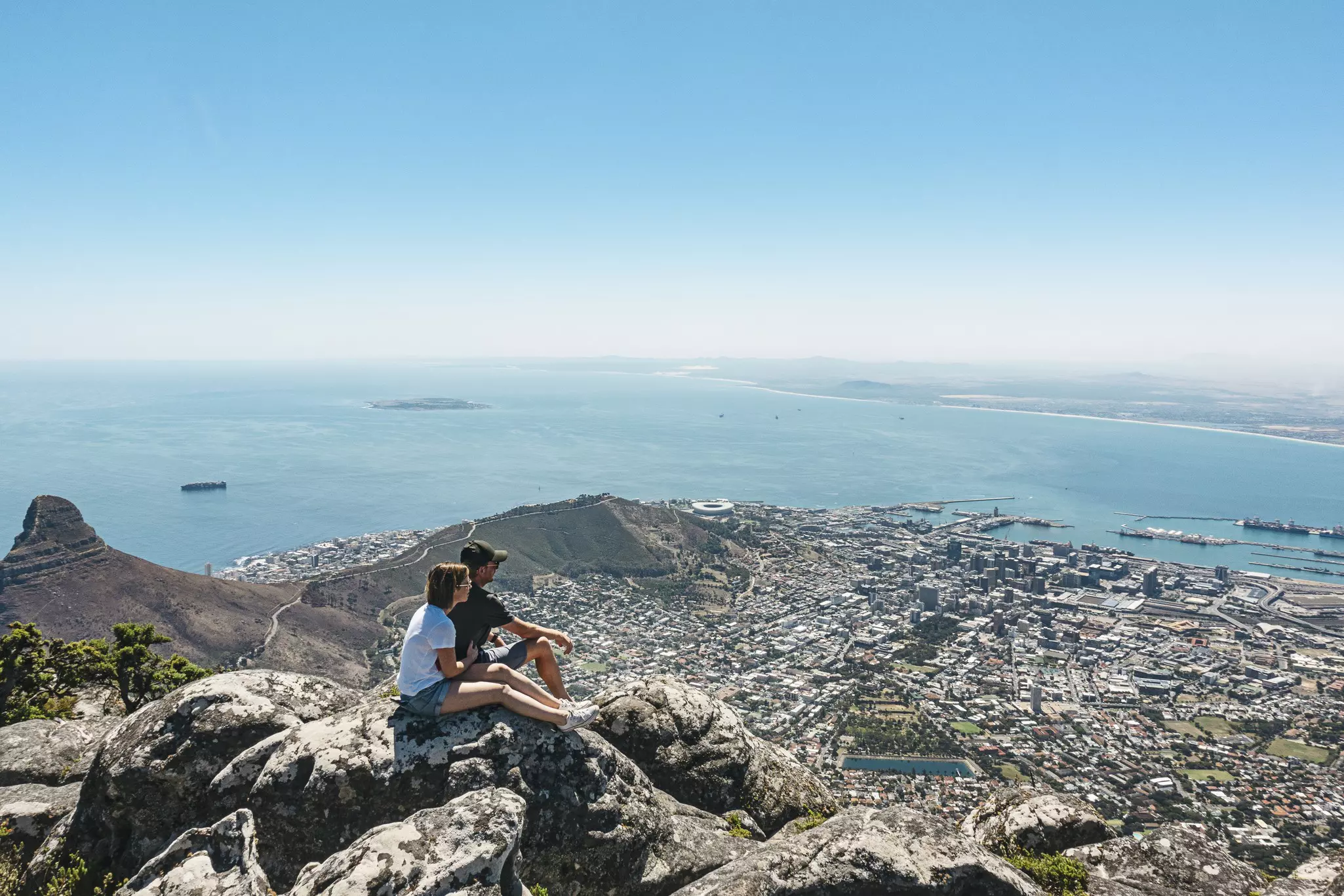
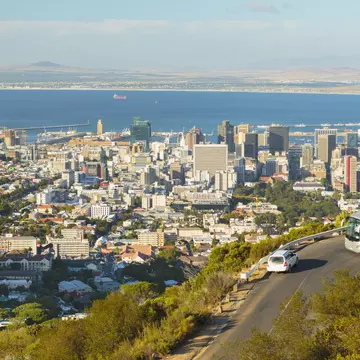
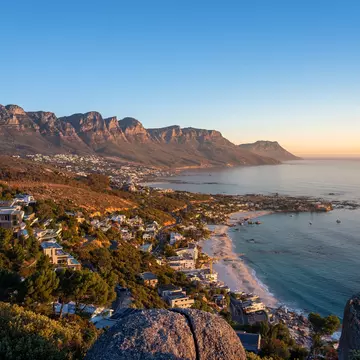
The flat-topped Table Mountain stands watch over Cape Town, a 1085m (3560ft) natural landmark of sandstone and granite adored for its breathtaking views from the top: glittering Table Bay, historic Robben Island and all of Cape Town’s City Bowl sprawl at your feet.
Dozens of trails wind up Table Mountain’s flanks, opening up valleys of fynbos (the local floral kingdom), shady forests and waterfalls. The most popular (and heavily trafficked) is Platteklip Gorge Trail, a 2.8km (1.8 miles) uphill push that is nature’s answer to the StairMaster, offering view after breathtaking view the higher you go.
Avoid the crowds with 1.5km (0.9-mile) Kloof Corner, a dramatic and somewhat hair-raising trek that rewards with fabulous views of Lion’s Head, the 12 Apostles and the Cape Town City Bowl. The difficult 2.5km (1.5 miles) India Venster Trail follows the route beneath the aerial cable car, up the mountain’s frontal face. Of course, you can just take the cable car, a quick five-minute ride to the top.
Planning tip: Many trails in South Africa limit how many hikers can be on them simultaneously, so book your spot ahead of time and hike with a group for safety. (Some longer trails actually require that you're not alone.)
South Africa has made steps in atoning for its apartheid past through education at various sites. Johannesburg’s Apartheid Museum is a sobering but enlightening place to start. Exhibits take you through the history of apartheid using videos, documents and photographs.
At the Hector Pieterson Memorial and Museum in Soweto, spoken testimonies, videos and photographs detail the tragic story of a 12-year-old student who became the first victim of police fire in 1976 when students protested the imposition of Afrikaans as the language of instruction in schools. Nearby, Nelson Mandela lived in a humble, four-room house, which today is the Mandela House Museum. It showcases Mandela's family photos and personal belongings and provides insight into the beloved anti-apartheid leader who, after 27 years in prison, became South Africa’s first democratically elected president.
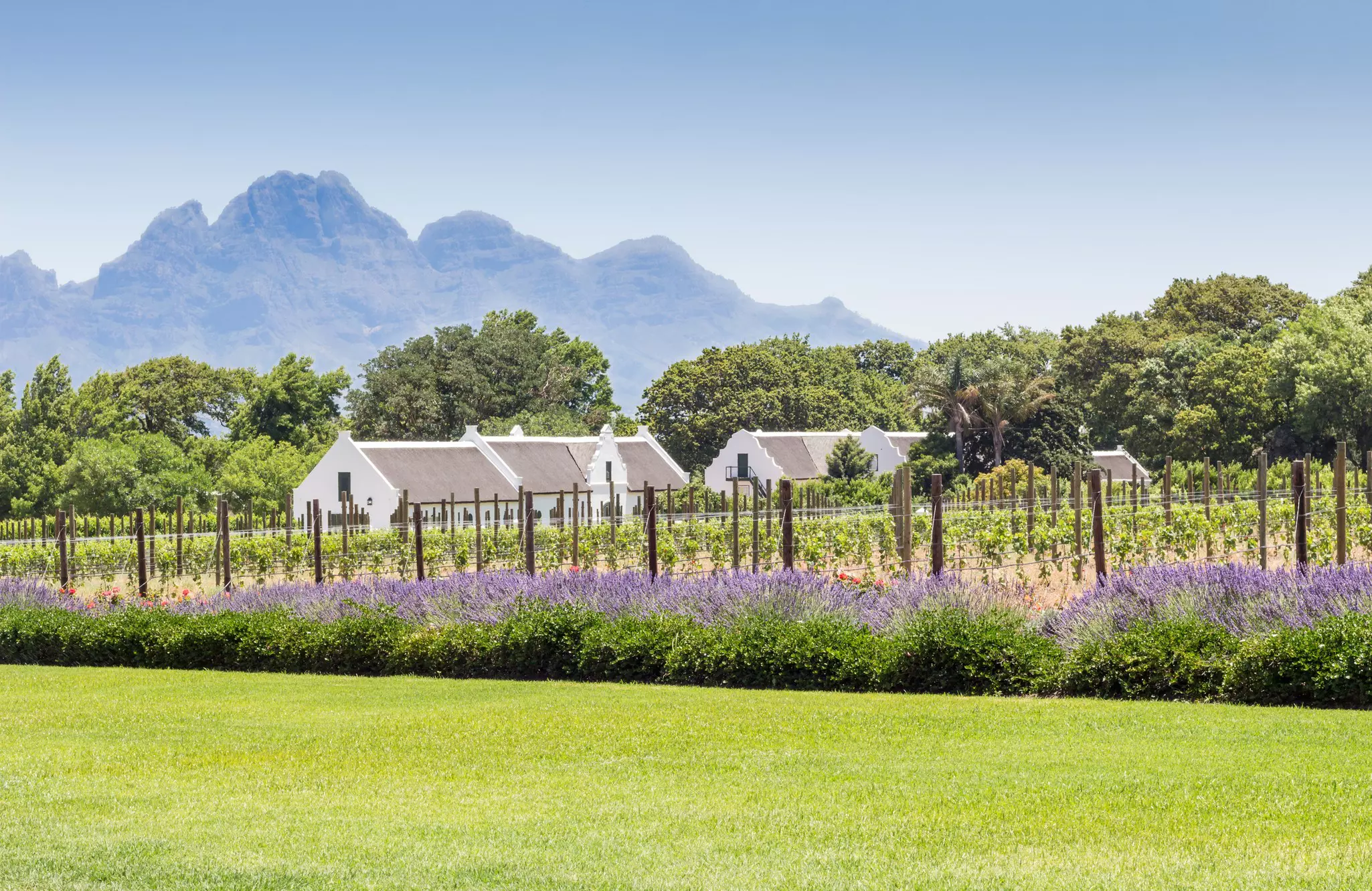
When the Dutch colonized South Africa some 350 years ago, the Dutch East India Company established a provisioning station for its ships. Since these ships needed wine, the company partnered with the French, and soon vineyards draped the valleys in the fertile region now known as the Cape Winelands. Over the years, the art of wine-making has been fine-tuned, including the perfection of Pinotage, South Africa’s signature red wine that’s a rustic cross between Pinot Noir and Cinsault.
Today, in independent South Africa, the Cape Winelands reigns as one of the world’s finest wine regions. Within it is a patchwork of vineyards and hundreds of wine estates, farm markets, little museums, gastronomic restaurants and three main wine towns dating from the 17th century: Franschhoek, settled by French Huguenots; Stellenbosch, filled with Cape Dutch architecture (make a stop at Vergelegen); and Paarl, colonized by 23 families from Stellenbosch. Excellent places to sample Pinotage include Delheim, on the slopes of Simonsberg Mountain outside Stellenbosch, and Lanzerac, established in 1692 near Stellenbosch with stunning views of mountains, vineyards and oak-shaded gardens.
Detour: If you need a break from all the wine tastings, take a drive (or bike ride) outside Paarl on Bainskloof Pass. This scenic mountain pass features almost 30km (19 miles) of unforgettable vistas and a caravan park at its halfway point.
Sea breezes, crashing waterfalls, emerald valleys and footprint-free, cliff-fringed beaches define the untrammeled realm of the Wild Coast, a fittingly named 250km-long (155-mile) sweep of coastline fronting the Indian Ocean in the Eastern Cape. This is the place to get away from it all, soaking in the solitude of pristine nature, where you’ll see more cows than people. Be warned: the roads are full of potholes, and gas stations are far and few between, but that’s what keeps the less intrepid away.
You can hike, swim, ride horseback, canoe, surf or just catch the rays on your own private beach. The hike to Hole in the Wall along the coast is a three-hour foray across undulating hills and through local villages, ending at the fabled rock arch with its swimming lagoon. The Xhosa River is a canoeing paradise with sparkling clear waters and bright Xhosa huts along its banks. Mirror-smooth Jbay Lagoon draws SUPers, kayakers and canoers. The Xhosa people have lived in this enchanted land for centuries, and you’ll see their turquoise rondavels dotting the lush green hills.
This is also the birthplace of anti-apartheid revolutionary leader Nelson Mandela, and several small museums in Mthatha and Quno are open to visitors.
Detour: Take a hike on one of Dwesa Nature Reserve's walking trails through pristine forests, grasslands and coastline. It's a paradise for a wide variety of wildlife – including around 290 bird species.
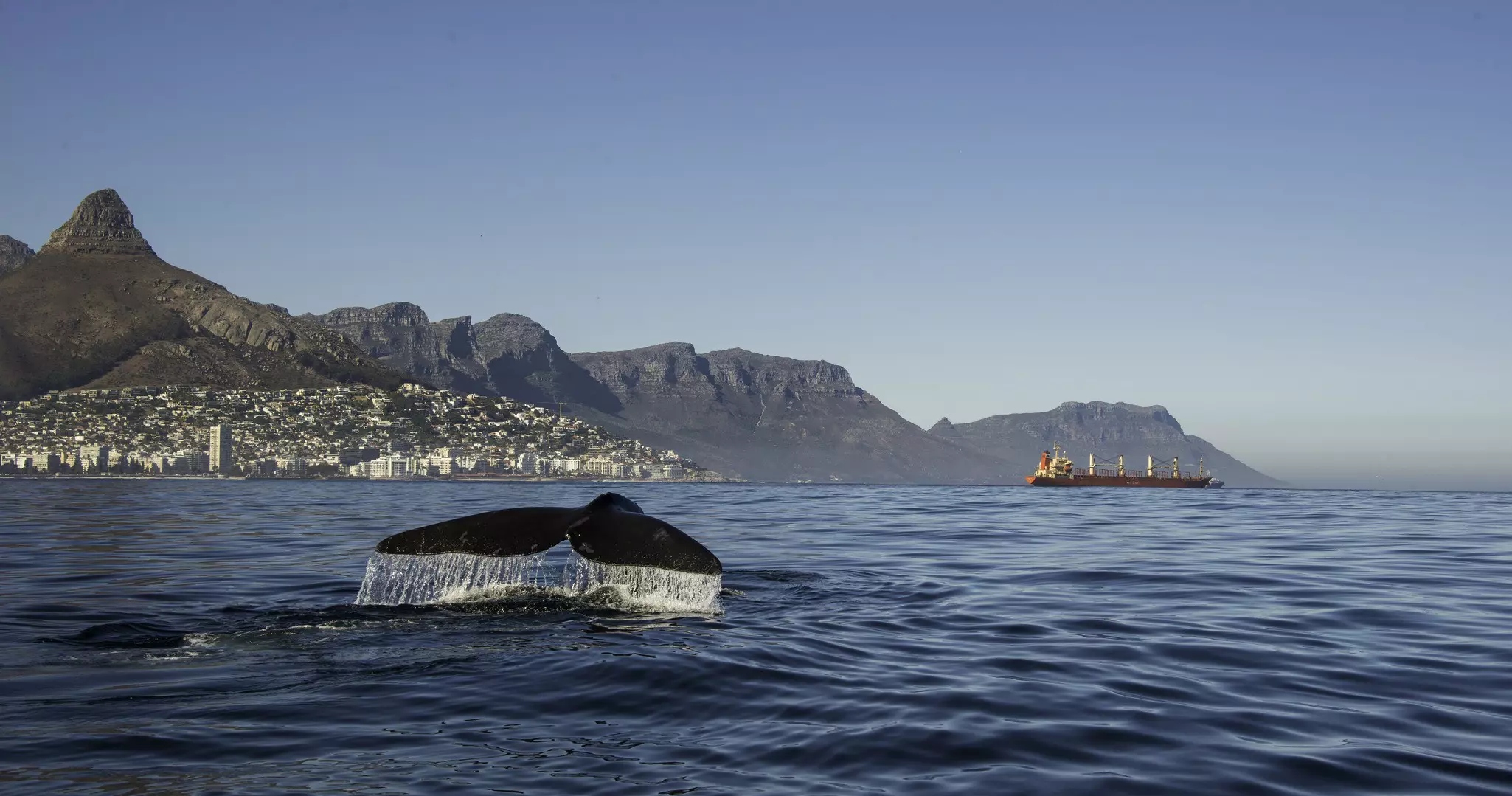
Some 37 species of whales and dolphins frequent South Africa’s shores, so it’s no wonder whale-watching is a popular activity. You can hop on a boat from plenty of places along the country’s three coastlines to view these behemoths in their watery haunts.
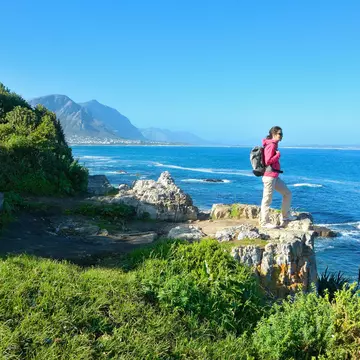
But here’s a twist: in some places, you don’t even have to step on a boat to see a whale. Watch whales close up from the shore in Lambert’s Bay, Yzerfontein and Plettenberg Bay. But the most celebrated land-based viewing spot is Hermanus, about 100km (62 miles) east of Cape Town. Between June and November, southern right whales stop by on their annual migration from Antarctica, and right off the coast, they splash, breach and lobtail (slap their flippers and tail against the water). The town even has a whale crier who blows a kelp horn when whales approach the shore.
The Zulus reigned between 1816 and 1897 in much of present-day KwaZulu-Natal as one of Africa’s most prominent empires. Despite their fierce fighting abilities, the British defeated them in the 1870s, and their kingdom was integrated into the Union of South Africa. But their culture remains strong – they are South Africa’s largest ethnic group – and the Zulu royal family is still active, reigning (but not ruling) in KwaZulu-Natal.
You can experience Zulu culture by visiting the Battlefields Region in the province’s northwest, where the Zulus fought 63 battles against a succession of invading forces. Monuments and museums such as Blood River and Isandlwana commemorate these clashes.
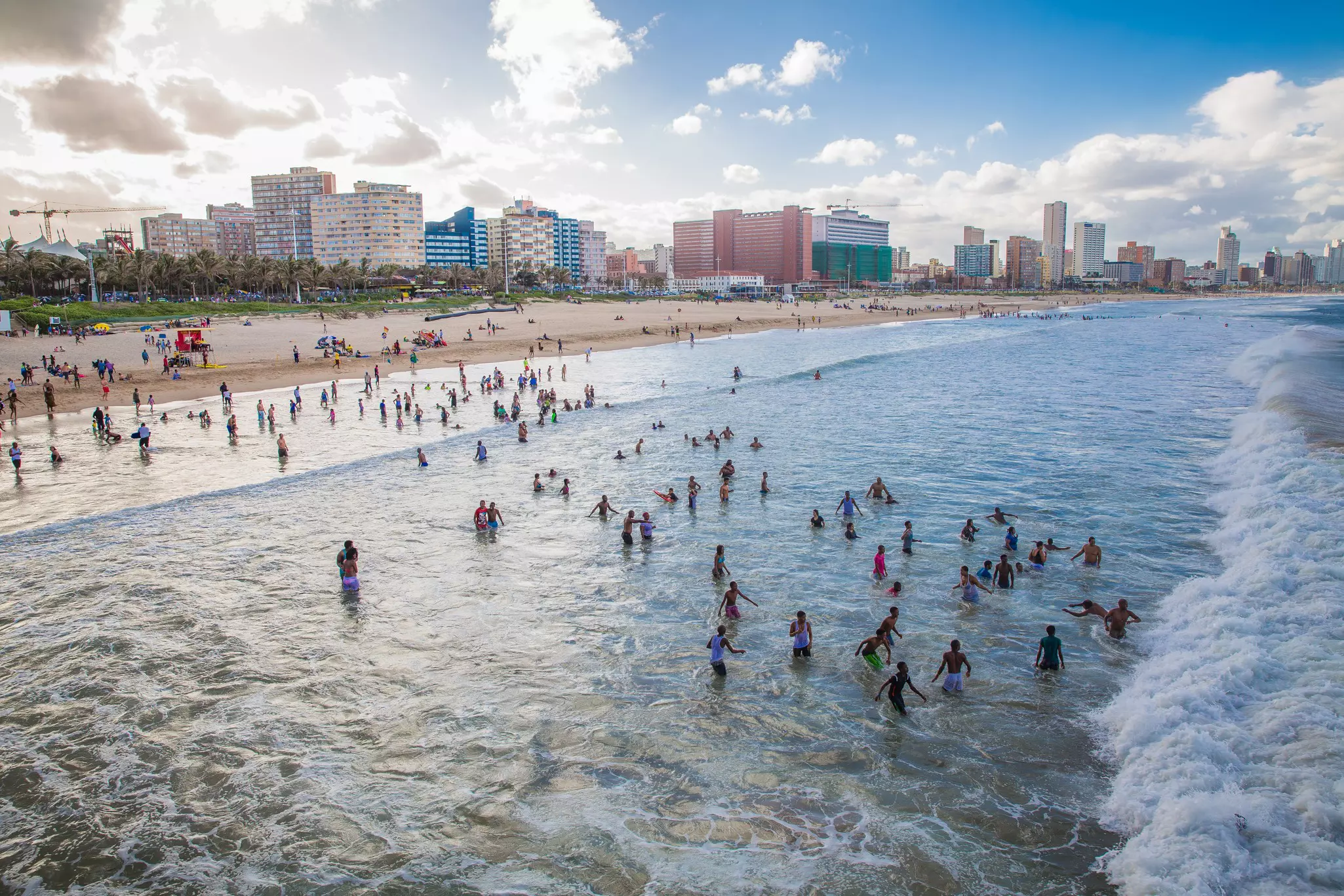
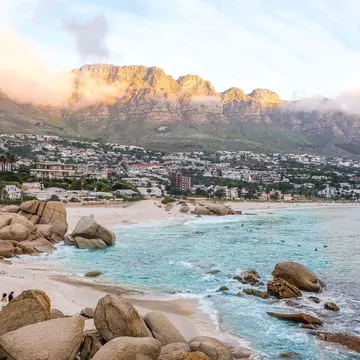
With more than 320 sunny days a year, Durban is a much-loved playground of golden-sand beaches lapped by the Indian Ocean’s azure waters. An expanse of sun-soaked paradise dubbed the Golden Mile (although it’s more like four miles) runs from uShaka Beach in the south to Suncoast Casino and Entertainment World in the north and offers beaches and beachy activities for everyone.
Beginners can surf from South and Addington beaches, and fishers can drop a line at Bay of Plenty Beach. Other stretches of sand, such as Umhlanga Rocks just slightly north of the Golden Mile, have a lively vacation vibe. If you want to picnic or just hang out with your travel companions, Blue Lagoon is a fabulous choice. A promenade runs along much of the Golden Mile, with Zulu artisans selling their wares and runners, walkers, cyclists and skateboarders catching the rays.
Deep beneath Gauteng’s highveld (high plateau), 20th-century researchers discovered two distant relatives of all humankind in the region’s labyrinthine limestone caves: Mrs Ples, the 2.1-million-year-old skull of an Australopithecus Africanus (a precursor to the genus Homo) and Little Foot, a nearly complete, three-million-year-old Australopithecus skeleton. Then, in 2015, a new species of human relative was uncovered, Homo naledi, whose placement in the evolutionary chain is still unknown.
You can explore this significant archaeology at the Cradle of Humankind, about an hour northwest of Pretoria. Entertaining, world-class exhibitions provide context at the Maropeng visitor center, and you can go beneath the earth to the excavation site at Sterkfontein Caves.
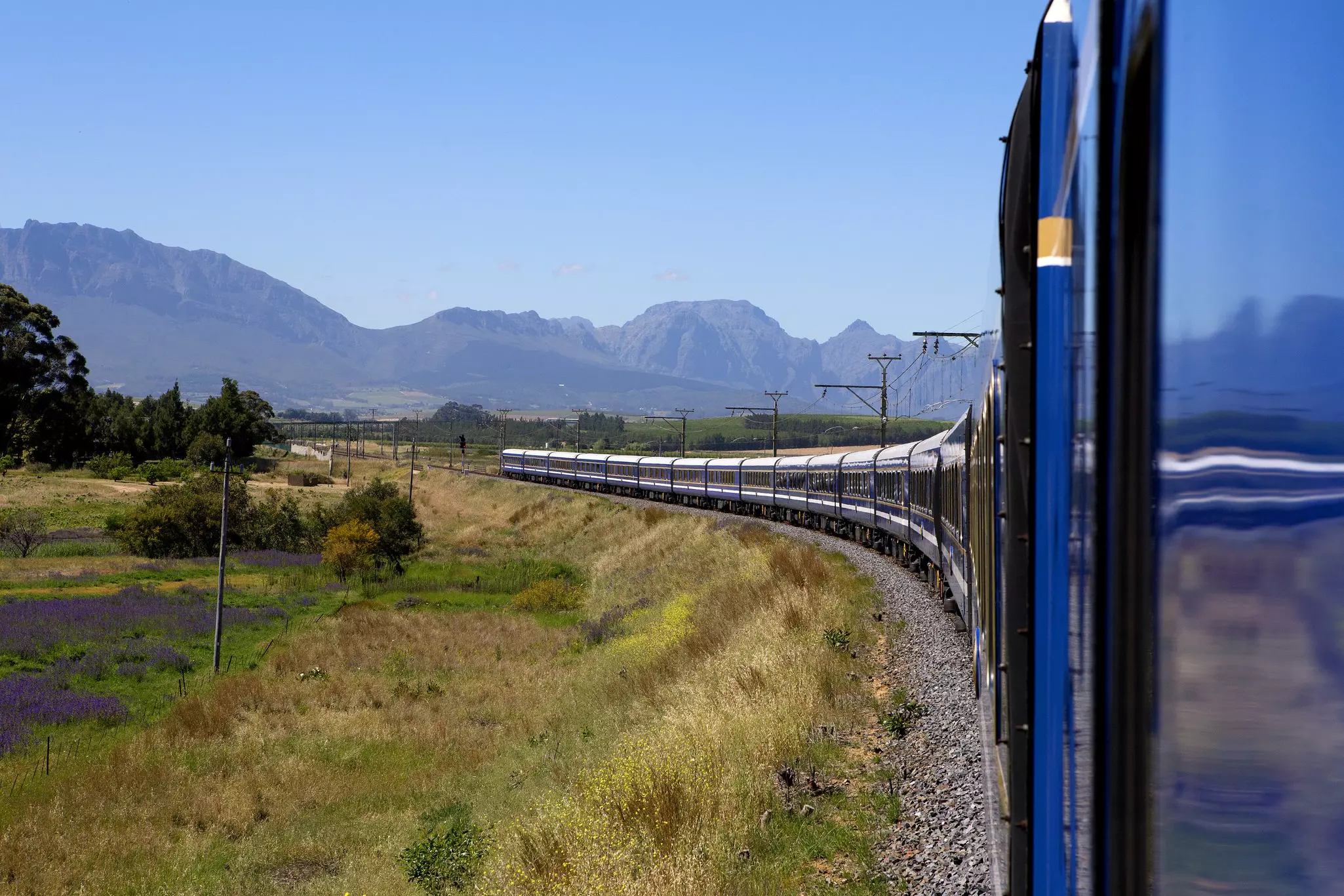
Sit back and soak in the golden age of travel aboard the Blue Train, a five-star hotel on wheels that is ranked as one of the world’s great rail journeys. Since this train came about during colonial times, when 19th-century British diamond and gold magnates demanded luxury, expect warm birch paneling, plush leather seating and full silver service at gourmet five-course meals.
The Blue Train travels between Pretoria and Cape Town, with two nights onboard. While you’ll enjoy the best of service and decor, it’s the scenery outside the windows that will dazzle the most: cactus-dotted desert, rocky mountains, vineyard-dotted hills, lush valleys and a front-row seat for Africa’s famous sunsets. Meals, drinks, Monte Cristo cigars and even a personal butler come with the hefty price.
Planning tip: Book your Blue Train ride during the low season (Nov–Aug) for significantly lower fares.
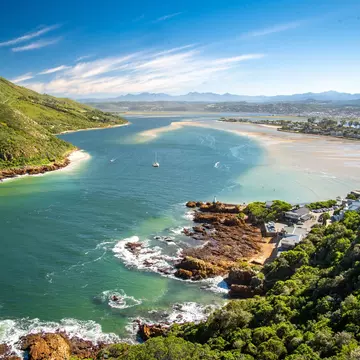
Take a scenic road trip through seaside villages, glittering beaches and misty mountains along the Garden Route, which some call the Garden of Eden. You can drive the 200km (125 miles) straight through, from Mossel Bay to Storms River, but this is one to take your time dipping into. Scuba dive to see Knysna seahorses, surf crashing waves, hike shadowy forests, see elephants in the wild, bungee jump into a gorge, or simply plunk down on an empty beach. Good bases are Plettenberg Bay and Knysna. A minimum of four days is recommended, though you could seriously spend weeks here.
Detour: Make a Saturday morning pit stop at Wild Oats Community Farmers Market for fresh produce, baked goods, breakfast and more, just 1.5km (1 mile) east of Sedgefield. The market is a beloved Garden Route stop.
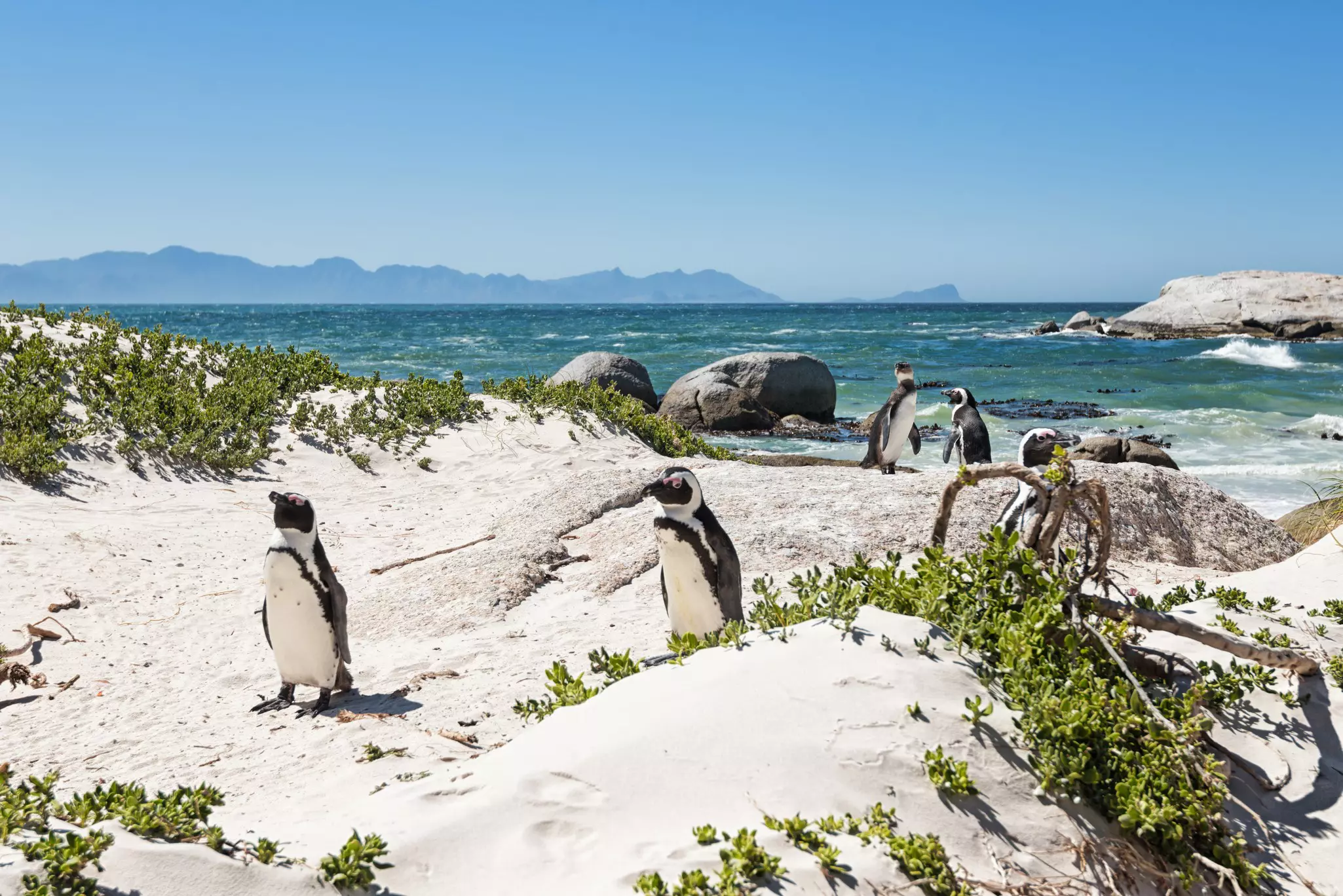
The Atlantic and Indian Oceans converge at historic Cape Point – aka the Cape of Good Hope – about 65km (40 miles) south of Cape Town. It’s thrilling to stand on this wind-blown, jagged landmass jutting into the sea, the southwesternmost point in Africa, observing the roiling waves and indigo waters as far as the eye can see. These treacherous waves have been the bane of seafarers for centuries, causing hundreds of shipwrecks. For spectacular views, jump on the Flying Dutchman Funicular or walk the steps to the 86m (285ft) lighthouse-topped summit.
Planning tip: Don’t rush your journey here. A drive from Cape Town reveals along the way dazzling beaches, cliffside vistas, fishing villages, and miles and miles of remote bushveld inhabited by zebras, ostriches and baboons. The African penguin colony at Boulders Beach is one of only two land-based penguin colonies in the world.
The Karoo’s sparsely populated landscapes are immense by day, and its skies are just as vast by night. In this magical semi-desert realm – encompassing nearly 500,000 sq km (1.9 million sq miles) within Western Cape, Northern Cape, Eastern Cape and the Free State – the stars pierce some of Earth’s darkest, cleanest skies, seemingly so close you can reach out and touch them.
It’s no wonder that the South African Astronomical Observatory, the southern hemisphere’s largest, is here. You can take a guided tour by day, but the nighttime stargazing safaris are the major draw.
Planning tip: The charming, historic town of Prince Albert is a good stargazing base.
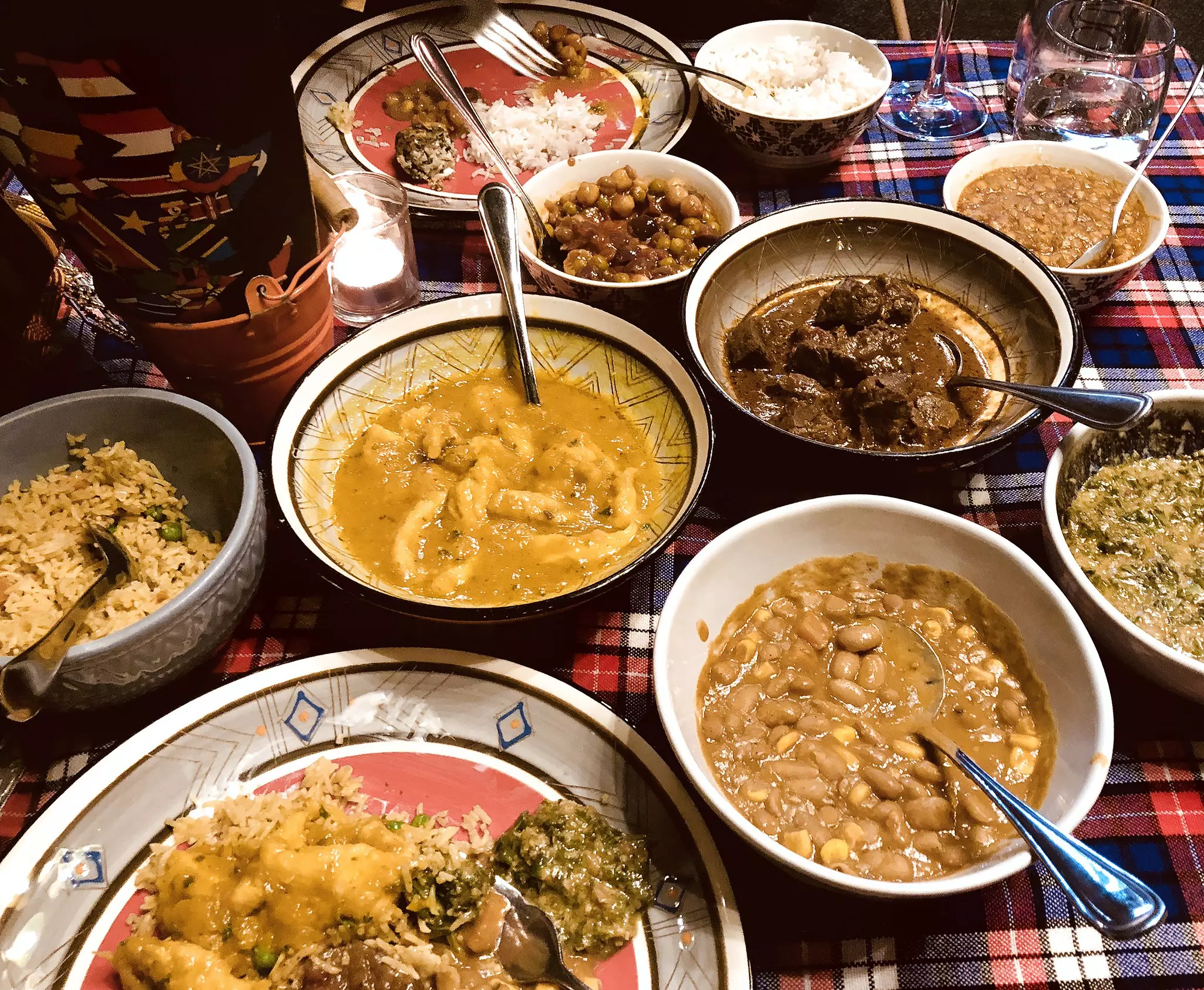
Throughout Cape Town’s long history of colonization and immigration, a parade of cultures has taken root, each contributing its traditions and customs. The most obvious – and cherished – result is the city’s diverse, innovative cuisine. Many call Cape Town the foodie capital of South Africa. You’ll find African, British, French, Asian, Dutch and other influences in the dishes.
The Cape Malay, for example, is a community influenced by southern African, Asian (especially Indonesian) and Dutch cultures; they’re known for their variety of spice-infused bredies (stews), curries, savory snacks and porrings (a warm pudding). Braai – derived from the Dutch word braden, meaning "to roast" – has become ubiquitous throughout the country. But braai is much more than barbecuing meat: it’s a social event where friends and family gather. Many township tours offer a traditional braai experience. Local chefs are taking note of this rich cultural heritage. Chef Luke Dale-Roberts’ award-winning Cape Town restaurants – Test Kitchen and Pot Luck Club – are prime examples, with their innovative twists on traditional fare.
Planning tip: Making restaurant and hotel reservations will be much easier if you avoid traveling during the peak Christmas and Easter seasons.
The idea of the Freedom Park in Pretoria was announced by Nelson Mandela in 1999 as the natural culmination of the Truth and Reconciliation Commission, its location chosen as a riposte to the nearby Voortrekker Monument. Every aspect of the design – the museum’s narrative flow, the building’s resemblance to boulders and the way the monuments and shrines are seamlessly integrated into the ridges’ natural layout – is intentional. They’re all meant to suggest the evolution of southern Africa’s history, from its geological beginnings billions of years ago, through the colonial era and to its present. It’s a place of architectural imagination and collective healing.
If you have time, it’s worth taking a tour of the 52 hectares that sprawl to the hilltop with wonderful views of the city below. Get a lift in a golf cart; otherwise it’s a long uphill slog around the winding pathways. S’khimbuto, the main memorial area, has an amphitheater and a Wall of Names inscribed with 75,000 names of those who played a significant part in the conflicts of South African history.
Sponsored by South Africa Tourism
As a travel entertainment and inspirational media outlet, we sometimes incorporate brand sponsors into our efforts. This activity is clearly labeled across our platforms.
Stories where we collaborate and welcome direct input from our client.
With sponsored content, both Lonely Planet and our brand partners have specific responsibilities:
Brand partner
Determines the concept, provides briefing, research material, and may provide feedback.
Lonely Planet
We provide expertise, firsthand insights, and verify with third-party sources when needed.
Take your South Africa trip with Lonely Planet Journeys
Time to book that trip to South Africa
Lonely Planet Journeys takes you there with fully customizable trips to top destinations – all crafted by our local experts.

Explore related stories