go to content go to search box go to global site navigation

Mexico City

Sights in Mexico City

‹ Prev

of 7

  1. A

    Zócalo

    The heart of Mexico City is the Plaza de la Constitución, more widely known as the Zócalo, meaning ‘base.’ City residents gave it this nickname in the 19th century, when plans for a major monument to independence went unrealized, leaving only the pedestal. Measuring more than 220m from north to south and 240m from east to west, the Zócalo is one of the world’s largest city squares.

    The ceremonial center of Aztec Tenochtitlán, known as the Teocalli, lay immediately northeast of the Zócalo. In the 1520s Cortés paved the plaza with stones from the ruined Teocalli and other Aztec buildings. The Inquisition performed its first auto-da-fe here in 1574. In the 18th…

    reviewed

  2. B

    Palacio de Bellas Artes

    Dominating the east end of the Alameda is this splendid white-marble palace, a concert hall and arts center commissioned by President Porfirio Díaz. Construction began in 1905 under Italian architect Adamo Boari, who favored neoclassical and art nouveau styles. Complications arose as the heavy marble shell sank into the spongy subsoil, and then the Mexican Revolution intervened. Architect Federico Mariscal eventually finished the interior in the 1930s, utilizing the more modern art deco style.

    reviewed

  3. C

    Mercado De Xochimilco

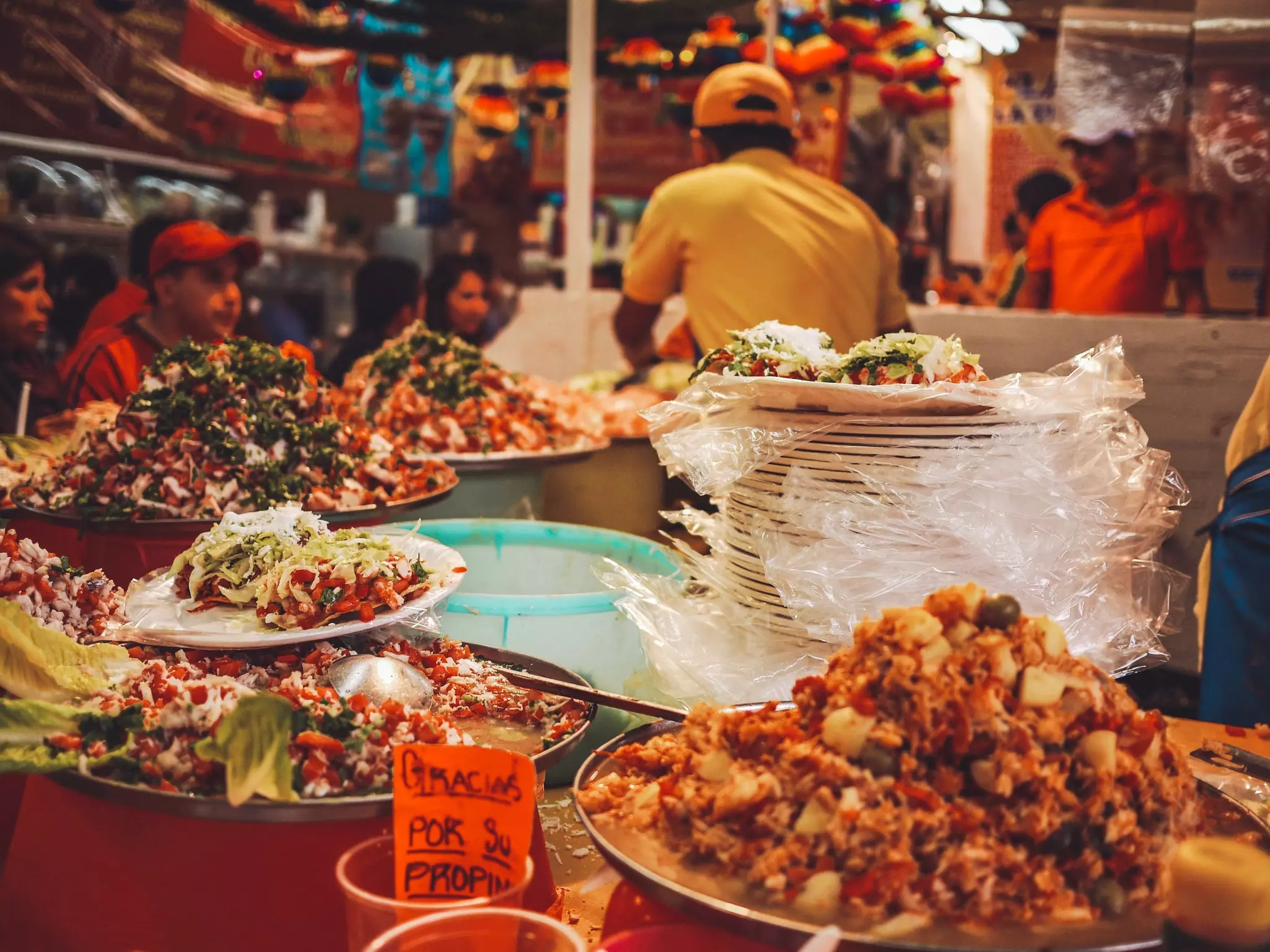
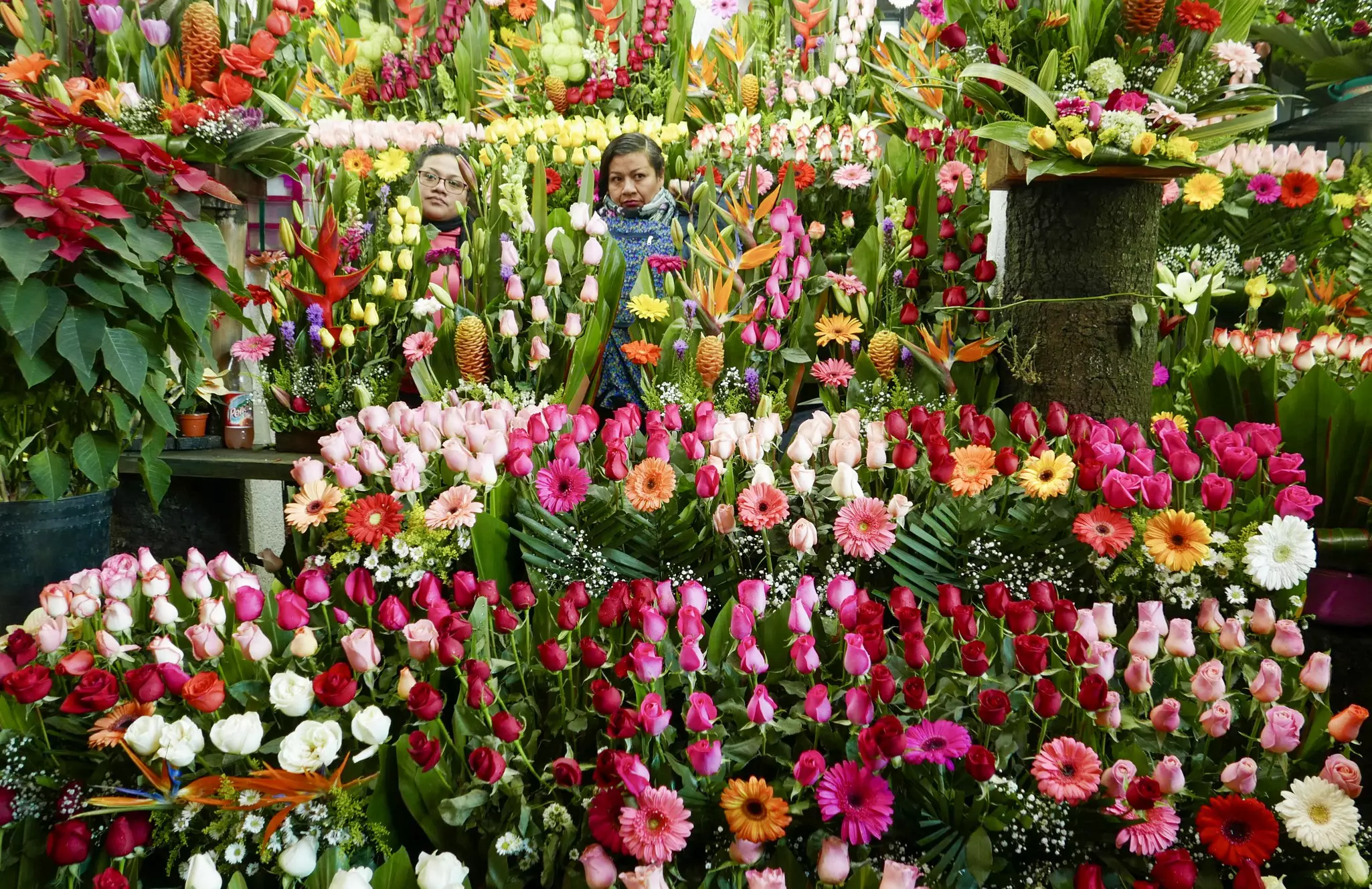
    South of the plaza, the bustling Mercado de Xochimilco covers two vast buildings: the one nearer the Jardín Juárez has colorful flower displays and an eating annex for tamales and other prepared foods, while the one nearer the train station sells mostly produce and household goods, with a few pottery stalls.

    reviewed

  4. D

    Palacio Nacional

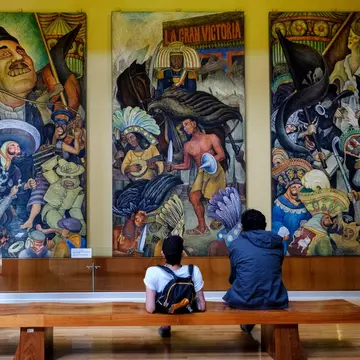
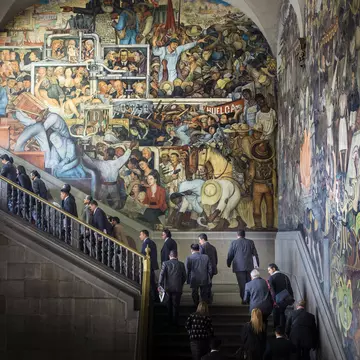
    Home to the offices of the president of Mexico, the Federal Treasury and dramatic murals by Diego Rivera, this palace fills the entire east side of the Zócalo.

    reviewed

  5. E

    Canals

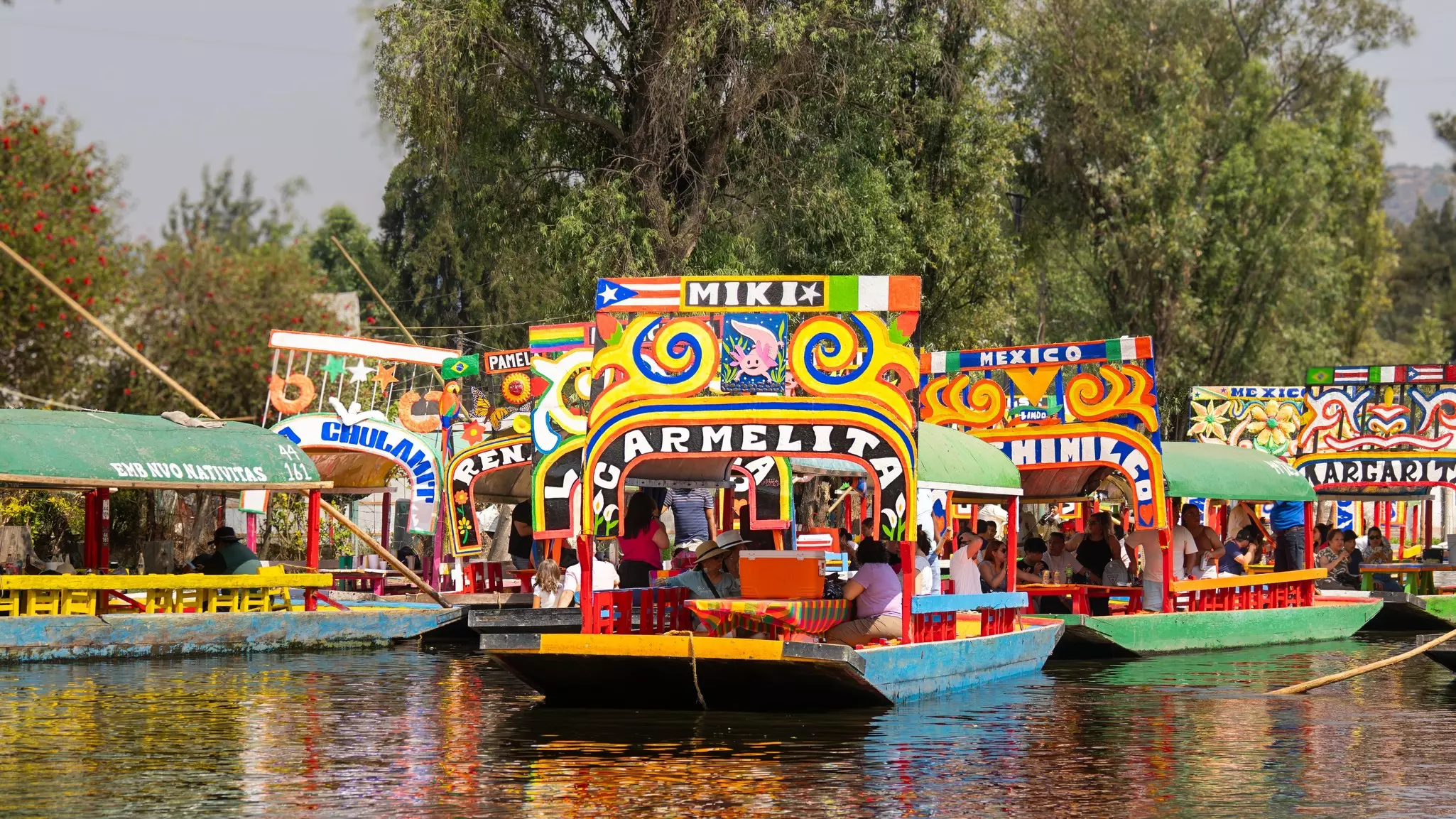
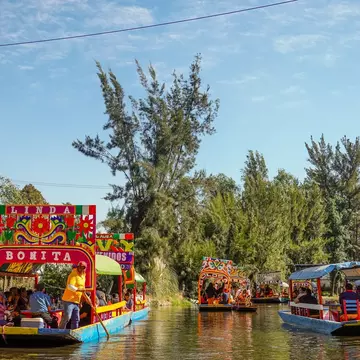
    Xochimilco (Náhuatl for 'Place where Flowers Grow') was an early target of Aztec hegemony, probably due to its inhabitants' farming skills. The Xochimilcas piled up vegetation and mud in the shallow waters of Lake Xochimilco, a southern offshoot of Lago de Texcoco, to make fertile gardens called chinampas, which later became an economic base of the Aztec empire. As the chinampas proliferated, much of the lake was transformed into a series of canals.

    Approximately 180km of these waterways remain today and provide a favorite weekend destination for defeños. The chinampas are still under cultivation, mainly for garden plants and flowers such as poinsettias and marigolds.…

    reviewed

  6. F

    Castillo de Chapultepec

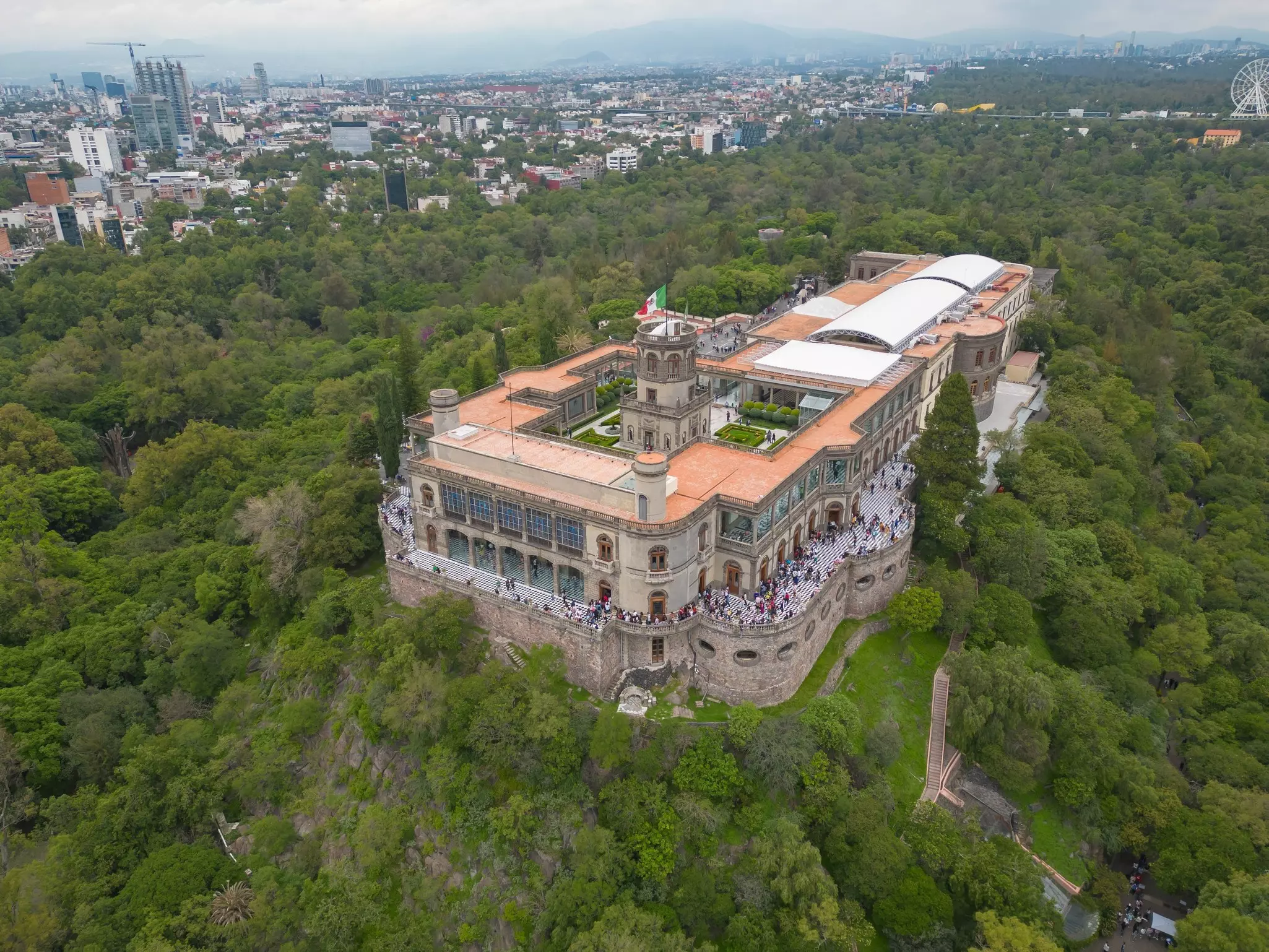
    A visible reminder of Mexico’s bygone aristocracy, the ‘castle’ that stands atop Chapultepec Hill was begun in 1785 but not completed until after independence, when it became the national military academy. When Emperor Maximilian and Empress Carlota arrived in 1864, they refurbished it as their residence. The castle became home to Mexico’s presidents until 1939, when President Lázaro Cárdenas converted it into the Museo Nacional de Historia (National History Museum). Historical exhibits chronicle the period from the rise of colonial Nueva España to the Mexican Revolution. In addition to displaying such iconic objects as the sword wielded by José María Morelos in…

    reviewed

  7. G

    Lotería Nacional

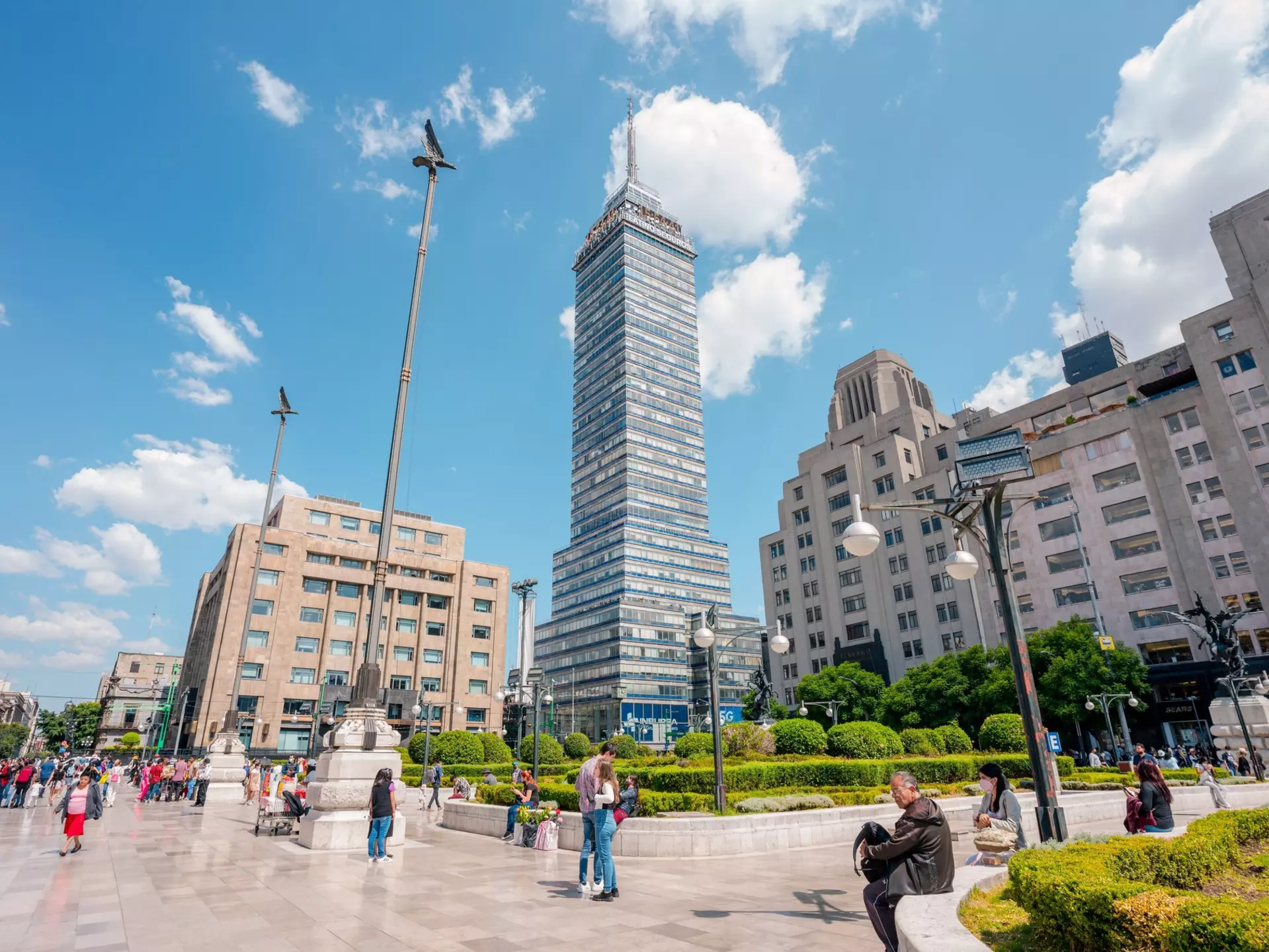
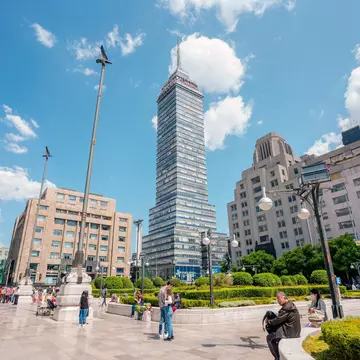
    Mexico's lottery is a national passion, and the tall art deco tower on the west side of Paseo de la Reforma opposite Av Juárez is the game's headquarters. Walk into the building and up the stairs almost any Sunday, Tuesday or Friday after 19:30, take a seat in the cozy auditorium, and at exactly 20:00 the sorteo (the ceremony of picking the winning numbers) begins. Cylindrical cages spew out numbered wooden balls, which are plucked out by uniformed pages who announce the winning numbers and amounts.

    The tall art deco tower on the west side of Paseo de la Reforma opposite Avenida Juárez is the headquarters of a Mexican passion: the Lotería Nacional (National Lottery).…

    reviewed

  8. H

    Parque Ecológico de Xochimilco

    Despite Xochimilco’s Unesco World Heritage status, encroaching urbanization and illegal settlement along the canals continue to strain this unique habitat. At least one endemic species of the zone, the axolotl (a fishlike salamander) is in danger of extinction. Thus in 1991 the Ecological Park of Xochimilco was established, about 3km northeast of downtown Xochimilco, both to recover the fragile ecosystem and to provide a retreat for stressed-out urbanites. Covering some 2 sq km, the protected area comprises a botanical garden and artificial lakes, home to a variety of waterbirds. Stroll the pleasant pathways, or rent a bicycle or a pedal boat for more extensive…

    reviewed

  9. I

    Museo de la Caricatura

    Mexico boasts a rich tradition of cartooning. Save for an eight-year period during the Porfirio Díaz regime when the dictator banned their publication, Mexican political cartoons have targeted the country’s leaders since the early 19th century. And as a glance at many daily newspapers shows, the art of scathingly political caricatures is very much alive and well. Housed in an 18th-century building that was originally an annex to the Jesuit college of San Ildefonso, the Museum of Cartooning displays the works of Mexico’s most prominent cartoonists from a collection of some 1500 original panels. These date from 1826, when Italian Claudio Linati published the country’s first…

    reviewed

  10. J

    Ex-Convento de Churubusco

    Scene of a historic military defeat, the 17th-century former Monastery of Churubusco, now a museum, stands within peaceful wooded grounds, 1.5km northeast of Plaza Hidalgo. On August 20, 1847, Mexican troops defended the monastery against US forces in a dispute over the US annexation of Texas. The Mexicans fought until they ran out of ammunition and were beaten only after hand-to-hand fighting. The US invasion was but one example in a long history of foreign intervention, as compellingly demonstrated by the National Interventions Museum inside the former convento. Displays include an American map showing operations in 1847, and material on the French occupation of the…

    reviewed

  11. Advertisement

  12. K

    Museo Frida Kahlo

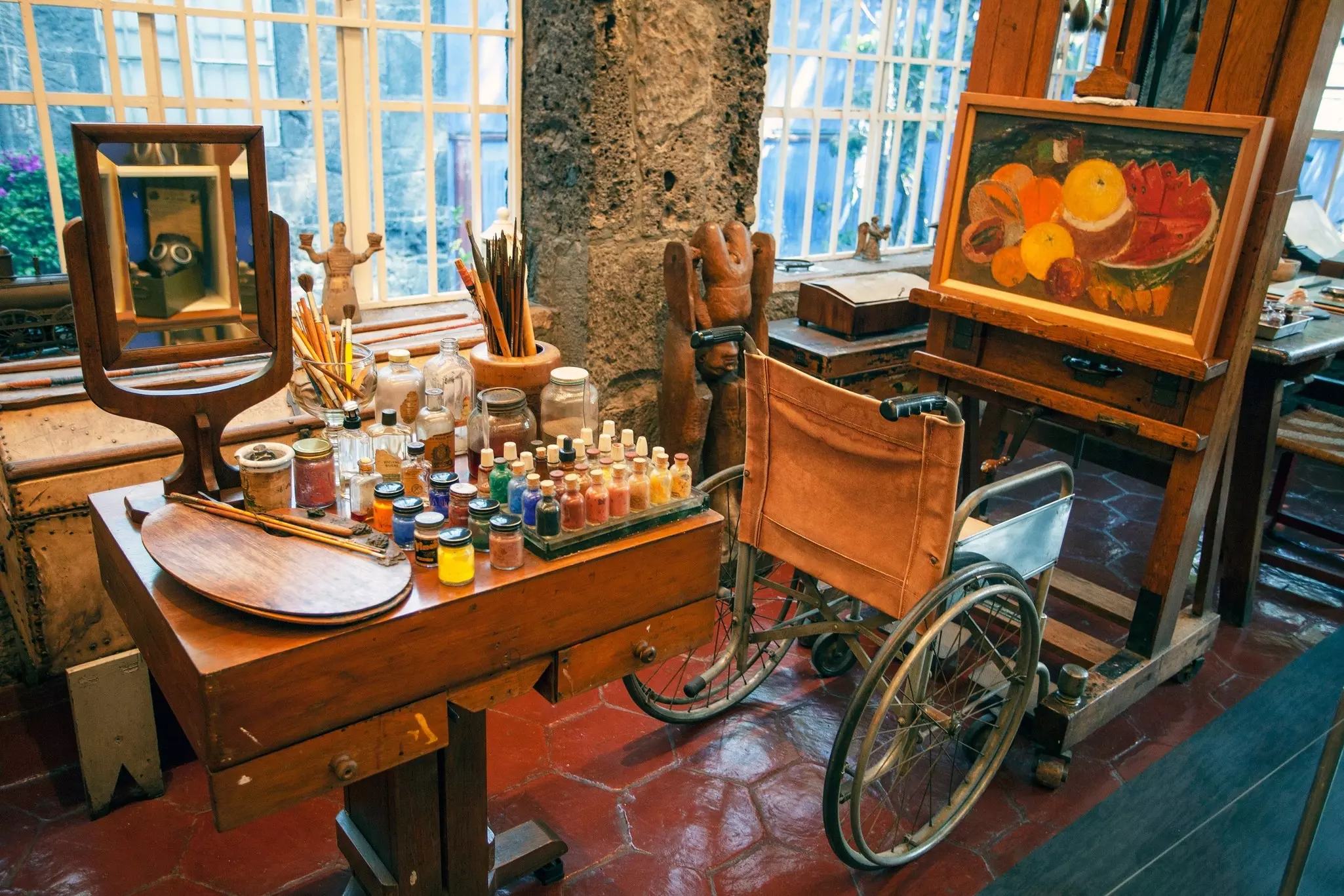
    Iconic Mexican artist Frida Kahlo was born, lived and died in the ‘Blue House, ’ six blocks north of Plaza Hidalgo. Almost every visitor to Mexico City makes a pilgrimage here to gain a deeper understanding of the painter (and maybe to pick up a Frida handbag). Built by her father Guillermo three years before Frida’s birth, the house is littered with mementos and personal belongings that evoke her long, often tempestuous relationship with husband Diego Rivera and the leftist intellectual circle they often entertained here. Kitchen implements, jewelry, outfits, books and other objects from the artist’s everyday life are interspersed with art, photos and letters, as well as…

    reviewed

  13. L

    Tlatelolco - Plaza de las Tres Culturas

    The Plaza de las Tres Culturas is so named because it symbolizes the fusion of pre-Hispanic and Spanish roots into the Mexican mestizo identity. It displays the architectural legacy of those three cultural strands: the Aztec pyramids of Tlatelolco, the 17th-century Spanish Templo de Santiago and the modern Secretaría de Relaciones Exteriores (Foreign Ministry).

    The Plaza of Three Cultures is a calm oasis in the city, but is haunted by the echoes of its sombre history. Founded by Aztecs in the 14th century, Tlatelolco was a separate dynasty from Tenochtitlán, on a separate island in Lago de Texcoco. Cortés defeated Tlatelolco's Aztec defenders here in 1521. You can view…

    reviewed

  14. M

    Bosque de Chapultepec

    Chapultepec, which means Hill of Grasshoppers in the Aztec language (Náhuatl), once served as a refuge for the wandering Aztecs before eventually becoming a summer residence for their noble class. In the 15th century, Nezahualcóyotl, ruler of nearby Texcoco, gave permission for the area to be made a forest reserve.

    The Bosque de Chapultepec has remained Mexico City's largest park to this day. It now covers more than 4 sq km (1.5 sq mi) and has lakes, a zoo and several excellent museums. Still home to Mexico's high and mighty, it contains the current presidential residence (Los Pinos) and a former imperial and presidential palace (Castillo de Chapultepec).

    One of its…

    reviewed

  15. N

    Centro Histórico

    Centro Histórico (Historic Centre) brims with fine colonial buildings and historic sites. Its nerve centre and the heart of Mexico City is Zócalo, the Plaza de la Constitución, which is home to the powers-that-be.

    On its east side is the Palacio Nacional, built on the site of an Aztec palace. It now holds the offices of the president, a museum and historical murals by Diego Rivera. To the north of the plaza is the Catedral Metropolitana (built by the Spanish in the 1520s on the site of the Aztecs' Tzompantli). The plaza is also a stomping ground for political protesters - it's often dotted with makeshift camps of strikers or campaigners.

    Also in the vicinity is the…

    reviewed

  16. O

    Museo Dolores Olmedo Patiño

    Possibly the most important Diego Rivera collection of all belongs to the Olmedo Patiño museum, ensconced in a peaceful 17th-century hacienda 2km west of central Xochimilco.

    Dolores Olmedo Patiño, who resided here until her death in 2002, was a socialite and a patron of Rivera. The museum's 144 Rivera works - including oils, watercolors and lithographs from various periods - are displayed alongside pre-Hispanic figurines and folk art. Another room is reserved for Frida Kahlo's paintings, including an especially anguished self-portrait depicting her spine as a stone column broken in several places. Outside the exhibit halls, you'll see xoloitzcuintles, a pre-Hispanic…

    reviewed

  17. P

    Anahuacalli

    Designed by Diego Rivera to house his collection of pre-Hispanic art, this museum, 3.5km south of Coyoacán, is a fortresslike building made of dark volcanic stone. It incorporates stylistic features from many pre-Hispanic cultures. An inscription over the door reads: ‘To return to the people the artistic inheritance I was able to redeem from their ancestors.’ If the air is clear, the view over the city from the roof is great. The House of Anáhuac (Aztec name for the Valle de México) also contains one of Rivera’s studios and some of his work, including a study for Man at the Crossroads, the mural that was commissioned for the Rockefeller Center in 1934. In…

    reviewed

  18. Q

    Plaza Juárez

    Representing the new face of the zone, this modern plaza is across the way from the Alameda’s Hemiciclo a Juárez, a semicircle of marble columns dedicated to post­independence president Benito Juárez, and behind the fully restored Templo de Corpus Christi, which now holds the DF’s archives. The plaza’s centerpiece is a pair of Tetris-block towers by leading Mexican architect Ricardo Legorreta: the 24-story Foreign Relations Secretariat building and the 23-story Tribunales (courts) building. Fronting these monoliths is some interesting art, including a bronze aviary by Mexican sculptor Juan Soriano and, near the west entrance, a David Alfaro Siqueiros mosaic…

    reviewed

  19. R

    Museo Nacional de Antropología

    The National Museum of Anthropology, among the finest of its kind, stands in an extension of the Bosque de Chapultepec. The vast museum offers more than most people can absorb in a single visit. Concentrate on the regions you plan to visit or have visited, with a quick look at some of the other eye-catching exhibits. Everything is superbly displayed, with much explanatory text translated into English. Audio-guide devices, in English, are available at the entrance. The complex is the work of Mexican architect Pedro Ramírez Vázquez. Its long, rectangular courtyard is surrounded on three sides by two-story display halls. An immense umbrellalike stone fountain rises up from…

    reviewed

  20. S

    Museo Nacional de Historia

    A visible reminder of Mexico’s bygone aristocracy, the ‘castle’ that stands atop Chapultepec Hill was begun in 1785 but not completed until after independence, when it became the national military academy. When Emperor Maximilian and Empress Carlota arrived in 1864, they refurbished it as their residence. It then sheltered Mexico’s presidents until 1939 when President Lázaro Cárdenas converted it into the Museo Nacional de Historia. Historical exhibits chronicle the period from the rise of colonial Nueva España to the Mexican Revolution. In addition to displaying such iconic objects as the sword wielded by José María Morelos in the Siege of Cuautla and the…

    reviewed

  21. T

    Suprema Corte de Justicia

    The Suprema Corte de Justicia, south of the Zócalo, has Orozco murals. In 1940 the artist painted four panels around the first level of the central stairway, two of which deal with the theme of justice. A more contemporary take on the same subject, Los Siete Crímenes Mayores (The Seven Worst Crimes), by Rafael Cauduro, unfolds over the three levels of the building’s southwest stairwell. Executed in his hyperrealist style, the series catalogs the horrors of state-sponsored crimes against the populace, including the ever-relevant torture-induced confession. On the southeast corner of the building’s interior, Ángel Ismael Ramos Huitrón’s En Busqueda de la Justicia

    reviewed

  22. Advertisement

  23. U

    Parque México

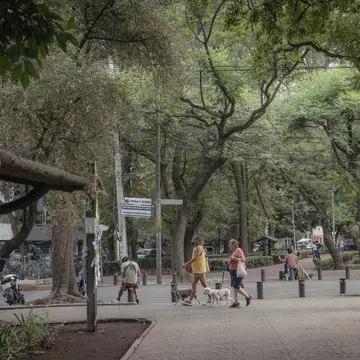
    A main focus is the peaceful, beautifully kept Parque México, full of trees, well-maintained paths, benches with cute little roofs, and signs exhorting everyone to demonstrate their ecoconsciousness and treat their parque nicely. Amsterdam, which runs in an oval loop one block outside the park's perimeter, was originally a horse-race track. When the track was handed over to developers in 1924, it was stipulated that a certain area inside it must be kept green - hence Parque México.

    Parque España, two blocks northwest, has a children's fun fair and is a bit more frenetic. Parque México is a 500m walk north from Chilpancingo metro station, or a 1km walk south from Sevilla…

    reviewed

  24. V

    Plaza Hidalgo & Jardín del Centenario

    The focus of Coyoacán life and the scene of most of the area’s weekend fun are its twin central plazas. The eastern Plaza Hidalgo has a statue of Miguel Hidalgo; the western Jardín del Centenario is surrounded by attractive cafés and centers on a fountain with a coyote sculpture, which is a symbol of Coyoacán. The two plazas are divided by Calle Carrillo Puerto. The Coyoacán tourist office is housed in the former Coyoacán Ayuntamiento (Town Hall), also called the Casa de Cortés, on the north side of Plaza Hidalgo. It’s said that on this spot the Spanish tortured the defeated Aztec king Cuauhtémoc to try to make him reveal the whereabouts of treasure. The existing…

    reviewed

  25. W

    Garash

    A gregarious toddler on the contemporary art scene, Garash was established in 2003 in this classic early 20th-century building, complete with original columns. Exhibitors are mainly Mexican and Japanese and tend to be in the innovative genre of Hisae Ikenaga, the Madrid-based sculptor famed for transforming mass produced modular furniture into startlingly contemporary sculpted forms (which is what many of us end up doing naturally when trying to assemble an Ikea flat pack!) and who has had a successful solo exhibition here. This is one of the galleries to participate in the annual MACO art fair, established in 2004 and held during the last week of April. This is…

    reviewed

  26. X

    Museo Sala De Arte Público David Alfaro Siqueiros

    One of the Big Three of Mexican muralism along with Diego Rivera and José Clemente Orozco, David Alfaro Siqueiros is recalled as much for his fiercely radical political views as for his larger-than-life paintings. An avowed anarchist, he notoriously organized an (unsuccessful) assassination attempt on the Russian revolutionary Leon Trotsky.

    Shortly before his death in 1974, Siqueiros donated his Polanco residence and studio to the government for use as a museum. Fans of the iconoclastic painter will find plenty of illuminating material about his life and work here, including sketches for his mural projects, and some of his paintings, notably an unfinished homage to…

    reviewed

  27. Y

    Alameda Central

    Created in the late 1500s by mandate of then-viceroy Luis de Velasco, the Alameda took its name from the ''álamos'' (poplars) planted over its rectangular expanse. By the late 19th century, the park was lit by gas lamps and graced with European-style statuary and a bandstand – it became the place to be seen for the city’s elite. Today the Alameda is a popular refuge, particularly on Sundays, when families stroll its broad pathways and gather for open-air concerts.

    On the south side of the Alameda, facing Av Juárez, is the Hemiciclo a Juárez, a gleaming white semicircle of marble columns around a regally seated statue of Benito Juárez (1806–72). Born a poor Zapotec…

    reviewed