go to content go to search box go to global site navigation

Trieste

Things to do in Trieste

‹ Prev

of 2

  1. A

    Museo Revoltella

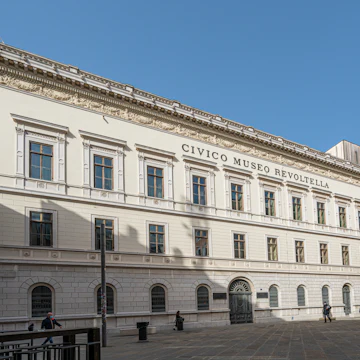
    Baron Pasquale Revoltella (1795–1869) would be pleased. He not only left his three-storey neo-Renaissance mansion to Trieste, but also his private collection of then-­contemporary art. With this and a hefty financial bequest from Revoltella, the Museo Revoltella was born in 1872. The city expanded the collection into two neighbouring buildings. Revoltella’s house retains the atmosphere and furnishings of the baron’s time. The baron’s flamboyant taste fills the gaudy rooms, with their chandeliers, gilded plaster, silk wallpaper and gold curtains. His collection of 19th-century Italian paintings and marble sculptures of nudes is on show here. The modern section, Palazzo…

    reviewed

  2. B

    Castello di San Giusto

    Often overlooked in favour of Trieste’s emblematic Castello di Miramare, the sturdy 15th-century Castello di San Giusto sits atop a strategic hill where it was built by Trieste’s Venetian rulers over older fortifications. The castle contains a recently renovated museum and armoury with a raft of exhibits, including suits of armour and other weapons. You can also wander around the walls and pop into the Lapidario Tergestino with its modest jumble of statuary and architectural fragments.

    reviewed

  3. Grotta Gigante

    The Grotta Gigante is near Villa Opicina, 5km northeast of Trieste. At 107m high, 280m long and 65m wide, the ‘giant grotto’ is one of the continent’s largest accessible caves – St Peter’s Basilica in Rome could fit inside. Nearly 500 steps lead you down into its eerily lit vault replete with stunning stalagmites. Take bus 42 from Piazza Oberdan, or tram 2 – the scenic choice that has covered the 5.2km journey since 1902 – to Villa Opicina, then bus 42 to the cave.

    reviewed

  4. C

    Risiera di San Sabba

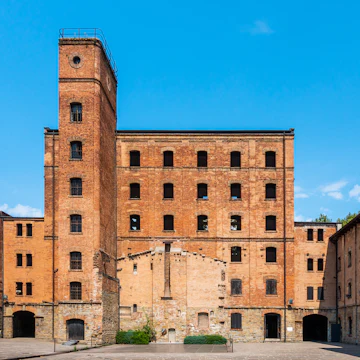
    The San Sabba rice-husking plant sounds like a harmless location, but in 1944 the Germans, with local Fascist help, built a crematorium here and turned it into Italy’s only extermin­ation camp. It is believed 20,000 people perished here, including 5000 of Trieste’s 6000 Jews. Yugoslav partisans closed it when they liberated the city in 1945, and 20 years later it became a national monument and museum. Take bus 8 from the train station.

    reviewed

  5. Caffè Tommaseo

    Is it just the hallucinogenic effects of the cappuccino or did you just see James Joyce over there scribbling in a notebook, or Sigmund Freud twitching behind a newspaper, or Umberto Saba polishing off a prosciutto panini ? Virtually unchanged since its 1830 opening, the belle époque Tommaseo with its moulded ceiling and Viennese mirrors is full of literary ghosts that often play tricks with the tired, delusional or over-caffeinated.

    reviewed

  6. D

    Civico Museo Teatrale Carlo Schmidl

    At the south edge of Borgo Teresiano, take time for the Civico Museo Teatrale Carlo Schmidl, housed in the grand Palazzo Gopcevich. It retraces the history of theatre and music in Trieste to the 18th century, with an engaging collection of historical instruments on the 1st and 2nd floors and a collection of signatures of such greats as Gioacchino Rossini, Giuseppe Verdi and Giacomo Puccini.

    reviewed

  7. E

    Biblioteca Civica

    Three small museums call the Biblioteca Civica home. The Museo Civico di Storia Naturale displays a musty array of stuffed animals and bones. Literature fans can poke about documents and other memorabilia linked to two great 20th-century novelists in the Museo Joyce and the adjacent Museo Svevo. James Joyce wrote some of his masterpieces in Trieste, and lugubrious local boy Italo Svevo wrote all of his in the city.

    reviewed

  8. F

    Civico Museo di Storia ed Arte ed Orto Lapidario

    The Civico Museo di Storia ed Arte ed Orto Lapidario unites a host of mostly Roman antiquities unearthed in and around Trieste and Aquileia. The more delicate items of Roman, Greek, Egyptian and prehistoric art and artefacts are spread over two floors, while the Orto Lapidario (Stone Garden) is a potluck assembly of more weather-resistant stone finds. Take bus 24 from the train station.

    reviewed

  9. G

    Basilica di San Giusto

    The Basilica di San Giusto, completed in 1400, is the synthesis of two earlier Christian basilicas in a blend of the Ravenna and Byzantine styles. The interior contains 13th-century frescoes and a mosaic from the same period depicting St Justus, the town’s patron saint. The Virgin and Child and the Apostles appear on another wonderfully preserved 12th-century mosaic.

    reviewed

  10. H

    Mascalzone Latino

    Just arrived from down south and been flummoxed by all that bratwurst and beer? Fear not, Napoli’s never far away. Run by native Neapolitans, this colourful old town palazzo replicates the spirit of Campania right down to the decorative lines of washing strung up from the rafters. At table level it’s all about pizzas, pasta and paper cones full of chunky chips.

    reviewed

  11. Advertisement

  12. I

    Circus

    A rather quirky hangout for sometimes over-serious Trieste, Circus lives up to its colourful name with a vaguely big-top decor mixed with old-time movie paraphernalia. It’s a great lunch stop with its ample panini (€4 to €5), huge bowls of salad (€5) and a selection of nicely priced primi (first courses). The atmosphere’s cool but not haughty.

    reviewed

  13. J

    Teatro Romano

    Smack-bang in the middle of the modern city, this remarkably well-preserved 2000-year-old Roman theatre was discovered during excavation for public works in 1938. Built into the hillside, with a capacity of up to 6000 people, it would have originally sat directly on the shore facing out to sea, but silting has moved the shoreline.

    reviewed

  14. K

    Caffè San Marco

    Young bloggers mix with 90-year-old former children of the Austro-Hungarian Empire at this dark mahogany haven where dexterous waiters balance coffee cups on silver trays and nothing much has changed since 1949 – or even 1909. The only thing missing is the atmospheric fug of cigarette smoke – a kind of blessing in disguise.

    reviewed

  15. L

    Acquario Marino

    Barely 100m from Piazza Venezia stands the waterfront Acquario Marino, where you can view some of the denizens of the Adriatic deep, as well as tropical fish. The former fish market (1913), which fills the southern half of the building, is being developed as a future exhibition space.

    reviewed

  16. M

    Lapidario Tergestino

    With commanding views across city and sea, the Colle di San Giusto is topped by a sturdy 15th-century castello, largely built over earlier fortifications by the city's Venetian rulers. Wander around the walls and pop into the Lapidario Tergestino with its modest jumble of statuary and architectural fragments.

    reviewed

  17. N

    Civico Museo Sartorio

    The Civico Museo Sartorio offers a varied collection of art, applied arts and jewellery. During restor­ation work, beautiful ceiling frescoes, some dating to the late 18th century, were uncovered, along with remains of the mosaic floor of a Roman house (domus).

    reviewed

  18. O

    Buffet Rudy

    Come to Rudy for a lesson in Triestine gnocchi that is nothing like the familiar pasta-covered potato balls you get in Rome or Turin. Resembling a big dumpling made from potato or bread (you choose), these Friulian classics are served in a tangy goulash sauce. Cancel that dessert.

    reviewed

  19. P

    Antica Trattoria Suban

    In the family since 1865, Suban is a Trieste legend that acts as a kind of regional kitchen in microcosm. Don’t miss the jota soup, succulent meats and delicious Hungarian desserts. It’s pricey and outside the centre, but sometimes you’ve just got to say, ‘what the…?’

    reviewed

  20. Q

    Viale 39

    A breeding ground for lounge lizards and bright young things, Viale 39 has multiple personalities as long as you’re a snappy dresser. Recline on cushioned sofas with an aperitif or get up and dance at Monday’s Latin American Noche Caliente (Hot Night) or Friday’s Valentino.

    reviewed

  21. R

    Buffet da Siora Rosa

    Opened before WWII by Mrs Rosa Caltaruzza – a portrait of whom still graces the wall – the family-run Siora Rosa is still one of the best and most traditional of Trieste’s buffets. Sit at the bar to sample sausages, sauerkraut and other Germanic offerings, or pasta.

    reviewed

  22. Advertisement

  23. S

    Castello di Miramare

    The Castello di Miramare is a curious place, a fanciful neo-Gothic remnant of the hyperactive imagination of Archduke Maximilian of Austria who deserted Trieste almost as quickly as he adopted it in 1864 to take up the obsolete crown of Mexico.

    reviewed

  24. T

    Museo Civico di Storia Naturale

    The Museo Civico di Storia Naturale displays a musty array of stuffed animals and bones. Literature fans can poke about documents and other memorabilia linked to two great 20th-century novelists in the Museo Joyce & Svevo.

    reviewed

  25. U

    Buffet da Pepi

    One of Trieste’s signature buffets, Da Pepi has been concocting traditional boiled meats, cold cuts and beer since – oh – 1897. All kinds of pork joints are produced here, served up with sauerkraut, hot mustard and kren (a tangy horseradish).

    reviewed

  26. V

    Le Barettine

    Just sitting at one of the deep timber tables awakens an appetite. The feel is that of a big rustic kitchen, in which you might be served spaghetti con la bottarga (a fish-egg sauce), followed by fresh fish filet with asparagus.

    reviewed

  27. W

    Teatro Verdi

    The Teatro Verdi opera house is a mix of Milan’s La Scala and Venice’s La Fenice (both architects had a hand). It first opened in 1801 and was refurbished between 1992 and 1997 at a cost of US$18 million.

    reviewed