go to content go to search box go to global site navigation

Haiti

Things to do in Haiti

‹ Prev

of 3

  1. Parc National Historique La Citadelle

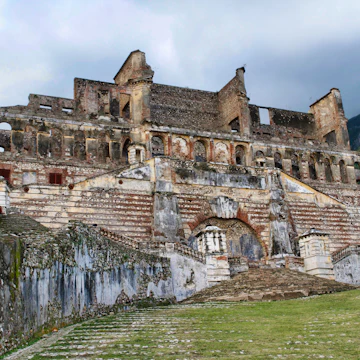
    It took Henri Christophe 15 years to build this vast mountaintop fortress, constructed to combat another invasion by the French. The astounding structure, with its shiplike appearance, is balanced on top of the 900m (2952ft) Pic la Ferrière and overlooks Cap-Haïtien, the northern plain and routes leading to the south.

    The fortress was completed in 1820, having employed up to 20,000 people, many of whom died during the arduous task. With 4m/13ft-thick walls that reach heights of 40m (131ft), the fortress was impenetrable. It held enough supplies to sustain the royal family and a garrison of 5000 troops for a year. It still contains over 100 cannons and an arsenal of…

    reviewed

  2. A

    Marché de Fer

    Several of Haiti’s cities have Iron Markets, but the original and best is in central Port-au-Prince. The Marché de Fer is an exuberant and exotic red-metal structure dating from 1889, which looks more akin to something from the Arabian Nights than tropical Haiti. In fact, it was originally destined to be the main hall of Cairo train station (hence its minarets), but when the sale from the Parisian manufacturers fell through, President Florvil Hyppolite snapped it up as part of his plan to modernize Port-au-Prince.

    reviewed

  3. Musée du Panthéon National

    The Musée du Panthéon National is a modern, mostly subterranean museum set in its own gardens. Its unusual design echoes the houses of Haiti’s original Taíno inhabitants, a motif repeated by the conical central ‘well’ bringing light to illuminate the gold monument recreating the cannons and banners found on the national flag. The bodies of Toussaint Louverture, Dessalines, Christophe and Pétion are inter­red below, and the names of further heroes of the independence struggle marked on the surrounding walls.

    reviewed

  4. Épi d’Or

    This Haitian take on the Subway-style sandwich outlet was taking Port-au-Prince by storm when we visited. As well as fantastic sandwiches, it also serves crepes, pizza and ‘MacEpi’ burgers, and there’s an inhouse patis­serie, all in bright surroundings and with cool air-con. Pay first, then present your ticket to complete the order. Be prepared for lengthy lunchtime queues.

    reviewed

  5. Bassins Bleu

    The Bassins Bleu are three cobalt-blue pools joined by spectacular cascades. Dissolved minerals give the falls their distinctive colour. According to legend, water nymphs live in the grottos and sun themselves on a rock in Palm Lake, but disappear at the sound of mortal footsteps. Given the number of mortals hanging around, you probably won't see them.

    reviewed

  6. B

    Fior di Latte

    Fior di Latte is not particularly well signed (it’s next to the American Airlines office). This restaurant’s vine-covered canopy is a lovely place to take an extended lunch break. The menu is Italian, with great plates of pasta and pizza, and some really tasty quiches thrown in, too. Finishing a meal with a bowl of homemade ice cream is a must.

    reviewed

  7. C

    Papaye

    ‘Caribbean fusion’ aren’t words you expect to see written in a Haitian restaurant review, but Papaye carries off the idea with considerable aplomb, taking Creole dishes and jamming them up against Asian, European and other culinary influences. Somehow it works, and is worth repeated investigation.

    reviewed

  8. D

    Moro

    Jacmel is a souvenir buyer’s paradise. Its most famous output are the papier-mâché Carnival masks, unique to the town, that you can see being made in the months before the festival. One of the better artisanat-galleries is Moro, although it’s not the cheapest.

    reviewed

  9. E

    Harry’s

    A popular extended bar-resto, Harry’s is one for the nightbirds. Pizzas are the thing, but there are sandwiches and a smattering of Creole dishes, too. It’s unconventionally cool, and when you’ve eaten, grab a beer and challenge the locals to a game of pool on one of the tables.

    reviewed

  10. F

    Presse Café

    We like Presse Café for its casual bistro air. Decorated with old newspapers and photos of jazz heroes, it’s a great place for a relaxed snack and drink, and even better for its lunchtime buffet. On Thursday and Friday evenings there’s usually live music.

    reviewed

  11. Advertisement

  12. G

    Mun Cheez

    A long-established and popular 1st-floor fast-food joint with good food, overlooking the junction with Ave Pan Américaine. It’s a cheery spot; you can sit with a beer and burger and watch the world go by.

    reviewed

  13. H

    Galerie Monnin

    Port-au-Prince’s oldest private art gallery, in a lovely building. Lots of landscapes, but with a wide selection of different Haitian schools.

    reviewed

  14. I

    Musée d’Art Haïtien

    The Musée d’Art Haïtien, on the southern edge of Champs de Mars, is something of a curate’s egg. It holds probably the largest collection of Haiti’s naive art, with masters like Hector Hyppolite, Préfète Duffaut, Philomé Obin and Robert St Brice well represented. Unfortunately the works aren’t hung well, and the permanent collection isn’t always on display. Instead you have to take potluck as to what’s on show, although the rotating exhibitions can be very good and sometimes branch out into photography.

    reviewed

  15. J

    Centre d’Art

    The Centre d’Art is in a two-floor gingerbread house on a quiet street south of Champs de Mars. It was opened in 1944 by De Witt Peters as both school and exhibition space to encourage the new breed of Haitian painters. Through its work the Centre d’Art helped give painters such as Hyppolite, Obin and Bigaud the recognition they deserved, and was of such importance in the development of Haitian art that its opening is often referred to as ‘the miracle of 1944.’

    reviewed

  16. K

    Quartier Latin

    A newer restaurant that’s proving itself popular, Quartier Latin throws French, Italian and Spanish dishes into the mix, and serves up generous and tasty dishes as a result. There are a few tables outside around a tiny pool, and a generally relaxed ambiance – further exhibited by the encouragement of its diners to write reviews and other messages on the walls at the entrance.

    reviewed

  17. L

    Sainte Trinité Episcopalian Cathedral

    From the outside, this cathedral, just north of Champs de Mars, doesn’t look archi­tecturally inspiring – a large but essentially unimpressive pale brick building. But the quiet exterior hides an amazing secret, as the inside is covered with joyously exuberant murals marking out the life of Christ, executed by the great masters of Haitian painting.

    reviewed

  18. M

    Lakay

    One of the busiest restaurants in Cap-Haïtien, and it’s not hard to see why. There are tables facing the seafront where you can enjoy a drink, otherwise you step inside to eat under bamboo thatch and load up on generous plates of Creole food, plus a few pizzas. The atmosphere is lively, and at weekends there are often bands (an admission charge of US$4 applies).

    reviewed

  19. N

    Boca Mocha

    Expats call Boca Mocha the Haitian Starbucks, but it’s nicer than the epithet suggests. Coffee is the order of the day – we fell for the white-chocolate mochaccinos – but there are some refreshing smoothies and a suitably fortifying selection of sandwiches and cakes. There’s wi-fi, the art on the wall is for sale and the air-con is positively arctic.

    reviewed

  20. O

    Tiffany’s

    This well-regarded restaurant in Bicentenaire has a cool, dark interior that attracts a slightly more well-heeled crowd, making this one of the few higher-end downtown restaurants to hold its own against the gravitational pull of the Pétionville dining scene. The French-influenced menu and good wine list are equally attractive draws here.

    reviewed

  21. P

    Akenssa Plaza Restaurant

    This is a cheap and cheerful place in the town center, although busier during the day than in the evening, when beer tends to win out over food in the ordering stakes. All the Creole standards are here, such as griyo (pork) and lambi, piled high with rice and plantain. Pasta dishes and burgers cater to other tastes.

    reviewed

  22. Advertisement

  23. Q

    Arc-en-Ciel

    This is a decent no-frills sort of a place, serving up healthily large portions of Creole standards. Along with platters of griyo (pork), plantain and the like, there’s good jerked chicken and a dash of American fast food. Later in the evening, diners compete with dancers as the music and atmosphere crank up a pitch.

    reviewed

  24. R

    Anba Tonel

    Most people hit Pétionville’s restaurants for an alternative to Creole cuisine, but Anba Tonel may be the place to change minds. Kibby (fried stuffed meatballs) is the highlight here, along with the winning (and unlikely) lambi (conch) kebabs. It’s all served amid wonderfully kitsch decor, quite unmissable.

    reviewed

  25. S

    Salubria Gallery

    The Salubria Gallery is an eclectic gallery in a blue-and-white fin-de-siècle house owned by American professor Robert Bricston. The walls are packed with paintings, even the bathrooms and bedrooms; you trail around the whole house, looking at a collection that includes most of the masters of Haitian art.

    reviewed

  26. T

    Grand Rue Artists

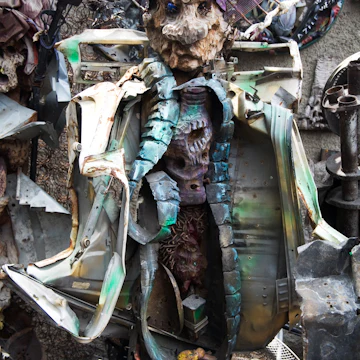
    The Grand Rue artists are unlike anything you’ve seen in Haiti, turning scrap and found objects into startling Vodou sculpture. The results are a heady mix of spirit, sex and politics – a Caribbean junkyard gone cyberpunk, yet one very much grounded in the preoccupations of daily Haitian life.

    reviewed

  27. U

    Sylvio Cator Stadium

    Soccer matches are regularly played at Sylvio Cator Stadium. It hosts international matches as well as being the home ground for Port-au-Prince’s two main clubs, Racing Club Hätien and Violette Athletic. The atmosphere can be frenzied, with lots of music, drumming and Prestige beer.

    reviewed