Things to do in Berlin
-
A
Museum für Film und Fernsehen
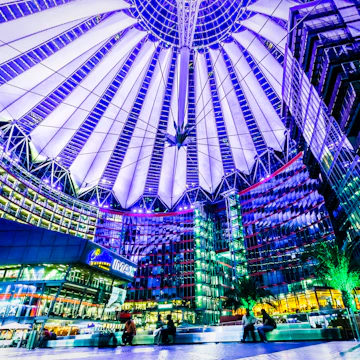
Germany's film history gets the star treatment year-round in the engaging Museum für Film und Fernsehen in the Sony Center. Make use of the excellent audioguide as you skip around galleries dedicated to pioneers such as Fritz Lang, ground-breaking movies such as Olympia by Leni Riefenstahl and legendary divas such as Marlene Dietrich. The TV exhibit is not nearly as engrossing, although if you ever wondered what Star Trek sounds like in German, this is your chance.
reviewed
-
B
Harry Lehmann
Let your senses step back in time at this charmingly fragrant fragment of ‘Old Berlin’, where the Lehmann family still creates bespoke perfumes (as they’ve been doing since 1926, although only at this spot since 1958) for discerning noses. Dozens of scents are kept in glass jars, and then syphoned into smaller flasks and sold by weight (with prices starting at just €3.50 for 10ml). Try the invigorating Eau de Berlin cologne, sensuous Lambada parfum, or ask them to customise your own scent.
reviewed
-
C
Bebelplatz
On this treeless square, books by Brecht, Mann, Marx and other ‘subversives’ went up in flames during the first full-blown public book burning, staged by the Nazi German Student League in 1933. Michael Ullmann’s underground installation, Empty Library, beneath a glass pane at the square’s centre, poignantly commemorates the event.
Named for August Bebel, the cofounder of the Social Democratic Party (SPD), it was called Opernplatz (Opera Square) when first laid out in the mid-18th century as part of the Forum Fridericianum, a cultural centre envisioned by Frederick the Great. Money woes meant that only some of the buildings could be realised: the Staatsoper Unter…
reviewed
-
D
Staatsbibliothek zu Berlin
The hulking building between Kulturforum and Potsdamer Platz houses part two of the State Library, picking up where the collection at the main branch on Unter den Linden leaves off, ie in 1955. Called ‘Stabi’ for short, it clearly bears the Scharoun imprimatur but wasn’t actually completed until 1978. Free 90-minute tours (in German) run at 10.30am every third Saturday of the month. Otherwise, it’s only accessible with a library card which comes with age and residency restrictions.
reviewed
-
E
Korea Haus
If you’re a Korean food virgin, this tiny hut in an unlikely Wedding location is a fine place to lose your innocence. The native owner-chef takes on the roles of greeter, seater, server, sommelier and cook in what amounts to a Peter Sellers–worthy performance. The menu is extensive, but we highly recommend the bulgogi: slices or chunks of beef or pork, cooked on a gas barbecue at your table and served with a handful of panchan (side dishes). Delicious and authentic.
reviewed
-
F
Former Reichsluftfahrtsministerium
Another design springing from the fevered brow of Tempelhof architect Ernst Sagebiel, the Reich Aviation Ministry was Hermann Göring’s massive power centre. It’s one of the few Nazi-era architectural relics that survived the epic Battle for Berlin. After the war it was used by several GDR ministries and in 1990, quite ironically, became the seat of the agency charged with privatising East German companies and property. It is now the home of the Federal Finance Ministry and not open to the public.
reviewed
-
G
Bar 25
With the 'Mediaspree' river development likely to become reality, some of Berlin’s most beloved riverside party spots are threatened. Summers just wouldn’t be the same without this surreal playground where you can arrive on Thursday and stumble home on Sunday without the party letting up. The setting is straight out of Twin Peaks : rustic log-cabin-style bar, candle-lit restaurant, a rope swing, an outdoor cinema, a spa with sauna and a trancey, thumpy club with disco ball.
reviewed
-
Rechenzentrum
This club had its start in April 2008, so fingers are crossed it’ll survive. Far, far off the beaten track, in a GDR-era data processing centre (some of the chunky old computers are still there), you can feel the electro beat on Saturday night, then chill by the UFO in the riverside Funkpark on Sunday (summer only). Opening times vary, but it’s usually open Saturday and Sunday. A free bus shuttles between the club and Ostkreuz (corner Neue Bahnhofstrasse and Sonntagstrasse) between 11pm and 5am.
reviewed
-
H
Marie-Elisabeth-Lüders-Haus
Across the river from the Paul-Löbe-Haus, on the former East Berlin side, the Marie-Elisabeth-Lüders-Haus houses the parliamentary library. Its most eye-catching design elements include a massive tapered stairway, a flat roofline jutting out like a springboard over a plaza, and a cube with giant circular windows containing the library reading room. The building complex just north is a daycare centre for the kids of government employees; note the hilarious boob-like structure.
reviewed
-
I
Boss Orange Concept Store
Boss Orange Concept Store ‘Concept’ doesn’t half cover it, with famous German label Hugo Boss’ creations housed in an architectural statement more akin to an art gallery than a mere retail space. You’ll find denim jeans embedded in the floor, quirky displays of unrelated modern-day paraphernalia and even regular exhibitions from contemporary artists and photographers in the downstairs ‘interactive space’. Oh, and some clothes.
reviewed
Advertisement
-
J
Historischer Hafen Berlin
Laced by rivers, canals and lakes, it’s not surprising that Berlin has a long history in inland navigation and it even had the busiest river port in Germany until WWII. The Historischer Hafen (Historical Harbour), at the southern tip of Museumsinsel, is an outdoor museum with over 20 vessels, barges and tugboats, many still operational. One boat doubles as a café in summer while another contains a small exhibit documenting 250 years of river shipping on the Spree and Havel.
reviewed
-
Haus Der Wannseekonferenz Gedenkstätte
In January 1942, a group of elite Nazi officials met in a stately villa on Wannsee to hammer out the details of the 'Final Solution' - the systematic deportation and murder of European Jews in eastern Europe. Today the same building houses the memorial Haus der Wannseekonferenz Gedenkstätte. You can stand in the room where discussions took place and study the conference minutes. Other rooms chronicle the horrors leading up to - and perpetrated during - the Holocaust.
reviewed
-
K
Abgeordnetenhaus
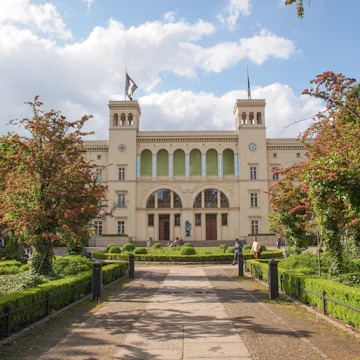
The stately neo-Renaissance structure across from the Martin-Gropius-Bau, technically placing it in Mitte, has been a political power nexus since its late-19th-century days as the house of the Prussian parliament. Under the Nazis, it went through a stint as a courthouse before being turned into an air force officers’ club. Since reunification, it has been the seat of Berlin’s state parliament. Free changing exhibits are held in the foyer and on the mezzanine level.
reviewed
-
L
Altes Schloss
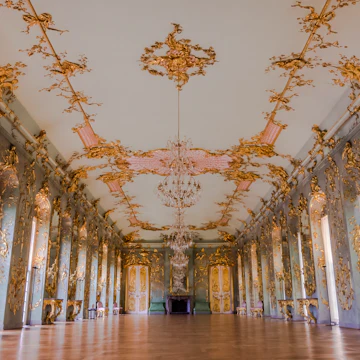
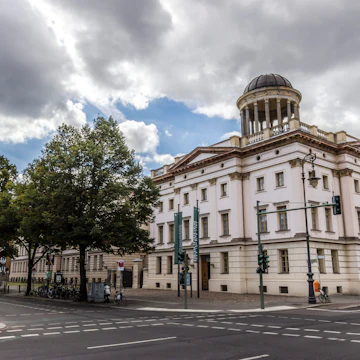
Also known as the Nering-Eosander Building after its two architects, this is the central, and oldest, section of the palace and fronted by Andreas Schlüter’s grand equestrian statue of the Great Elector (1699). The baroque living quarters of Friedrich I and Sophie-Charlotte are an extravaganza in stucco, brocade and overall opulence. Highlights include the Oak Gallery, a wood-panelled festival hall draped in family portraits; the charming Oval Hall overlooking the park; Friedrich I’s bedchamber, with the first-ever bathroom in a baroque palace; the fabulous Porcelain Chamber, smothered in Chinese and Japanese blueware; and the Eosander Chapel, with its trompe…
reviewed
-
Stasi Prison
Victims of Stasi persecution often ended up in the grim Stasi Prison, now a memorial site officially called Gedenkstätte Hohenschönhausen. Tours (in English at 2pm Saturday and sometimes during the week; call ahead) reveal the full extent of the terror and cruelty perpetrated upon thousands of suspected regime opponents, many utterly innocent. To get here, take tram M5 from Alexanderplatz to Freienwalder Strasse, then walk 10 minutes along Freienwalder Strasse.
reviewed
-
Hansaviertel
The Hansaviertel, built from 1954 to 1957, northwest of Tiergarten, and is a loosely-structured leafy area blending high-rises and single-family homes. It grew from an architectural exposition, the Internationale Bauausstellung, or ‘Interbau’, held in 1957, and represents the pinnacle of architectural vision in the 1950s. More than 50 architects from 13 countries – including Gropius, Luciano Baldessari, Alvar Aalto and Le Corbusier – participated in its design.
reviewed
-
Bräustübl
Wrap up a day at the Müggelsee on the lakeside terrace or inside this rambling brew-pub that oozes 1920s Berlin charisma from every nook and cranny. There are two menus: one featuring hearty, old-timey German classics that wash down well with the Berliner Bürgerbräu brewed on-site, and a smaller one with – get this! – light and healthy Ayurvedic dishes calibrated to blood type. Concerts, readings and cabaret take over the little stage at weekends.
reviewed
-
M
Das Verborgene Museum
Founded by a pair of feminist artists and art historians, the nonprofit Hidden Museum has a unique focus: the largely forgotten works by early-20th-century women artists, mostly from Germany. Past exhibits have highlighted the works of expressionist artist Ilse Heller-Lazard and photographs by Henriette Grindat. Curators mount about two exhibits annually, which run for three or four months each. At other times, the museum is closed.
reviewed
-
N
AM1, AM2, AM3
So hip it hurts, Andreas Murkudis’ cluster of minimalist-chic shops tucked away in a pretty Mitte courtyard offer a wealth of sartorial temptations for men and women from designers such as his Berlin-based brother Kostas Murkudis, internationals Sophia Kokosalaki and Martin Margiela, sturdy Ludwig Reiter footwear (from Vienna) and Schiesser underwear (given a twist by Kostas). There’s also furniture and jewellery, plus helpful, refreshingly honest service.
reviewed
-
O
Steiff Galerie in Berlin
The cuddly creations of this famous stuffed-animal company, founded in 1880 by Margarete Steiff (who in 1902 invented the teddy bear – named for US president Teddy Roosevelt, whom she admired), are tailor-made for snuggles. The fluffy menagerie at this central store will have all ages feeling warm and fuzzy.
reviewed
Advertisement
-
P
Ma
Champion chef Tim Raue brings dedication to freshness, innovative aromas and local ingredients to his new flagship restaurant at the Adlon Hotel. The décor alone is swoon-worthy, especially the 2000-year-old Han dynasty terracotta horse (ma is Chinese for horse) and the gilded carving. The kitchen takes Asian cuisine into the culinary stratosphere and everything is light and healthy thanks to the complete lack of white sugar, flour and other ‘bad carbs’.
reviewed
-
Q
Gendarmenmarkt
Berlin's most graceful square is bookended by the domed German and French cathedrals and punctuated by the grandly porticoed Konzerthaus Berlin. It was named for the Gens d’Armes, an 18th-century Prussian regiment consisting of French Huguenot immigrants whose story is chronicled in a museum inside the French cathedral. Climb the tower here for grand views of historic Berlin.
reviewed
-
R
Zagreus Projekt
Art meets food in this project space headed by chef-artist-gallery-owner Ulrich Krauss. Every other month, Krauss invites different artists to create a site-specific installation, then composes a menu inspired by the artwork and serves it to a small group of diners at a communal table right in the gallery. Great for art-loving foodies and food-loving artists. Reservations required as hours vary.
reviewed
-
Haus am Wannsee
Get in on the latest hotshots on the Berlin art scene at this ivy-covered villa that’s been teetering on the cultural edge since 1946. Art here is not limited to paintings but also includes sculpture, media art, fashion, furniture and architecture. Staff also rent an audioguide (€5, in German only) for a 90-minute bicycle tour (bicycle rental €5) of nearby houses built by such famous architects as Gropius, Mies van der Rohe and Muthesius.
reviewed
-
S
Vino e Libri
Two of civilization's greatest treasures - wine and books - form the name, decor and soul of this ristorante run with charm and panache by a Sardinian family. The pizza is excellent but chef Bruno truly shines when it comes to experimental flavour combinations. Strawberry salmon, and tagliatelle with wild boar in a chocolate-based sauce are truly excellent.
Wife Debora, meanwhile, keeps the service running as smoothly as a well-oiled machine.
reviewed