go to content go to search box go to global site navigation

El Salvador

Things to do in El Salvador

‹ Prev

of 9

  1. A

    Museo de la Palabra y La Images

    In its brand-new location, the Museum of Word and Image is a museum of Salvadoran writing and writers, with a heavy emphasis on the revolutionary movement of the '70s and '80s. No surprise really - the museum's director is Carlos Henríquez Consalvi, aka 'Santiago,' the Venezuelan-born journalist who was the founder and main voice of Radio Venceremos during the war. (You're liable to see him around the museum most days.)

    The museum has three small exhibit areas, through which it rotates compelling exhibits on themes such as writers (like Roque Dalton and Salarrué), the massacre of 1932, and women in Salvadoran history. Throughout the museum are terrific black-and-white…

    reviewed

  2. B

    Military History Museum

    Head to the troubling but surprisingly interesting Military History Museum. In a series of interconnected, barrack-like rooms, President Maximiliano Martínez is praised for the 'resolve and patriotism' with which he suppressed Communist insurgents in 1932 - some 30,000 indigenous men, women and children were killed in the process - and Colonel Domingo Monterrosa, alleged mastermind of the massacre at El Mozote, is described as having 'written pages of glory for the history of the armed forces.'

    On the walls and in floor-mounted displays is an incredible array of rifles, machine guns, grenade launchers, mortars, flame throwers, radio and night-vision equipment - almost…

    reviewed

  3. C

    Centro Turístico Puerto San Juan

    Boat tours of the lake and its various islands can be arranged at the new Centro Turístico Puerto San Juan, about 1km north (downhill) from the center of town. What used to be a grubby dirt lot is now an attractive modern structure, complete with eateries, artesanía vendors and a walkway overlooking the water. The tourism office have managed to convince the boat operators to establish fixed prices, which are charged per boat (up to 10 people).

    Tours range from 45 minutes to six hours, and visit a combination of islands, sights and lakeside villages, including Isla del Burro, San Luis Carmen and Isla Los Pájaros. You may be able to combine a boat tour with a visit to…

    reviewed

  4. D

    La Ventana

    Located in the heart of the bohemian bar-lounge scene, La Ventana is a smart, laid-back place that's popular day or night. Tables line the long windows - perfect for people watching - and the menu offers an excellent variety of international meals. Clients can choose from any number of creative sandwiches, big salads, pasta dishes and quiche…plenty of vegetarian options! Food is prepared fresh and portions are decent.

    Belgian and German ales are also served, as are tasty coffee drinks. A lively bar scene at night makes it a particularly cool place to have a bite. Buy postcards and La Ventana will mail them for free.

    reviewed

  5. E

    La Fonda del Mirador

    This Suchitoto institution has spectacular views of Lago de Suchitlán far below. The open air-dining room has exposed beams and a low-slung clay tile roof, with ferns hanging here and there. The food is great - gallo en chicha (chicken marinated in homemade moonshine) is a weekend favorite, and the boca colorada filete (fillet of smapper) is prepared with a homemade salsa of arrayan, mamey and tamarindo - all local fruits. The ensalada marinera (seafood salad) is a meal in itself.

    reviewed

  6. Paso de Alaska

    This good, friendly restaurant is located in Los Naranjos, El Salvador's highest town, in the shadow of Volcán Santa Ana and at the top of a scenic mountain pass between Santa Ana and Sonsonate (Hwy CA-12). The climate is cool, and you can see all the way to the ocean from the upper-level dining area. Hamburgers and sandwiches leave something to be desired - better to go with a typical lunch plate, like a quarter chicken with rice and garlic bread. Follow signs from the highway.

    reviewed

  7. F

    Volcán Guazapa

    Volcán Guazapa, towering to the southwest of Suchitoto, was an FMLN stronghold during the war. Today you can see bomb shells, craters and tatús, plus views of San Salvador and San Vicente volcanoes. You can visit by horse or on foot; the tours are operated by an independent cooperative, and the quality (vegetation cleared, tatús maintained, horses not depressed) depends greatly on who's in charge at the time. Check with the tourism office for details.

    reviewed

  8. G

    Templo del Señor Juayúa

    Juayúa's white-washed church - the Templo del Señor Juayúa - is famous for its crucifix: the 'Cristo Negro,' carved by Quirio Cataño in the late 16th century and displayed prominently at the back of the nave. It is the object of a great deal of worship and pilgrimage - you can climb a set of stairs behind the altar for a closer look. On your way out, don't miss the beautiful stained-glass windows along the walls, representing the 14 stages of the cross.

    reviewed

  9. H

    Lover's Steakhouse

    Don't leave Santa Ana without treating yourself to a dinner at Lover's. The menu ranges from Italian to Chinese, but the specialty is meat and seafood. Dishes are amazingly affordable. A rambling dining area includes an open-air courtyard, complete with tiki torches, and beers come with your pick of no less than 34 different bocadillos (appetizers), from ceviche to wontons to Buffalo wings.

    reviewed

  10. I

    Los Tacos de Paco

    Near Metrosur, this may be the most culturally enlightened taco joint you'll ever encounter. It hosts a poetry reading on Wednesday at 18:00, and has a small but good selection of books and artwork for sale. And as for the tacos…the sign says 'The Best Mexican Food in El Salvador,' which is either true or nearly true - either way, you won't be disappointed.

    reviewed

  11. Advertisement

  12. J

    El Sin Rival

    What started out as a two-tub street cart in 1953, has become a collection of great ice-cream shops - truly 'without rival.' It boasts 16 homemade sorbets made with natural ingredients - no chemicals or colorants here. Mora (blueberry) and tres leches (sweet milk) are the original flavors from the street-cart days, and are still local favorites.

    reviewed

  13. K

    Café La 'T'

    The most bohemian of nightspots in town, Café La 'T' (latte, get it?) is straight out of Chiapas, with Zapatista posters, photos of indigenous coffee workers and a distinctly lefty crowd. Free films are screened on Wednesday and Thursday, and there's live music every other Friday, usually jazz or Latin American folk music. Coffee is the specialty.

    reviewed

  14. L

    Iglesia Santa Lucia

    Constructed in 1853, this church is one of Suchitoto's colonial gems. Its facade features exquisite arches with molded keystones and six huge columns. Two statuesque towers loom down from above (both chime - one with a bell and the other with metal bars) and an antique clock sits in between. The wood-paneled interior is well preserved and worth a prayer.

    reviewed

  15. Casa Museo de Alejandro Cotto

    Considering this is one of the most expensive museums in the country, you'd think it might be a little more spectacular. It's a private collection of antiques, musical instruments, paintings and books crammed in a rambling colonial-era home. If you like poking around, Alejandro Cotto, a filmmaker born in Suchitoto, may even be there to show you around.

    reviewed

  16. M

    Café Baguette Lido

    A friendly bakery with two pages of creative sandwiches, divided into lite and, well, the opposite of lite. Try the turkey breast with cottage cheese, or salmon with capers, both served on wholegrain bread; or turn the page to the pesto chicken and NY Polish sausages. All come with a salad, fries or potato salad - whether you want it or not!

    reviewed

  17. N

    Tienda San José

    Inside this ordinary chips-and-soda minimart hides a surprisingly pleasant dining area with a sunflower motif and picnic tables. Friendly service and large plates of well-prepared típica make this a good choice. In the evening it becomes a popular meeting spot for locals and travelers alike.

    reviewed

  18. O

    Iglesia El Rosario

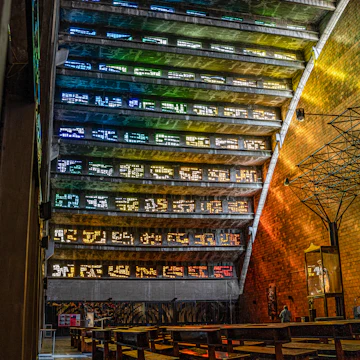
    What appears from the outside like a dilapidated airport hangar is, in fact, one of the most intriguing churches in the country. After entering through an easy-to-miss corridor, you'll see that Iglesia El Rosario opens into a shallow nave backed by a high brick wall and soaring arched roof above. The roof isn't a true arch, though, but a series of overhanging steps inset with a rainbow of stained-glass panels.

    On the walls are figures made of scrap metal, with larger, more detailed stone and metal statues displayed in the wings on either side of the main entrance. Besides the simple beauty of the place, the contrasts are striking - the modern industrial-style artwork, the…

    reviewed

  19. P

    Típicos Margoth

    A popular cafeteria-style restaurant serving, as the name suggests, típico. Food is fresh and served in good-sized portions. There's occasional live music on Saturday night.

    reviewed

  20. Chaparrastique

    Also known as Volcán de San Miguel, Chaparrastique is the 2130m volcano towering southwest of San Miguel. It's a real behemoth, and climbing it requires some advance planning (and should be done only in the dry season). First, you'll need a police escort, usually arranged through the Chinameca police station, whose jurisdiction the volcano falls into. Two weeks' notice is preferred, but with some friendly pleading you may be able to get an escort, within a couple of days.

    You'll have to fax a written request with the date and names of the people in your group. There is no fee, but definitely bring food for all - say, tamales for breakfast and pupusas for lunch - and…

    reviewed

  21. Centro de Intercambio y Solidaridad

    The Mélida Anaya Montes Spanish Language School is one of the principal programs offered by CIS, a community advocacy organization founded in 1993 by foreign and Salvadoran solidarity workers following the signing of the peace accords. Courses incorporate progressive social and political themes into assignments and discussions. Students live with local families and classes, taught by Salvadorans, are held weekday mornings.

    Afternoons are reserved for the school's 'Political Cultural Program,' which entails daytrips (and occasional weekend overnights) to coffee plantations, women's' cooperatives, health centers, social organizations, and other sites, to give students an…

    reviewed

  22. Advertisement

  23. Q

    Tin Marín Museo de los Niños

    Where to start? This gem of a museum has so many interesting hands-on features, your little one may need a return trip. Roughly divided into four sections - health, environment, technology and culture - exhibits include a miniature supermarket (to learn about food groups), a huge artificial volcano (complete with smoke and red lights for lava) and a papermaking area (to learn about recycling).

    There's a cockpit and fuselage of a real Boeing 727 airplane, and a real VW Beetle that kids can handpaint to their heart's delight - part of an exhibit on color and senses, it looks like an Andy Warhol piece. Another kid-favorite is the Casa de Gravedad (Gravity House) - a small…

    reviewed

  24. R

    Plaza Barrios

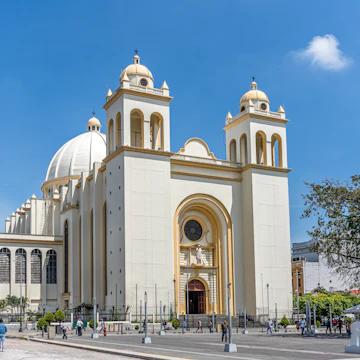
    The main plaza is called Plaza Barrios and dedicated to a former president and crusader for the separation of church and state. There is a statue of Barrios astride a horse in the middle of the plaza, turned to face the cathedral and streaked (of course) with pigeon shit. The Palacio Nacional is on the west side of the plaza and all the trees have been removed directly in front of it - the view is clear, but the stone-paved plaza can get hot in the afternoon as a result.

    Plaza Barrios is where most political protests begin or end (on our last visit, a group of family members and advocates for imprisoned gang members took control of the cathedral to protest new highly…

    reviewed

  25. S

    Museum of Popular Art

    Yet another terrific museum is the Museum of Popular Art, which showcases El Salvador's underappreciated contribution to Central American folk art. The main attraction is the Sala Dominga Herrera, which describes the evolution of 'sorpresas,' the tiny clay figures made and sold in nearby Ilobasco.

    Dominga Herrera (1911-1982), the daughter of ceramic doll makers, gained modest fame for her miniature and meticulously painted creations, which she began making on a whim but have since become a cottage industry for the whole town, even the country. Classic sorpresas are single pieces, usually portraying a profession, domestic scene or, more recently, sexual entanglements.…

    reviewed

  26. Cascada Los Tercios

    Cascada Los Tercios is a small waterfall that tumbles over a cliff of tightly packed hexagonal stone spires, a geological oddity related to volcanic activity. The falls are a bit underwhelming when the water is low (often), but the rock formation is interesting enough, as is getting there.

    To visit, go south on the road in front of Iglesia Santa Lucia; it curves left, down and up again, before intersecting with a main road at a soccer field. Turn left and continue for about 1.5km. Right after a smoking garbage dump, look for a gate on your left. Enter here or continue to the next house, where one of the kids can guide you - either way, you pass through the family's…

    reviewed

  27. T

    Capilla Medalla Milagrosa

    Built in 1904 by an order of French nuns and modeled after their church in Paris, the small Gothic-style Capilla Medalla Milagrosa is one of San Miguel's best attractions. It's a sublime place, set in the middle of large tree-filled grounds, with a high arched ceiling (painted baby blue) and famously gorgeous stained windows.

    The altar is populated with flowers and statues of saints, most prominently the Virgin Mary, who has a neon crown and displays the words - also in neon - María, concebida sin pecado, rogad por nos que recurrimos a vos (Mary, conceived without sin, pray for us who have recourse to thee). The saying comes from the namesake 'Miraculous Medal,' which…

    reviewed