Parque Nacional Carara

Save

Advertisement

Note: Javascript is disabled in your browser.
To see the gallery in all its glory, you'll need to enable Javascript.

Introducing Parque Nacional Carara

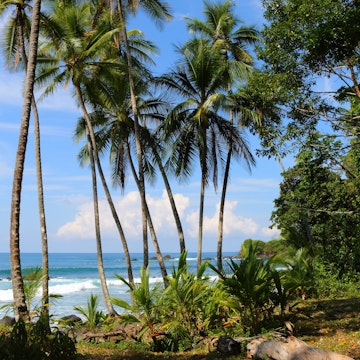
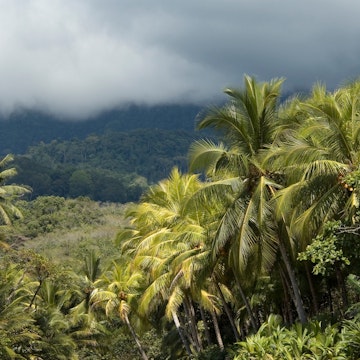
Situated at the mouth of the Río Tárcoles, the 5242-hectare park is only 50km southeast of Puntarenas by road or about 90km west of San José via the Orotina highway. Its significance cannot be understated. This reserve is at a crucial meeting point between the dry tropical forests to the north and the wet rain forests to the south, which means that it’s possible to see strangler figs and deciduous kapok trees alongside acacias and cacti. Since the park is surrounded by pasture and agricultural land, it forms a necessary oasis for all the wildlife inhabiting the transitional zone.

Advertisement

With the help of a hired guide, it’s also possible to visit the archaeological remains of various indigenous burial sites located within the park, though they’re tiny and unexciting compared to anything you might see in Mexico or Guatemala. At the time of the Europeans’ arrival in Costa Rica, these sights were located in an area inhabited by an indigenous group known as the Huetar (Carara actually means ‘crocodile’ in the Huetar language). Unfortunately, not much is known about this group as little cultural evidence was left behind. Today, the few remaining Huetar are confined to several small villages in the Central Valley.

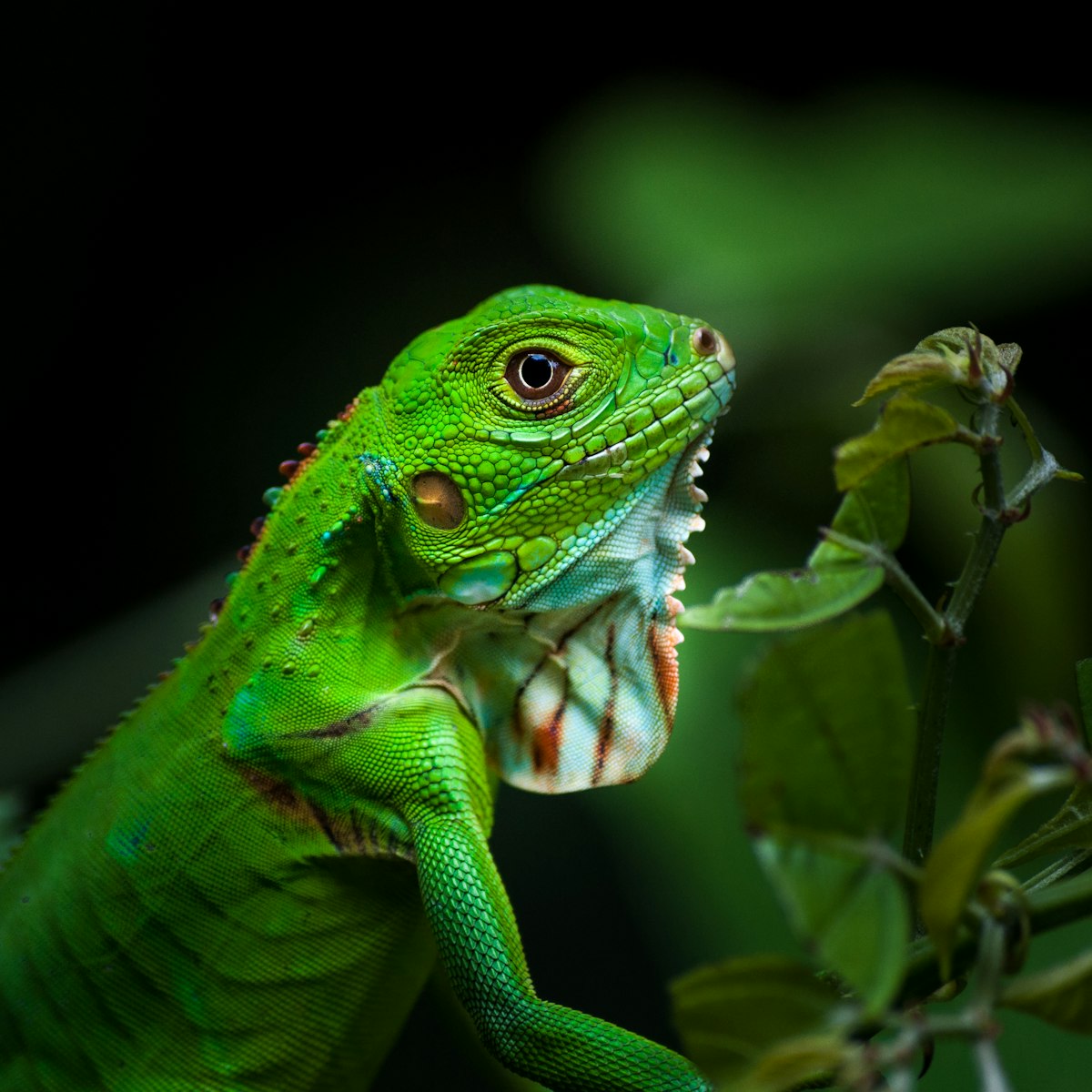
Over 400 different species of birds inhabit the reserve, though your chances of spotting rarer species will be greatly enhanced with the help of an experienced guide. The most exciting bird for many visitors to see, especially in June or July, is the brilliantly patterned scarlet macaw, a rare bird that is common to Parque Nacional Carara. Other birds to watch for include antbirds, parrots, trogons, manakins, herons and shorebirds. Monkeys, squirrels, sloths, agoutis and white-tailed deer are among the more common mammals present.

The dry season from December to April is the easiest time to go, though the animals are still there in the wet months. March and April are the driest months. Rainfall is almost 3000mm annually, which is less than in the rain forests further south. It’s fairly hot, with average temperatures of 25°C to 28°C – but it’s cooler within the rain forest. An umbrella is important in the wet season and occasionally needed in the dry months. Make sure you have insect repellent. According to the park rangers, the best chance of spotting wildlife is at 7am when the park opens.

If you’re driving from Puntarenas or San José, pull over to the left immediately after crossing the Río Tárcoles bridge, also known as Crocodile Bridge. If you scan the sandbanks below the bridge, you’ll have a fairly good chance of seeing as many as 30 basking crocodiles. Although they’re visible year-round, they best time for viewing is low-tide during the dry season. Binoculars help a great deal. Crocodiles this large are generally rare in Costa Rica as they’ve been hunted vigorously for their leather. However, the crocs are tolerated here as they feature prominently in a number of wildlife tours that depart from Tárcoles. And of course, the crocs don’t mind as they’re hand-fed virtually every day. Please people, we’re asking you nicely – don’t feed the animals.

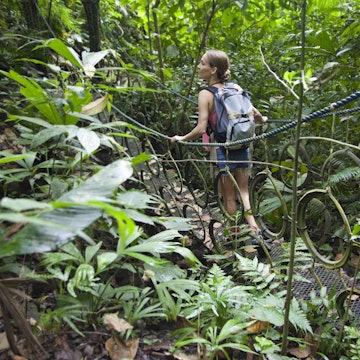
Some 600m further south on the left-hand side is a locked gate leading to the Sen­dero Laguna Meándrica trail. This trail pene­trates deep into the reserve and passes through open, secondary forest and patches of dense, mature forest and wetlands. About 4km from the entrance is Laguna Meańdrica, which has a large population of herons, smoothbills and kingfishers. If you continue past the lagoon, you’ll have a good chance of spotting mammals and the occasional crocodile, though you will have to turn back to exit. Another 2km south of the trailhead is the Carara ranger station (admission US$8; 7am-4pm), where you can get information and enter the park. There are bathrooms, picnic tables and a short nature trail. Guides can be hired for US$15 per person (two minimum) for a two-hour hike. About 1km further south are two loop trails. The first, Sendero Las Araceas, is 1.2km long and can be combined with the second, Sendero Quebrada Bonita (another 1.5km). Both trails pass through primary forest, which is characteristic of most of the park.

Increased tourist traffic along the Pacific coast has unfortunately resulted in an increase in petty theft. Vehicles parked at the trailheads are routinely broken into, and although there may be guards on duty, it is advised that drivers leave their cars in the lot at the Carara ranger station and walk along the Costanera Sur for 2km north or 1km south. Also, be sure to travel in a group and don’t carry unnecessary valuables as muggings are reported here occasionally. Alternatively, park beside the Restaurante Ecológico Los Cocodrilos.

Last updated: Mar 2, 2009

Tips & articles

  1. Wildlife watching in Costa Rica

    28 July 2009

    For a good number of travelers, a trip to Costa Rica is synonymous with wildlife watching. When some...

    Read more

See all tips & articles for Parque Nacional Carara

Hotels & Hostels

Check out all our reviewed and recommended accommodation and book online.

Find hotels & hostels

Travel Insurance

Going to Costa Rica? Make sure you're covered.

Get a quote

See all travel services

Advertisement