Sights in Shànghǎi
-
A
Yùyuán Gardens & Bazaar
With their shaded alcoves, glittering pools churning with carp, pavilions, pines sprouting wistfully from rockeries, and roving packs of Japanese tourists, these gardens (豫园; Yùyuán)are one of Shànghǎi's premier sights – but are overpoweringly crowded at weekends.
The Pan family, rich Ming-dynasty officials, founded the gardens, which took 18 years (1559–77) to be nurtured into existence before bombardment during the Opium War in 1842. The gardens took another trashing during French reprisals for attacks on their nearby concession by Taiping rebels. Restored, they are a fine example of Ming garden design. The spring and summer blossoms bring a fragrant and floral…
reviewed
-
B
Shanghai Urban Planning Exhibition Hall
The 3rd floor features Shanghai’s idealised future, with an incredible model layout of the megalopolis-to-come plus a dizzying Virtual World 3-D wrap-around tour complete with celebratory fireworks.
reviewed
-
C
Zhongshan Park
Known as Jessfield Park to the British, this is a moderately interesting park located in the north east, in the former ‘Badlands’ area of 1930s Shànghǎi. Kids will like Fundazzle ( 翻斗乐; Fāndǒulè), an adventure playground with slides, mazes and tunnels.
reviewed
-
D
M50
Chinese contemporary art has been the hottest thing in the art world for the past decade and there’s no sign of the boom ending, with collectors around the world paying record prices for the work of top artists like Zhang Xiaogang (whose paintings sold for a total of US$57 million in 2007). Běijīng may dominate the art scene in China, but Shànghǎi has its own thriving gallery subculture, centred on this complex of industrial buildings down dusty Moganshan Rd in the north of town. Although many of the artists who originally established the enclave are long gone, it is well worth putting aside a half-day to poke around the many galleries here. There’s some challenging,…
reviewed
-
E
Taikang Road Art Centre
Xīntiāndì and Taikang Rd are based on a similar idea – an entertainment complex housed within a layout of traditional lòngtáng alleyways – but when it comes to genuine charm and vibrancy, Taikang Rd is the one that delivers. Also known as Tiánzǐfáng, this community of design studios, wi-fi cafes, and boutiques is the perfect antidote to Shànghǎi’s oversized malls and intimidating skyscrapers. With families still residing in neighbouring buildings, a community mood survives, and the area’s relative transport isolation has prevented it from being utterly swamped by tour groups.
There are three main north–south lanes (Nos 210, 248, 274) criss-crossed by…
reviewed
-
F
Qibao
Well within reach of the centre of town (8km southwest of Xujiahui), the ancient canal town of Qibao dates back to the Northern Song dynasty (AD 960–1127), reaching its apogee during the Ming and Qing dynasties. Qibao is littered with traditional historic architecture, threaded by small, busy alleyways and cut by a picturesque canal. Vestiges of village handicrafts survive, including traditional wooden-bucket makers, a traditional distillery and a remarkable miniature carving museum. If you can blot out the crowds, Qibao will bring you some of the flavours of old China.
reviewed
-
G
Shanghai Museum
A tour de force, this museum of traditional Chinese art is the centrepiece of People’s Square, if not Shanghai, so bookmark a whole day. Top galleries include the Ceramics Gallery, Bronzes Gallery and Painting Gallery. Arrive early to avoid the queues. The Shanghai Museum also has an emporium. Items include facsimiles of the museum’s porcelain collection, and postcards and books on the Chinese arts, architecture, travel and language.
reviewed
-
H
Shanghai Ocean Aquarium
Education meets entertainment in this slick and intelligently designed aquarium that children will love. Join them on a tour through the aquatic environments from the Yangzi River to Australia, South America, the frigid ecosystems of the Antarctic and to the flourishing marine life of coral reefs. The 155m-long underwater clear viewing tunnel has gobsmacking views.
reviewed
-
I
Shanghai History Museum
One of Shanghai’s top sights, this fun museum charts the city’s highs and lows from its days as a cotton-producing town to its grandiose, opium-wreathed heyday and beyond. Life-size models of traditional shops are staffed by realistic waxworks and some exhibits are hands-on or accompanied by creative video presentations.
reviewed
-
J
Shanghai No 1 Department Store
Opened in 1936, the Shanghai No 1 Department Store was formerly known as the Sun Company and was one of East Nanjing Rd’s big department stores (with Wing On, Sun Sun and Sincere) and the first equipped with an escalator. Today it averages 150,000 shoppers a day over 11 levels of merchandise.
reviewed
Advertisement
-
K
Flower, Bird, Fish & Insect Market
One of the few remaining traditional markets in town, this is the spot to go shopping for city-sized pets. There are all sorts of critters for sale, but it’s the insects that are the most remarkable. Crickets come in a variety of sizes and are sold in woven bamboo cages; pick one up for under Y30.
reviewed
-
L
Oriental Pearl Tv Tower
Love it or hate it, this 468m-tall bauble-adorned tripod has become a symbol of Pudong and the Shanghai renaissance. Join the queue for high-altitude views or head to the basement to visit the highly recommended Shanghai History Museum.
reviewed
-
M
Jade Buddha Temple
One of Shànghǎi's few active Buddhist monasteries, this temple was built between 1911 and 1918. The centrepiece is the 1.9m-high pale green Jade Buddha (Yùfó), seated upstairs in his own hall. It is said that Hui Gen (Wei Ken), a Pǔtuóshān monk, travelled to Myanmar (Burma) via Tibet, lugged five jade Buddhas back to China and then sought alms to build a temple for them. The beautiful effigy of Sakyamuni, clearly Southeast Asian in style, gazes ethereally from a cabinet. Visitors are not able to approach the statue, but can admire it from a distance. An additional charge of Y10 is levied to see the statue (no photographs).
An equally elegant reclining Buddha is…
reviewed
-
N
Ohel Moishe Synagogue
This synagogue was built by the Russian Ashkenazi Jewish community in 1927 and lies in the heart of the 1940s Jewish ghetto. Today it houses the new Shanghai Jewish Refugees Museum, which is an excellent introduction to the lives of the approximately 20,000 Central European refugees who fled to Shànghǎi to escape the Nazis. You can also visit the synagogue. For a mini walking tour of the surrounding streets, turn right outside the synagogue, then right again past the former Jewish tenements of Zhoushan Rd, once the commercial heart of the district. At Huoshan Rd turn left to visit Huoshan Park and the memorial plaque erected for the visit of Yitzak Rabin in the late…
reviewed
-
O
Xīntiāndì
Xīntiāndì hasn’t even been around for a decade yet and already it’s a Shànghǎi icon. An upscale entertainment complex modelled on traditional alleyway (lòngtáng) homes, this was the first development in the city to prove that historic architecture does, in fact, have economic value. Elsewhere that might sound like a no-brainer, but in 21st-century China, which is head-over-heels for the bulldozer, it came as quite a revelation. Well-heeled shoppers and al fresco diners keep the place busy until late, and if you’re looking for a memorable meal or a browse through some of Shànghǎi’s more fashionable boutiques, you’re in the right place. The heart of the…
reviewed
-
P
Longhua Temple & Pagoda
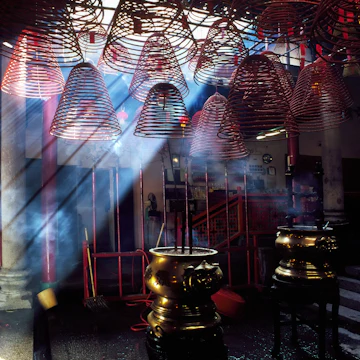
Southwest of central Shànghǎi, close to the river, this is the oldest and largest monastery in Shànghǎi. Said to date from the 10th century, it has been much renovated. Lónghuá refers to the pipal tree under which Buddha achieved enlightenment. There are five main halls, starting with the Laughing Buddha Hall. To either side of the entrance are a bell and a drum tower. The temple is famed for its 6500kg bell, which was cast in 1894. There are several side buildings to explore, including the Thousand Luohan Hall, in which is arrayed a huge legion of glittering arhat. A large effigy of Sakyamuni seated on a lotus flower is contained within the main hall – the Great…
reviewed
-
Q
50 Moganshan Road Art Centre
Chinese contemporary art has been the hottest thing in the art world for the last few years and there's no sign of the boom ending, with collectors paying record prices for the work of top artists. Traditionally Běijīng dominates the art scene in China. But Shanghai has its own thriving artistic community, centred on this complex of industrial buildings down dusty Moganshan Rd and edging up Suzhou Creek in the north of town.
Put aside a day to poke around the many galleries here. There's some challenging, innovative art, as well as work that won't last, and there are places to sip a coffee alongside the gallery owners and the artists themselves. A confusing series of…
reviewed
-
Gongqing Forest Park
The miserly lawn space in most of Shànghǎi’s synthetic parks can leave one cold, but this vast expanse of forested parkland on the western shore of the Huangpu River is a leafy, wooded and tranquil slice of countryside in town. This is about as wild as you get in Pǔxī, with acres of willows, luohan pines, magnolias, hibiscus and nary a skyscraper in sight. Aim to spend half if not a whole day picnicking and wandering around this huge area, or hop into one of the buggies (Y10) for express tours around the grounds. Children will whoop at the sight of the roller coaster (Y20), rock climbing wall (Y20), adventure ground and fun fair. There’s also a pricey football pitch…
reviewed
-
R
Confucian Temple
Most historic Chinese towns boast a temple dedicated to Confucius, although the iconoclastic spasms of the Cultural Revolution left many battered and bruised. A modest and pretty retreat, this well-tended temple to the dictum-coining sage is cultivated with maples, pines, magnolias and birdsong. Originally dating to 1294, when the Mongols held sway through China, the temple moved to its current site in 1855, at a time when Christian Taiping rebels were sending much of China skywards in sheets of flame. The layout is typically Confucian, its few worshippers complemented by ancient and venerable trees, including a 300-year-old elm. The towering Kuixing Pavilion (Kuíxīng Gé)…
reviewed
-
S
Shànghǎi World Financial Center
The neck-craning 492m-high Shànghǎi World Financial Center was never able to grab the ever-elusive title of world's tallest building, but it is nonetheless a stunning addition to the Pǔdōng skyline. With the world's highest observation deck (there are three decks in total, on the 94th, 97th and 100th floors) and the world's 2nd-highest hotel above ground level (at research time), even the dazzling Jīnmào Tower is now in the shade. Take the ear-popping lift up to the top or visit the restaurant/bar 100 Century Avenue to truly put your head in the clouds.
reviewed
Advertisement
-
T
Song Qingling Mausoleum
Despite its hard-edged communist layout, this green park is excellent for a stroll and for escaping the relentless Gǔběi skyline. Song Qingling herself is interred in a low-key tomb here, but she is memorialised in the Song Qingling Exhibition Hall ( 宋庆龄陈列馆; Sòng Qìnglíng Chénlièguǎn) straight ahead from the main entrance, which itself looks like a Chinese imperial tomb. Among the displays of Song memorabilia – including her black qípáo – is a telling photograph of Marxist Westerners reading from Mao’s Little Red Book back in the days when it was politically fashionable. The international cemetery here also contains a host of foreign…
reviewed
-
U
Shanghai Museum of Natural History
Located in the former Cotton Exchange Building (built in 1923), the exhibits at this dusty and gloomy museum haven’t been touched since the 1950s – now that’s something! It is easily the city’s most forlorn attraction and is horribly out of date, but, like the Bund Sightseeing Tunnel, it’s a bizarre experience and it has its fans. The museum’s former chairman, the gangster Du Yuesheng, built the dramatic red-brick building across East Yan’an Rd as the Chung Wai Bank (with a private bullet-proof elevator). It’s all expected to go soon, though. City officials feel it’s something of an embarrassment and a new natural history museum (more in line with post-1950s…
reviewed
-
V
Shanghai Botanical Gardens
The location just off the busy and polluted Longwu Rd is hardly idyllic, but the Botanical Gardens offer an escape from Shànghǎi’s synthetic cityscape. The Tropicarium gives you the chance to get close to tropical flora, and once inside, you can take the lift to the 6th floor for an impressive view of the gardens. Some of the flower arrangements are a little twee, but the place is well-maintained and bustling with visitors. The northern side of the gardens has a dusty memorial temple, originally built in 1728. It’s dedicated to Huang Daopo, who supposedly kick-started Shànghǎi’s cotton industry by bringing the knowledge of spinning and weaving to the region from…
reviewed
-
W
Temple of the Town God
Chinese towns traditionally came with a Taoist Temple of the Town God, but many fell victim to periodic upheaval. Originally dating to the early 15th century, this particular temple was badly damaged during the Cultural Revolution and later restored. Note the fine carvings on the roof as you enter to the main hall, dedicated to Huo Guang, a Han dynasty general, flanked by rows of effigies representing both martial and civil virtues. Exit the hall north and peek into the multifaith hall on your right dedicated to three female deities, Guanyin (Buddhist), Tianhou and Yanmu Niangniang (Taoist). Gazing fiercely over offerings of fruit from the rear hall is the red-faced and…
reviewed
-
X
People’s Park
Occupying the site of the colonial racetrack (which became a holding camp during WWII), People’s Park is a green refuge from Shànghǎi’s fume-ridden roads, with its Shanghai Museum of Contemporary Art ) and pond-side bar, Barbarossa, all overlooked by Tomorrow Square, the Shanghai Art Museum and the Park Hotel. If you’re in Shànghǎi in June, join the photographers ringing the gorgeous pink lotuses that flower in the pond. On weekend mornings an unofficial matchmaking market is held here, where parents show up with their children’s CVs (but without the children) in an attempt to find a suitably successful spouse.
reviewed