Sights in Hong Kong
-
A
Tian Tan Buddha
On a hill above the monastery sits the Tian Tan Buddha, a seated representation of Lord Gautama some 23m high (or 26.4m with the lotus), or just under 34m if you include the podium. There are bigger Buddha statues elsewhere – notably the 71m-high Grand Buddha at Leshan in China's Sichuan province – but apparently these are not seated, outdoors or made of bronze. It weighs 202 tonnes, by the way. The large bell within the Buddha is controlled by computer and rings 108 times during the day to symbolise escape from what Buddhism terms the '108 troubles of mankind'.
The podium is composed of separate chambers on three different levels. On the first level are six statues of…
reviewed
-
B
Peak Tower
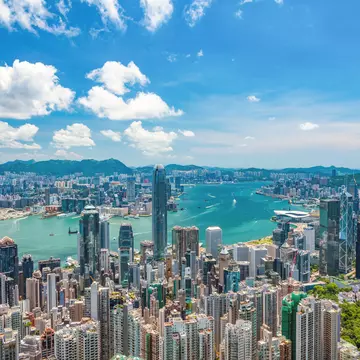
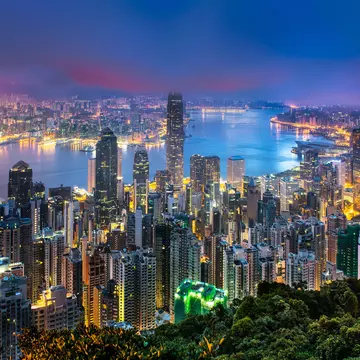
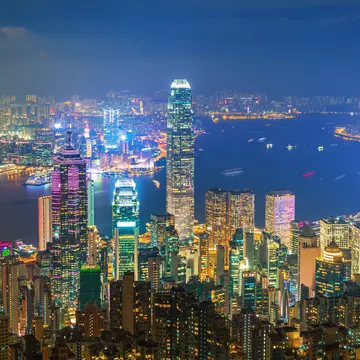
The anvil-shaped Peak Tower makes a good grandstand for many of the best views of the city and harbour. On Level P1 there’s an outpost of Madame Tussauds, with eerie (and often creepy) wax likenesses of international stars, as well as local celebrities such as Jackie Chan and Michelle Yeoh. There is an open-air viewing terrace (adult/child $30/15) on Level 5.
reviewed
-
C
Ocean Park
It may have to compete with the natural crowd-pulling powers of Disneyland on Lantau, but for many Ocean Park remains the top theme park in Hong Kong. The accolade is in no small part thanks to a successful revamp of this local institution, which has seen new rides and attractions added to the constantly expanding site as well as consistently record-breaking visitor numbers. The presence of four giant pandas plus four very cute, rare red pandas – all gifts from the mainland – has also contributed to the dramatic turnaround in the park’s fortunes.
The park is divided into two main sections. The main entrance is on the Waterfront (lowland) side and is linked to the…
reviewed
-
D
Hong Kong Disneyland
One of America's most famous cultural exports finally landed in Hong Kong in late 2005. It's divided into four main areas – Main Street USA, Fantasyland, Adventureland and Tomorrowland – but don't expect too much. This is a very small-scale Disney franchise (although there are plans to expand it) with a solitary real adrenaline- inducing roller coaster ride (Space Mountain), while the rest of the park is made up of tamer attractions and of course is rammed with outlets selling Disney merchandise and fast food.
There's plenty for younger children to enjoy, including the full complement of Disney characters patrolling the park and the odd show re-creating great Disney…
reviewed
-
E
Chi Lin Nunnery
One of the most beautiful and arrestingly built environments in Hong Kong, this large Buddhist complex, originally dating from the 1930s, was rebuilt completely of wood (and not a single nail) in the style of the Tang dynasty in 1998. It is a serene place, with lotus ponds, immaculate bonsai tea plants and bougainvillea, and silent nuns delivering offerings of fruit and rice to Buddha and arhats (Buddhist disciples freed from the cycle of birth and death) or chanting behind intricately carved screens. The design (involving intricately interlocking sections of wood joined without a single nail) is intended to demonstrate the harmony of humans with nature. It’s pretty…
reviewed
-
F
Tsim Sha Tsui East Promenade
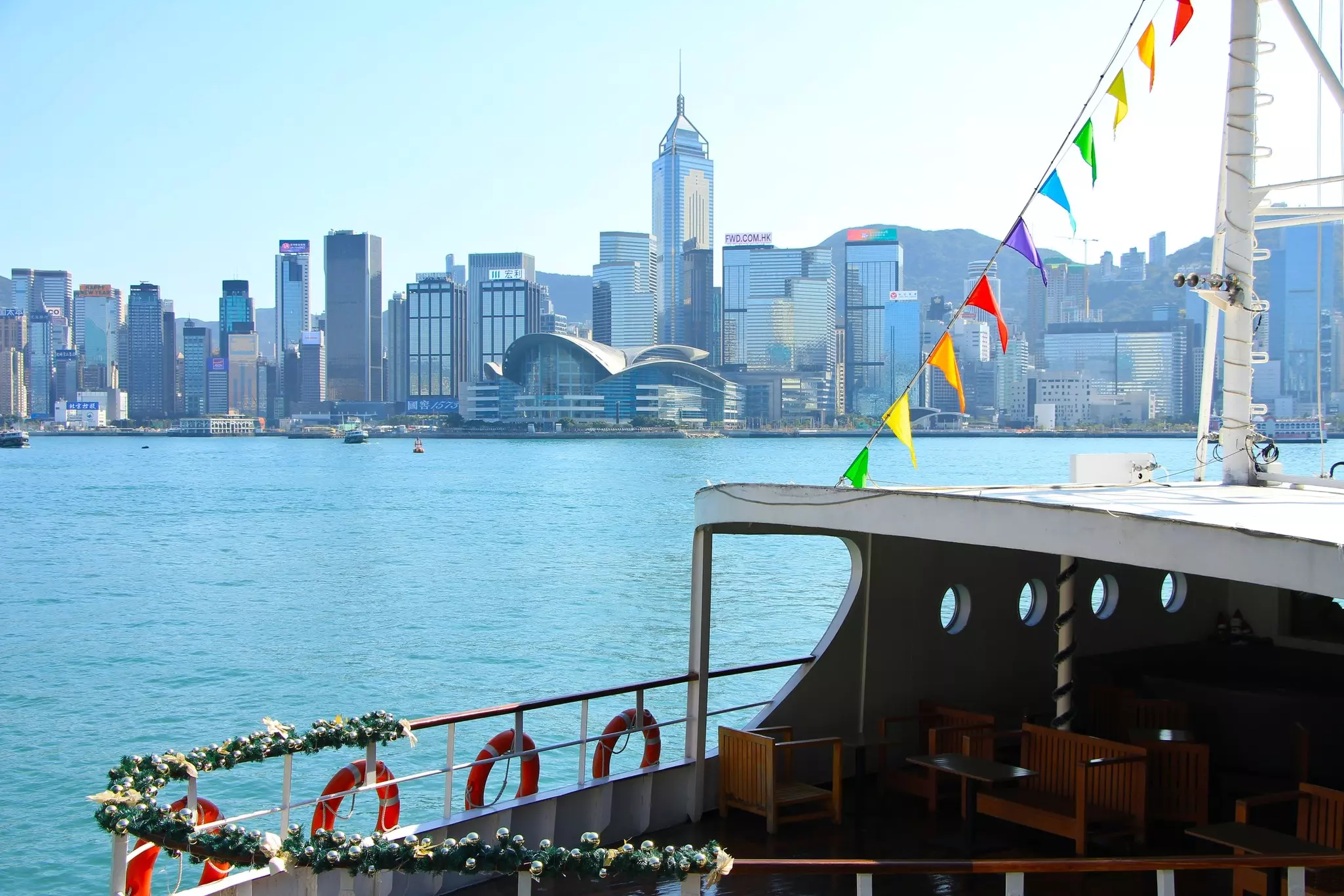
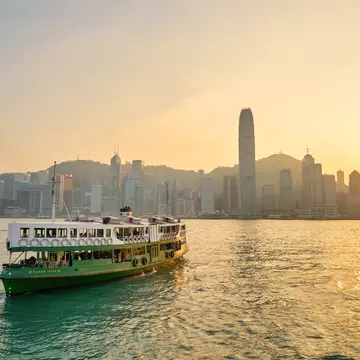
One of the finest city skylines in the world has to be that of Hong Kong Island, and the promenade here is one of the best ways to get an uninterrupted view. It’s a lovely place to stroll around during the day, but it really comes into its own in the evening, during the nightly Symphony of Lights, a spectacular sound-and-light show involving 44 buildings on the Hong Kong Island skyline, which runs from 8pm to 8.20pm. The new Deck ‘n Beer bar located here is a great spot to have an alfresco, waterside drink (weather permitting).
Along the first part of the promenade is the Avenue of the Stars, which pays homage to the Hong Kong film industry and its stars, with…
reviewed
-
G
Hong Kong Museum of History
For a whistle-stop overview of the territory’s archaeology, natural history, ethnography and local history, this museum is well worth a visit, not only to learn more about the subject but also to understand how Hong Kong presents its history to itself and the world.
‘The Hong Kong Story’ takes visitors on a fascinating walk through the territory’s past via eight galleries, starting with the natural environment and prehistoric Hong Kong – about 6000 years ago, give or take a lunar year – and ending with the territory’s return to China in 1997. You’ll encounter replicas of village dwellings; traditional Chinese costumes and beds; a re-creation of an entire arcaded street…
reviewed
-
H
Apliu Street Market
From the Sham Shui Po MTR station, take exit A1 and you’ll soon fall right into this flea market, which makes a cheaper and more interesting hunting ground than the Temple Street Night Market to the south. Everything from clothing to antique clocks and coins is on sale here, although the real speciality is secondhand electronic goods – radios, mobile phones, stereo systems, amplifiers and spare parts. The market spills over into Pei Ho St.
reviewed
-
I
Central Escalator
The world’s longest covered outdoor people-mover is part commuter travelator, part sightseeing ride and part pick-up procession. It consists of elevated escalators, moving walkways and linking stairs on the 800m hill from Central’s offices to the bedroom communities of the Mid-Levels. The best part is gliding by the Shelley St bars; there’s just enough time to make flirtatious eye contact with the denizens within.
reviewed
-
J
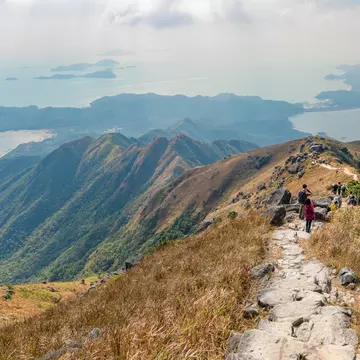
Ngong Ping Plateau
Perched 500m up in the western hills of Lantau is the Ngong Ping Plateau, a major drawcard for Hong Kong day-trippers and foreign visitors alike, especially since 1993, when one of the world's largest statues of Buddha was unveiled here.
reviewed
Advertisement
-
K
Tai O
A century ago this mostly Tanka village on the west coast of Lantau was an important trading and fishing port, exporting salt and fish to China. Today Tai O is in decline, except perhaps as a tourist destination offering an intriguing glimpse of the life of a traditional fishing village.
A few of the saltpans still exist, but most have been filled in to build high-rise housing. Older people still make their living from duck farming, fishing, making the village's celebrated shrimp paste and processing salt fish, which you'll see (and smell) everywhere. It remains a popular place for locals to buy seafood – both fresh and dried.
As recently as the 1980s Tai O also traded in…
reviewed
-
L
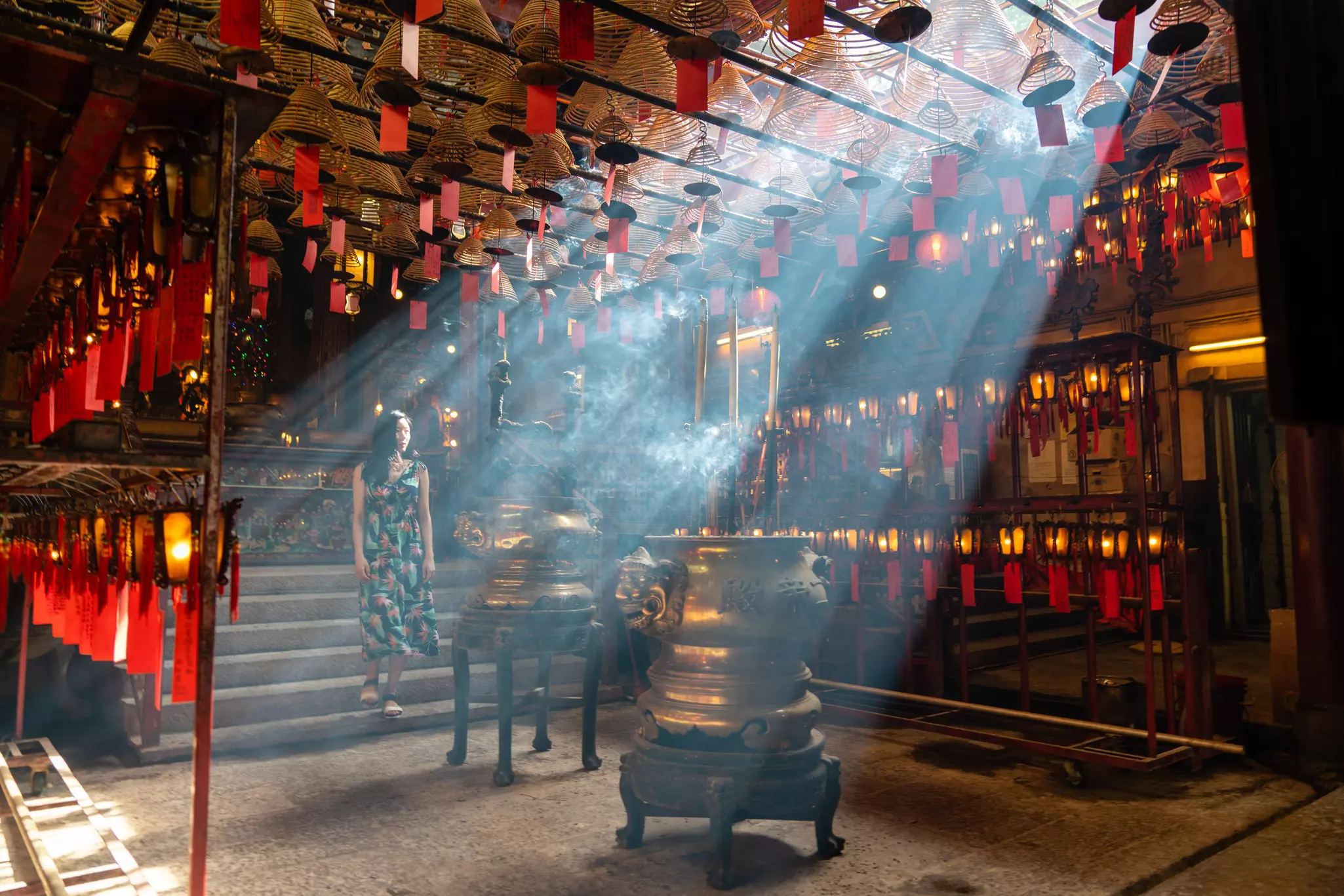
Sik Sik Yuen Wong Tai Sin Temple
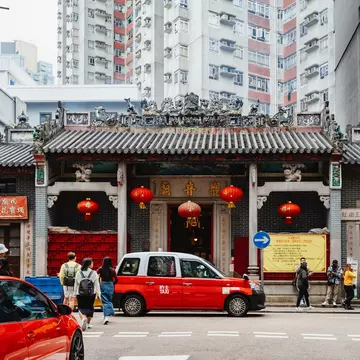
An explosion of colourful pillars, roofs, lattice work, flowers and incense, this busy temple is a destination for all walks of Hong Kong society, from pensioners and businesspeople to parents and young professionals.
Some come simply to pray, others to divine the future with chìm – bamboo ‘fortune sticks’ that are shaken out of a box on to the ground and then read by a fortune-teller (they’re available free from the left of the main temple).
The complex, adjacent to the Wong Tai Sin housing estate, was built in 1973 and is dedicated to the god of that name, who began his life as a humble shepherd in Zhejiang province. When he was 15 an immortal taught Wong Tai…
reviewed
-
M
Hong Kong Museum of Art
The excellent Hong Kong Museum of Art is a must for lovers of the fine as well as the applied arts. It has seven galleries spread over six floors, exhibiting Chinese antiquities, Chinese fine art, historical pictures and contemporary Hong Kong art; it also hosts temporary international exhibitions.
The seventh gallery houses the Xubaizhi collection of painting and calligraphy. Highlights include some exquisite ceramics in the Chinese Antiques Gallery; the Historical Pictures Gallery, with its 18th- and 19th-century Western-style paintings of Macau, Hong Kong and Guǎngzhōu; and the Gallery of Chinese Fine Art, which combines contemporary Chinese art and 20th-century…
reviewed
-
N
Tung Wan Beach
Tung Wan Beach, Cheung Chau's longest and most popular (though not its prettiest) beach lies at the end of Tung Wan Rd, due east of the ferry pier. The best part of Tung Wan is the far southern end, which is a great area for windsurfing. Just south of Tung Wan Beach, Kwun Yam Wan Beach is known to English speakers as Afternoon Beach and is a great spot for windsurfing.
Windsurfing has always been an extremely popular pastime on Cheung Chau, and Hong Kong's only Olympic gold medal winner to date, Lee Lai-shan, who took the top prize in windsurfing at the 1996 Olympics in Atlanta, grew up here. At the northern end of Afternoon Beach, the Cheung Chau Windsurfing Water Sports…
reviewed
-
O
Lamma Island
The third-largest island after Lantau and Hong Kong, Lamma is known for its lively pubs, seafood restaurants, beaches and hikes. The laid-back lifestyle, strong feeling of community and relatively low rental make it a popular place with expats. The most interesting way to see a good portion of the island is to follow the 4km-long 'Family Trail' between the two main villages, Yung Shue Wan and Sok Kwu Wan, which takes a little over an hour, and return to Central by ferry from there.
reviewed
-
P
Lippo Centre
Though the Hongkong & Shanghai Bank building and the Hong Kong International Airport in Chep Lap Kok (1998) – both by English architect Norman Foster, in Late Modern high-tech style – may be Hong Kong’s best-known modern architecture, there are quite a number of fine modernist buildings in the territory designed by old masters. The Lippo Centre, which resembles koalas hugging a tree, is a pair of office towers built in 1987 by American Paul Rudolph.
reviewed
-
Q
Hong Kong Maritime Museum
This small but interesting museum, occupying the ground floor of Murray House, consists of ancient and modern galleries charting the shipping history of Hong Kong. It’s well worth a visit if you’ve already come to see Murray House. The modern gallery includes some fun interactive displays where you can test your skills at Morse code or even pilot a tanker through Hong Kong waters.
reviewed
-
Lantau Link Viewing Platform
The Lantau Link Visitors Centre and its viewing platform is where you can take in the enormity of Tsing Yi Bridge and the Lantau Link, the combined road and rail transport connection between the New Territories and Lantau. The centre contains models, photographs and videos of the construction process – very much a crowd-pleaser for trainspotters and the hard-hat brigade.
reviewed
-
R
Avenue of the Stars
One of the finest city skylines in the world has to be that of Hong Kong Island, and the promenade here is one of the best ways to get an uninterrupted view. It’s a lovely place to stroll around during the day, but it really comes into its own in the evening, during the nightly Symphony of the Stars, a spectacular sound-and-light show involving 20 buildings on the Hong Kong Island skyline, which runs from 8pm to 8.20pm. Along the first part of the promenade is the Avenue of the Stars, which pays homage to the Hong Kong film industry and its stars, with handprints, sculptures and information boards, a brave but ultimately lacklustre effort to celebrate Hong Kong’s film…
reviewed
-
S
Mai Po Nature Reserve
The 270-hectare nature reserve includes the Mai Po Visitor Centre at the northeastern end, where you must register; the Mai Po Education Centre to the south, with displays on the history and ecology of the wetland and Deep Bay; floating boardwalks and trails through the mangroves and mud flats; and a dozen hides (towers or huts from where you can watch birds up close without being observed). Disconcertingly, the cityscape of Shenzhen looms to the north.
Visitors are advised to bring binoculars (they may be available for rent at the visitor centre for $20) and cameras, and to wear comfortable walking shoes or boots but not bright clothing. It is best to visit at high tide…
reviewed
Advertisement
-
T
South Lantau Rd
Just under 5km southwest of Mui Wo, Pui O is the first of several coastal villages along South Lantau Rd. Pui O has a decent beach, but as it's the closest one to Mui Wo it can get very crowded. The village has several restaurants, holiday flats galore and, in season, stalls renting bicycles.
Cheung Sha (Long Sand), at over 3km Hong Kong's longest beach, is divided into 'upper' and 'lower' sections; a trail over a hillock links the two. Upper Cheung Sha, with occasional good surf, is the prettier and longer stretch and boasts a modern complex with changing rooms, toilets, showers and a snack bar. Lower Cheung Sha village has a beachfront restaurant, Stoep Restaurant. Long…
reviewed
-
Beaches
Tung Wan beach, Cheung Chau’s longest and most popular beach (though not its prettiest), lies at the end of Tung Wan Rd, due east of the ferry pier. The best part of Tung Wan is the far southern end, which is a great area for windsurfing. Just south of Tung Wan beach, Kwun Yam Wan beach is known to English speakers as AfternoonBeach and is a great spot for windsurfing. Windsurfing has always been an extremely popular pastime on Cheung Chau, and Hong Kong’s only Olympic gold-medal winner to date, Lee Lai-shan, who took the top prize in windsurfing at the 1996 Olympics in Atlanta, grew up here. At the northern end of Afternoon Beach, the Cheung Chau Windsurfing Water…
reviewed
-
U
Hong Kong Heritage Museum
This award-winning, three-storey purpose-built innovator features magnificent displays on Cantonese opera and the cultural heritage of the New Territories, the inspiring Children's Discovery Gallery(which has learning and play zones), the art collection of one Dr TT Tsui and, from time to time, the wonderful works of Hong Kong's little-known but excellent photographers.
reviewed
-
V
Noonday Gun
Built in 1901, this recoil-mounted 3lb cannon is one of the few vestiges of the colonial past in Causeway Bay. The gun stands in a small garden opposite the Excelsior Hotel on Gloucester Rd and is fired at noon every day.
The Noonday Gun is accessible via a tunnel through the basement car park in the World Trade Centre, just west of the Excelsior Hotel. From the taxi rank in front of the hotel, look west for the door marked ‘Car Park Shroff, Marina Club & Noon Gun’.
reviewed
-
W
Tung Chung
Change has come to Tung Chung, on Lantau's northern coast, at a pace that can only happen in Hong Kong. This previously all-but-inaccessible farming region, with the small village of Tung Chung at its centre, has seen Chek Lap Kok, the mountain across Tung Chung Bay, flattened to build Hong Kong's international airport and a New Town rise up, served by the MTR.
As part of the territory's plans to solve its housing crisis, Tung Chung New Town has now become a 760-hectare residential estate. The expected population of Tung Chung and the neighbouring New Town of Tai Ho is 330,000 by 2012.
These developments and transport improvements have put an end to Tung Chung as a peaceful…
reviewed