Sights in Québec City
-
A
Artillery Park
The French chose this location for their army barracks because of its strategic view of the plateau west of the city and the St Charles River, both of which could feed enemy soldiers into Québec City. English soldiers moved in after the British conquest of New France. The English soldiers left in 1871 and it was changed into an ammunition factory for the Canadian army. The factory operated until 1964 and thousands of Canadians worked there during the World Wars. Now you can visit the Officers’ Quarters and the Dauphine Redoubt where guides greet you in character (ie the garrison’s cook) and give you the scoop on life in the barracks. There’s also a huge model of Québec…
reviewed
-
B
Musée du Fort
Not really a museum at all, the Musée du Fort houses a 30-minute multimedia show on the many attempts over the centuries to take Québec City. It’s all played out on a model/diorama that lights up in the middle of a minitheater. The breathless narration and anemic smoke-puffs that pass for special effects are a bit hokey but it does give a quick, enjoyable, easy-to-grasp audiovisual survey of the city’s battles and history, making a good introduction to it. English-language shows are held on the hour (French-language versions on the half-hour).
reviewed
-
Basilique Ste-Anne-de-Beaupré
The village of Ste-Anne-de-Beaupré is known for the Goliath-sized Basilique Ste-Anne-de-Beaupré and its role as a shrine. Churches were built at this location since the mid-1600s but were frequently destroyed by fire. The awe-inspiring basilica of today was constructed after a devastating blaze in 1922 and has been open since 1934.
reviewed
-
C
La Citadelle
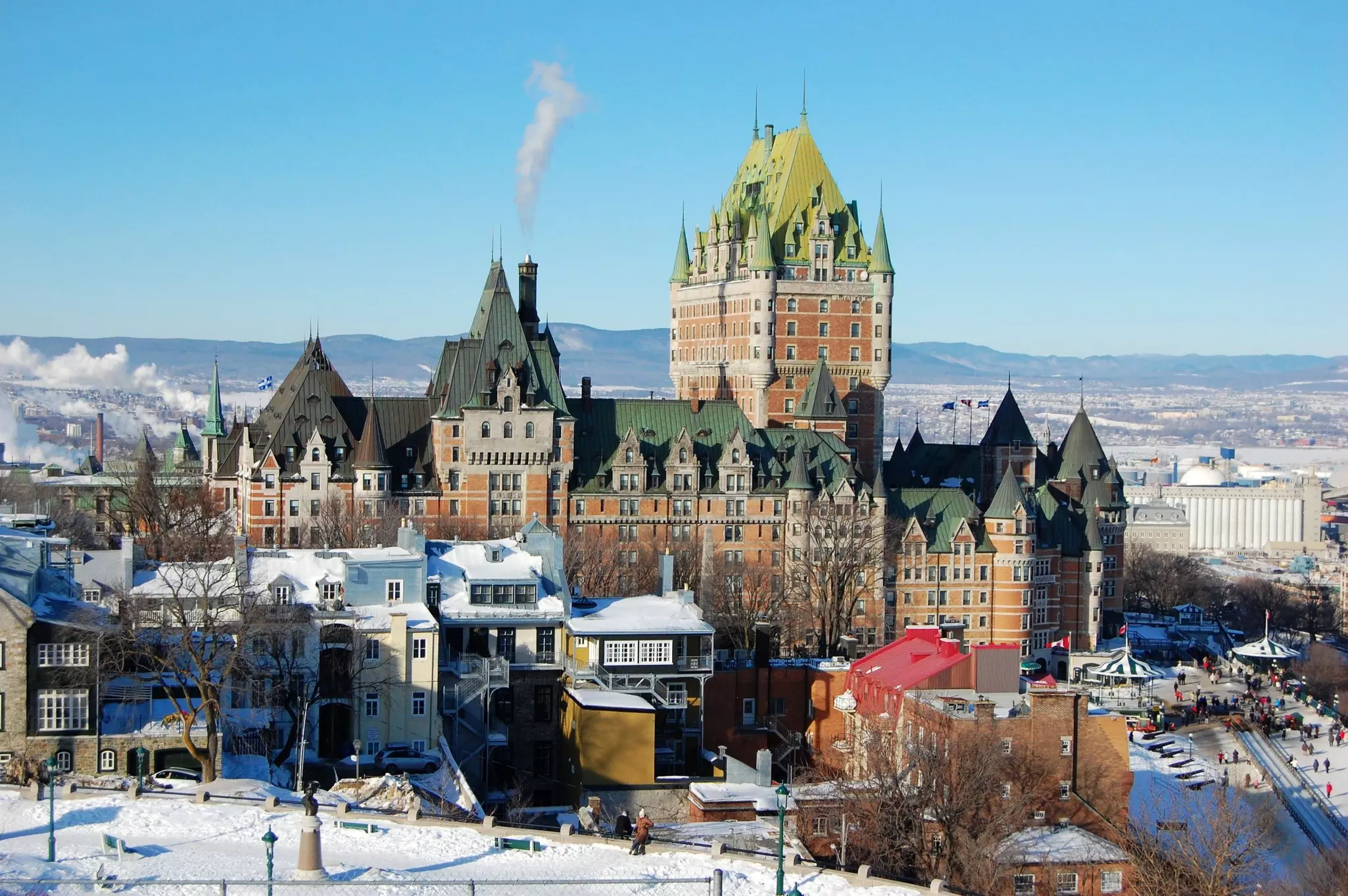
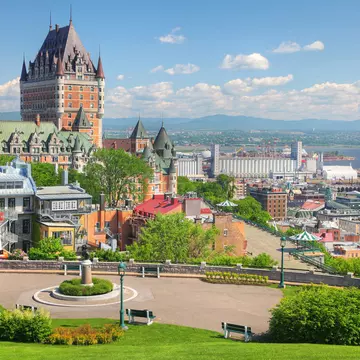
This massive, star-shaped fort towers above the St Lawrence River on Cap Diamant. French forces started construction here in the late 1750s leaving a gunpowder building and a redoubt, the beginnings of a defensive structure. But the Citadelle we know today was actually built by the British, who feared two things: an American invasion of the colony and a possible revolt by the local French-speaking population (that’s why the cannons point not only at the river, but at Québec City itself). However, by the time the Citadelle was completed (construction began in 1820 and was finished about 30 years later) things were calming down. Twenty years later, in 1871, the Treaty of…
reviewed
-
D
Musée National des Beaux-Arts du Québec
Anyone curious about Québec art needs to carve out at least half a day for a visit to this museum, one of the best in the province. There are expert permanent exhibitions that range from art and artists in the early French colonies to Québec’s abstract artists. There are also individual halls devoted entirely to the province’s artistic giants of the last century. The do-not-miss permanent exhibitions include one devoted to Jean-Paul Lemieux (1904–90) and another to Jean-Paul Riopelle (1923–2002), which includes L’hommage à Rosa Luxemburg (Tribute to Rosa Luxemburg; 1986), his largest work. The Brousseau Inuit Art Collection of 2639 pieces spanning 50 years…
reviewed
-
E
Hôtel du Parlement
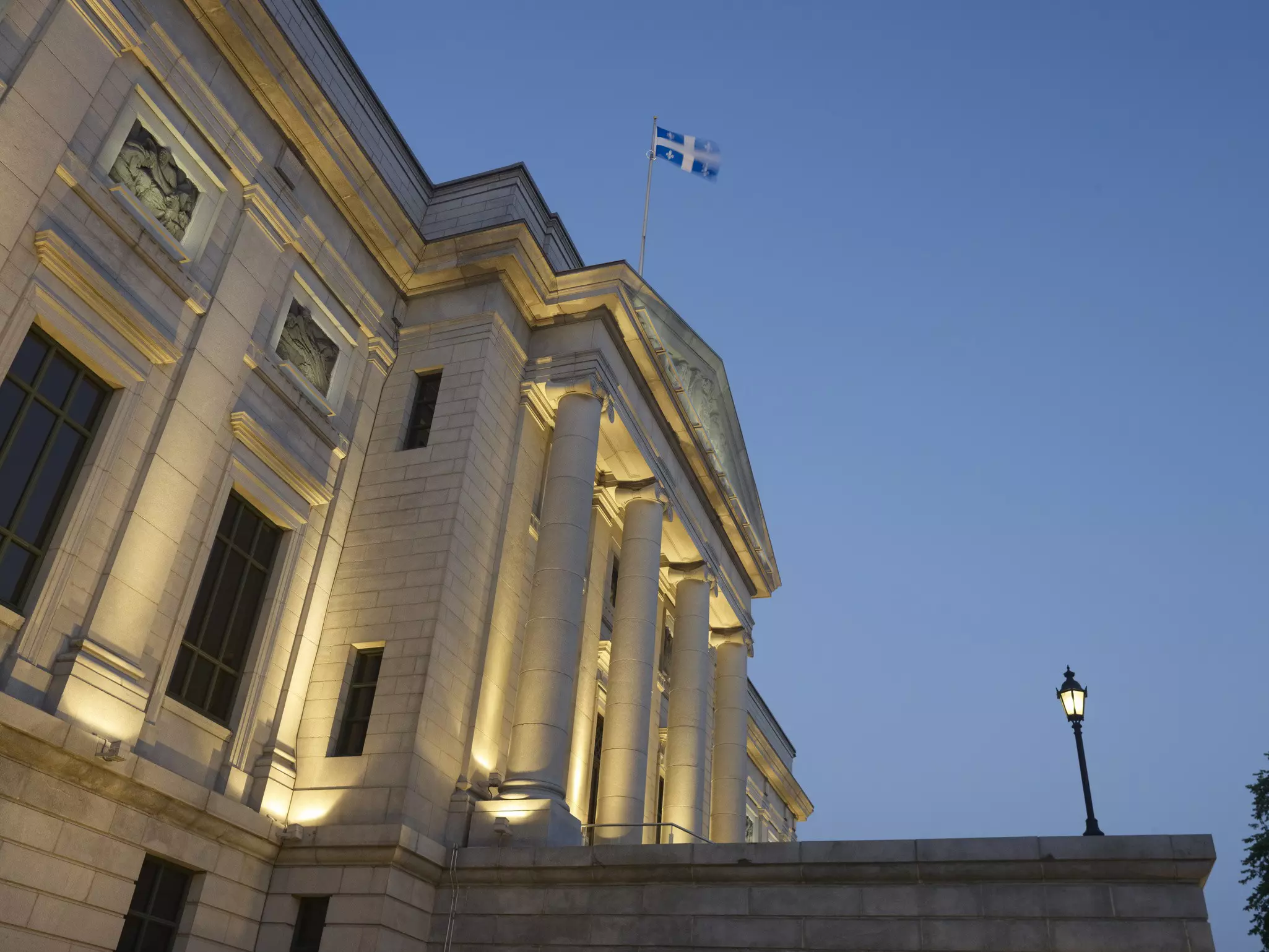
The National Assembly building is a Second Empire structure completed in 1886. It’s home to the Provincial Legislature. Free tours are given in English and French year-round. The 30-minute visits get you into the National Assembly Chamber, the Legislative Council Chamber and the Speakers’ Gallery. The facade of the building is decorated with 23 bronze statues of significant provincial historical figures, including explorer Samuel de Champlain (1570–1635), early New France governor Louis de Buade Frontenac (1622–98) and battle heroes like James Wolfe (1727–59) and Louis-Joseph Montcalm (1712–59), the English and French generals who met, fought and received mortal…
reviewed
-
F
Cathedral of the Holy Trinity
Built from 1800 to 1804, this cathedral was designed by two officers from the British army’s military engineering corps and modeled on St Martin-in-the-Fields Church in London, England. This elegantly handsome Anglican cathedral was the first ever built outside the British Isles, with oak imported from Windsor Castle’s Royal Forest just to make the pews. Upon its completion, King George III sent the cathedral a treasure trove of objects, including candlesticks, chalices and silver trays. The elaborateness of the gifts heading toward the New World sent London’s chattering classes atwitter. The royal box for the reigning monarch or her representative is located in the upper…
reviewed
-
G
Musée des Ursulines
The fascinating story of the Ursuline nuns’ lives and their influence in the 17th and 18th centuries is told in this thoughtful, well-set-out museum. The sisters established the first girls’ school on the continent in 1641, educating both aboriginal and French girls. Marie de l’Incarnation, the founder, was one of the most intriguing figures from the order. Leaving a young son in France after she was widowed, she joined the Ursulines and moved to New France and lived well into old age. She taught herself aboriginal languages and her frequent and eloquent letters to her son back in France are held by historians to be some of the richest and most valuable material available…
reviewed
-
Parc des Champs de Bataille
One of Québec City’s must-sees, this verdant, cliff-top park contains the Plains of Abraham. This was the stage for the infamous 1759 battle between British General James Wolfe and French General Montcalm that determined the fate of the North American continent. The park, named for Abraham Martin, a Frenchman who was one of the first farmers to settle in the area, is packed with sites, old cannons, monuments and commemorative plaques. It also has a fine multimedia history museum and several impressive fortification towers (one with a small military museum inside). The park is also a draw for locals, who come for outdoor activities such as running, in-line skating and,…
reviewed
-
Onhoüa Chetek8e
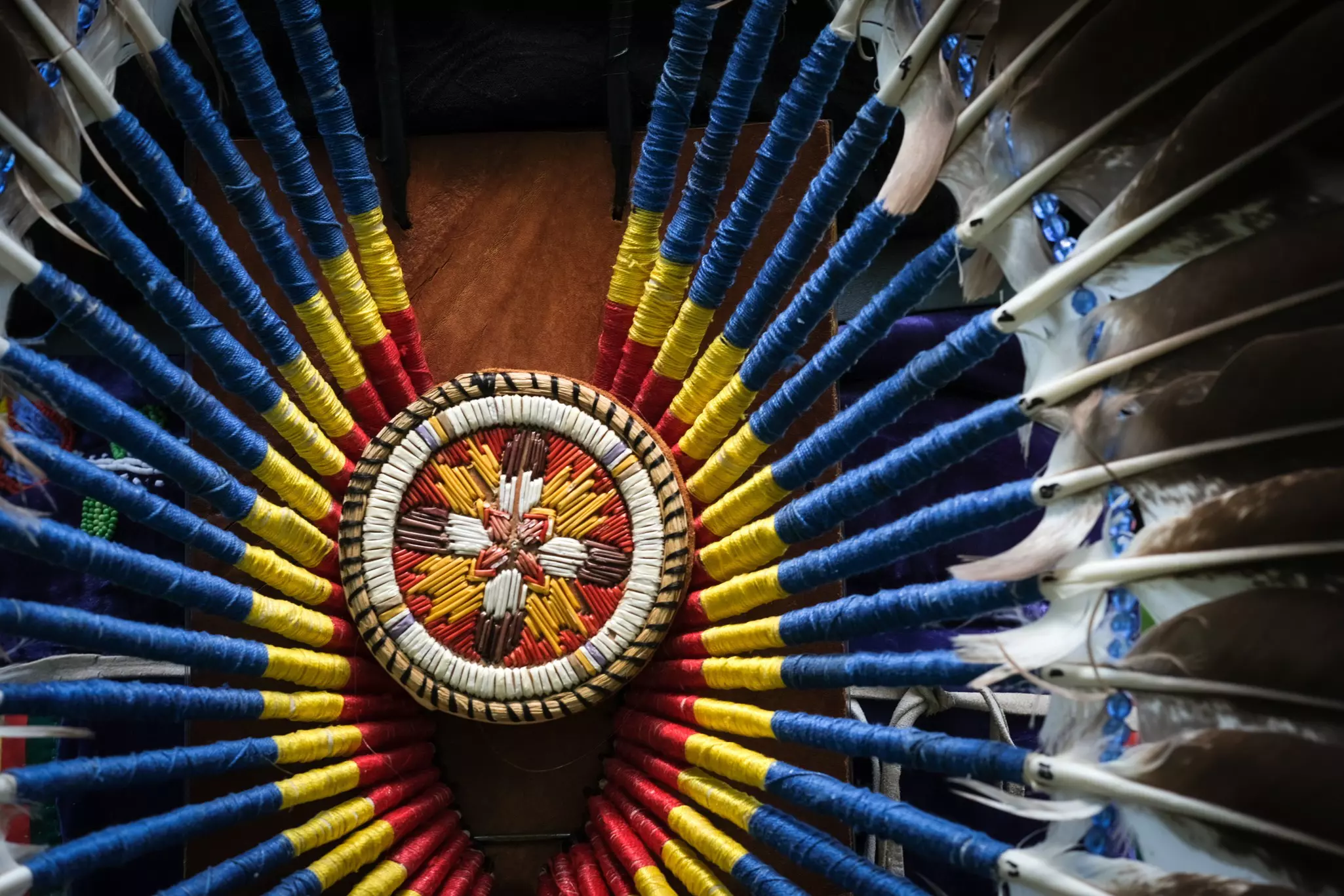
This Huron aboriginal reserve is only about 20 minutes west of Québec City (you’ll know you’re there when you start seeing the bilingual Huron/French traffic signs). The major attraction here is the Onhoúa Chetek8e, a reconstructed Huron village (the ‘letter’ 8 in Huron is pronounced ‘oua’ like the ‘wh’ in ‘what’). The guides are excellent (one is even a former land-claims negotiator) and take you round the village explaining Huron history, culture and daily life. It may be artificial, but visitors love this place and children go wild for the tipi, canoes and bow-and-arrow range. Several guides speak English but call ahead to make sure they aren’t already assigned…
reviewed
Advertisement
-
H
Musée de L’amérique Française
On the grounds of the Séminaire de Québec (the Québec Seminary), this excellent museum is purported to be Canada’s oldest. (The Musée Scientifique du Séminaire de Québec opened here in 1806.) The museum that stands here today has brilliantly atmospheric exhibits on life in the seminary during the colonial era as well as religious artifacts and temporary exhibitions on subjects like endangered species. The priests from the Québec Seminary were avid travelers and collectors and there are some magnificent displays of the scientific objects they brought back with them from Europe, such as old Italian astronomical equipment. The exhibits are capped off by a wonderful short…
reviewed
-
I
Basilique-Cathédrale Notre-Dame-de-Québec
This basilica got its start as a small church in 1647. In the ensuing years, the churches built here suffered everything from frequent fires to battle damage, especially during fighting between British and French armies in 1759. But no matter what, the church was rebuilt and repaired. Each replacement was bigger than the last until it reached the size you see today – a structure completed in 1925. The interior is appropriately grandiose, though most of the basilica’s treasures didn’t survive the 1922 fire that left behind only the walls and foundations. To have a look at the crypt, you’ll have to sign on to a guided tour. Everyone from governors of New France to…
reviewed
-
J
Musée de la Civilisation
The Museum of Civilization wows you even before you’ve visited the exhibitions. It is a fascinating mix of modern design that incorporates pre-existing buildings with contemporary architecture. The permanent exhibits, like the one on the cultures of Québec’s Aboriginals and the one titled ‘People of Québec: Then and Now, ’ are unique and well worth seeing. Many of the exhibits include clever interactive elements. The changing shows are also outstanding and this is really the only museum in town that regularly focuses on contemporary issues and culture. This is a big place with lots to see, so you should concentrate on only one or two exhibitions if you’re not planning to…
reviewed
-
Parc de la Chute Montmorency
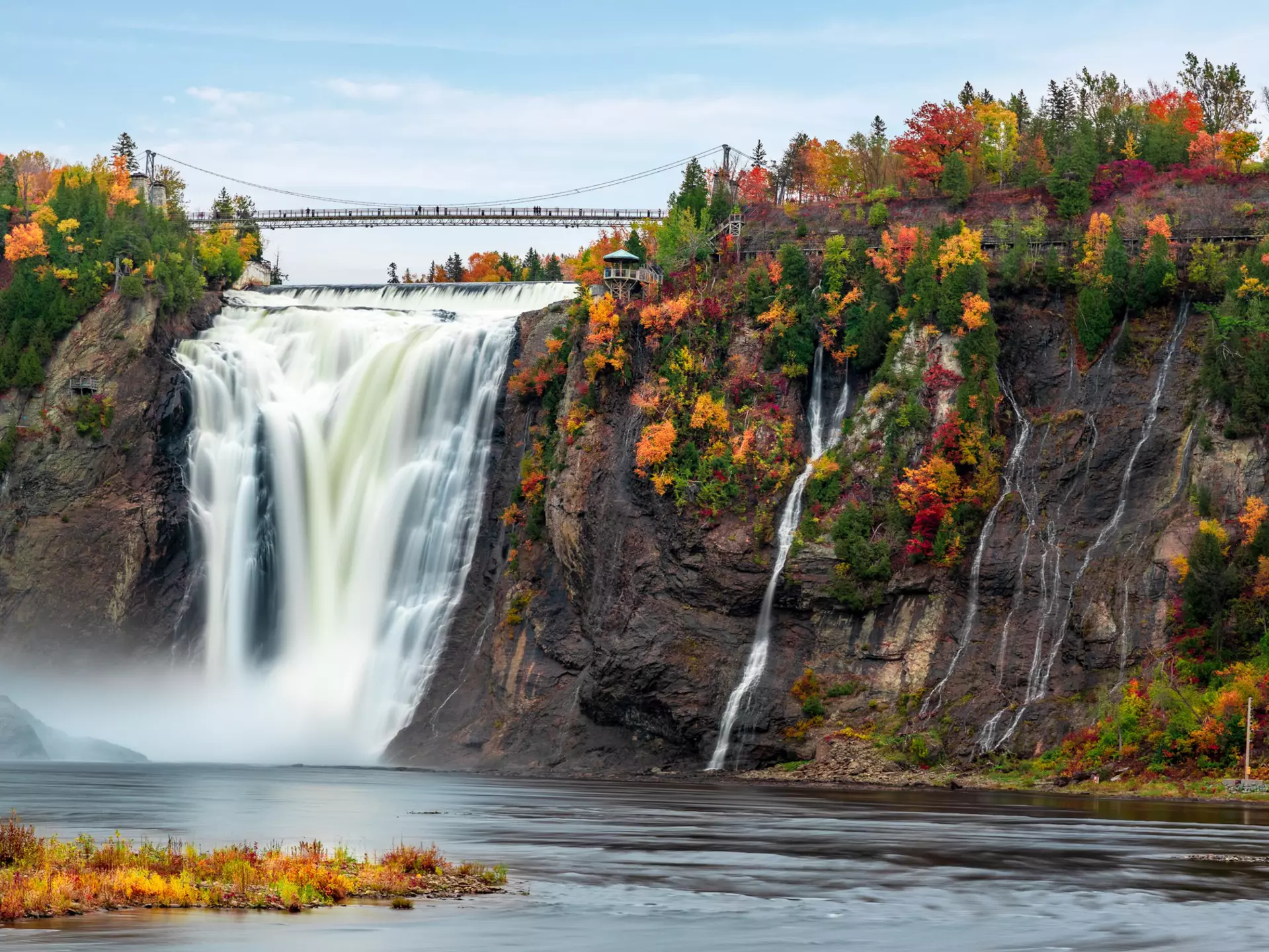
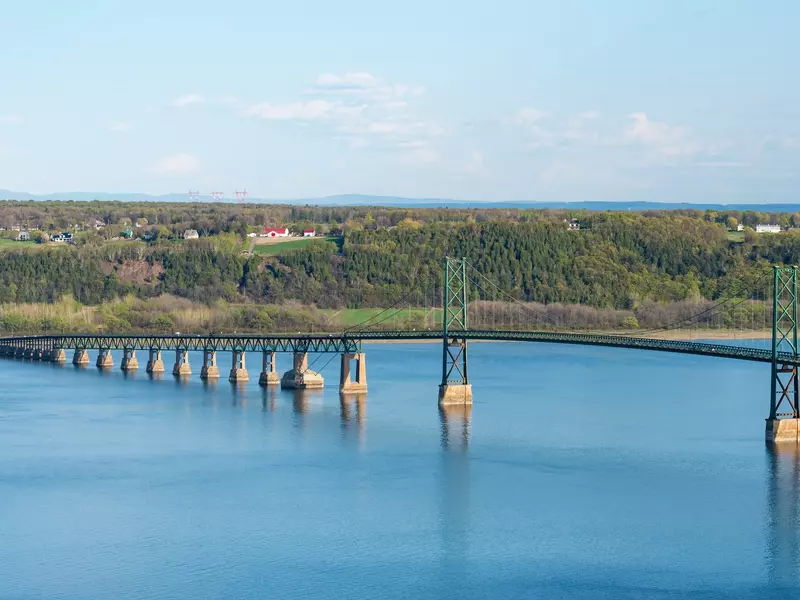
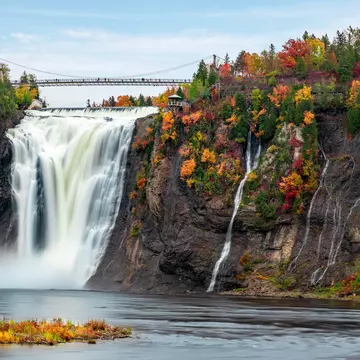
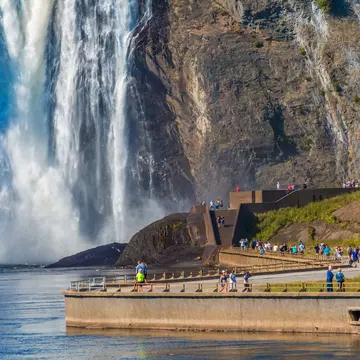
This waterfall is right by the Taschereau Bridge on the way to Île d’Orléans and is worth a stop if you’re in the area. It’s 83m high, topping Niagara Falls by about 30m, though it’s not nearly as wide. What’s cool is walking over the falls on the suspension bridge to see (and hear) them thunder down below. The park is free but parking ($10 per car) and the cable car (adult/child $11/6) can add up over the average one-hour visit. You can opt to walk the circuit instead of taking the cable car up. This is an interesting stop even in winter. When the spray from the falls freezes, it creates a 30m-high toboggan hill. The falls are about 12km from Québec City.
reviewed
-
K
Louis S St-Laurent Heritage House
Louis St-Laurent (1882-1973) was Canada's prime minister from 1948 to 1957. He spent most of his life in Québec City at this address and the house is 'alive' with his life story. Literally. Each room is hooked up to motion detectors - just walk in and prepare to have family photos start talking to you or phones ring with urgent messages for you to pass on to Mr Laurent. It's all brilliantly done; interactive history at its best.
Fluently bilingual due to his Irish mother and Québécois father, he was one of Canada's most distinguished leaders. Under his watch, Newfoundland joined Canada as its 10th province and important social benefits were established for all…
reviewed
-
L
Discovery Pavilion
the main gateway to Battlefields Park, the Discovery Pavilion houses a museum as well as the excellent Québec City tourist office, Centre Infotouriste. The main draw here is the permanent exhibition entitled Odyssey. In it, you move from theater to theater where the history of the Plains of Abraham are depicted through clever multimedia presentations and generous doses of good humor. There’s a fine exhibit at the end devoted to French and British colonial military with displays depicting the lives of soldiers in the New World. The exhibit on their uniforms, which describes the significance of the designs and colors, is nicely done.
reviewed
-
M
Nunavik Information Centre
Far in Québec’s north, Nunavik (not to be confused with Canada’s third territory, Nunavut) is almost completely inhabited by Inuit. With no trains or roads into Nunavik, even most Quebecers know little about the Inuit culture or this fascinating region. This modest center was opened mainly to promote tourism to the area’s 14 villages, but it’s an interesting place for a short stop just to look at the wall pictures or the small craft displays. It’s an incredibly friendly place and the employees are more than willing to shoot the breeze for the genuinely curious, answering questions on anything from the Inuit language to Inuit culture.
reviewed
-
N
Église St-Roch
There are giants and then there is this, the biggest church in Québec City. Measuring over 80m long, 34m wide and 46m high including the steeples, it was built between 1914 and 1923. When the original architects died, the neo-Gothic, neo-Roman structure was finished off by Louis-Napoléon Audet, the same man who worked on the Ste-Anne-de-Beaupré Basilica. The marble inside the church is from Saskatchewan. See if you can find faint fossil imprints in it. Around late October the St-Roch Church hosts the Festival des Musiques Sacrées de Québec (the Québec City Festival of Sacred Music), a wonderful time to see it at its best.
reviewed
-
O
Église Notre-Dame-des-Victoires
Dating from 1688, Our Lady of Victories Church, a modest house of worship on the square, is the oldest stone church in the USA and Canada. It stands on the spot where Champlain set up his ‘Habitation, ’ a small stockade, 80 years prior to the church’s arrival. Inside are copies of works by Rubens and Van Dyck. Hanging from the ceiling is a replica of a wooden ship, the Brézé, thought to be a good-luck charm for ocean crossings and battles with the Iroquois. The church earned its name after British ships were unable to take Québec City in 1690 and again in 1711.
reviewed
-
Aquarium du Québec
Spread across 40 hectares, Québec’s aquarium contains some 10,000 aquatic creatures, in the form of freshwater and saltwater fish, amphibians, reptiles, invertebrates and marine mammals. The park is divided into several habitats, including a wetlands region and an arctic sector (with an underwater observation window of the polar bears). There’s also a food court with a terrace overlooking the river. You can catch daily events like walrus feeding (10:30am) and polar bear feeding (11am) or live shows with either a walrus (3:30pm) or a trained harbor seal (1:15pm and 4:15pm).
reviewed
Advertisement
-
P
Église St-Jean-Baptiste
This colossus completely dominates its area on the southwest end of Rue St-Jean. The first church was built in 1842 but was destroyed by fire in 1881. It was completely rebuilt by architect Joseph-Ferdinand Peachy and open again for business by 1884. Peachy drew on well-known French churches for inspiration: Notre-Dame-de-Paris for the pillars, Église St-Sulpice for the vaults and Église de la Trinité for the facade. In summer, the church presents modest but well-researched exhibitions on church or neighborhood history.
reviewed
-
Q
Centre D’interpretation de Place-Royale
This interpretive center touts the area as the cradle of French history. The exhibits focus on the individual people, houses and challenges of setting up on the shores of the St Lawrence River. It goes a bit heavy on the random artifact displays (though pottery shards do have their charm), but also has some worthwhile displays that help illuminate what life was like from the 1600s to the 20th century. Children can dress up in costumes on the bottom floor and tours of the Lower Town are offered by guides in period dress during summer.
reviewed
-
R
Fortifications of Québec
These largely restored old walls are a national historic site. You can walk the complete 4.6km circuit on top of it all around the Old Town for free. From this vantage point, much of the city’s history is within easy view. The fortifications’ interpretive center is by the Porte St-Louis where you can visit a small but interesting exhibit on the history of the walls as well as an old gunpowder building from 1815. It also offers 90-minute guided walks that include the Old Town.
reviewed
-
Les Galeries d’Art Beauchamp
With seven galleries and counting, this important contemporary-art company features the work of Québécois, Canadian and international artists. While the works themselves never disappoint, the gallery also hosts special events like virtual exhibitions and a nonprofit organization to bring art to underprivileged children in Québec City. Artists also come to paint on-site in the Artist in Gallery program. Visit the website for other gallery locations.
reviewed
-
S
La Maison Henry-Stuart
This handsomely preserved cottage, built in 1849, once belonged to an upper-middle-class anglophone family, and contains period furnishings from the early 1900s. Guided tours help elucidate what life was like in those days, and tea and lemon cake makes it seem all the sweeter. A small but verdant garden surrounds the cottage. Visits are by guided tour, which take place every hour on the hour between 11am and 4pm. Call for the latest schedule.
reviewed