Sights in Rio De Janeiro
-
A
Museu Histórico do Exército e Forte de Copacabana
Built in 1914, on the promontory of the former Our Lady of Copacabana chapel, the Forte de Copacabana (Copacabana Fort) was one of Rio’s premier defenses against attack. You can still see its original features, including walls up to 12m thick, defended by Krupp cannons. The several floors of exhibits in the fort’s museum, tracing the early days of the Portuguese colony to the mid-19th century, aren’t the most tastefully presented, but the view alone warrants a visit. There’s a lovely café overlooking Copacabana.
reviewed
-
Sítio Burle Marx
This huge 35-hectare estate was once the home of Brazil's most famous landscape architect, Roberto Burle Marx. The estate's lush vegetation includes thousands of plant species, some of which are rare varieties from different corners of the globe. A 17th-century Benedictine chapel also lies on the estate, along with Burle Marx's original farmhouse and studio, where you can see displays of paintings, furniture and sculptures by the talented designer.
reviewed
-
B
Parque da Catacumba
On the edge of the lake (but across the busy road), this park and sculptural garden added some new adventure activities in 2010, including a 7m rock-climbing wall (R$15), a zipline (R$10), rappelling down a 30m rock-face (R$40) and a canopy walk (R$30) through the treetops. It's operated by Lagoa Aventuras. It's free to simply stroll through the park, and there's a short but steep trail (15 minutes' walking) to the Mirante do Sacopã, which offers scenic views from a height of 130m above Lagoa.
reviewed
-
Town Center
The town of Cabo Frio is at the end of the long sweeping beach that extends northward from Arraial do Cabo. Cabo Frio lies to the west of the Canal do Itajuru, which links the Lagoa de Araruama to the Atlantic Ocean. Near the bridge is the town's focal point - a hill with a small white chapel. The town center is east of here, and the bus station is to the west (about 2km from the center) near the end of Av Júlia Kubitschek. This road runs almost parallel to the Praia do Forte, named after the fort at its eastern end.
reviewed
-
C
Casa de Benjamin Constant
This country estate served as the residence for one of Brazil's most influential politicians in the founding of the young republic. Benjamin Constant (1837–91) was an engineer, military officer and professor before taking an active role in the Provisional Government. He is also remembered for founding a school for blind children. Painstakingly preserved, his house provides a window into his life and times. The lush gardens surrounding his estate provide a fine view over Centro and the western side of Santa Teresa.
reviewed
-
D
Igreja São Francisco da Penitência & Convento de Santo Antônio
Overlooking the Largo da Carioca is the baroque Igreja São Francisco da Penitência, dating from 1726. Restored to its former glory, the church's sacristy, which dates from 1745, has blue Portuguese tiles and an elaborately carved altar made out of jacaranda wood. It also has a roof panel by José Oliveira Rosa depicting St Francis receiving the stigmata. The church's statue of Santo Antônio is an object of great devotion to many Cariocas in search of a husband or wife.
A garden on the church grounds leads to the catacombs, used until 1850. Visits must be arranged in advance.
Next door, the Convento de Santo Antônio was built between 1608 and 1615. It contains the…
reviewed
-
Sand Dunes & Beaches
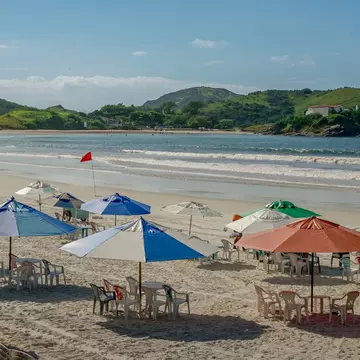
There are three sand-dune spots in and about Cabo Frio. The dunes of Praia do Peró, a super beach for surfing and surf casting, are 6km north in the direction of Búzios, near Ogivas and after Praia Brava and Praia das Conchas. The Dama Branca (White Lady) sand dunes are on the road to Arraial do Cabo. The Pontal dunes of Praia do Forte town beach stretch from the fort to Miranda hill. Robberies can pose a danger at the dunes, so get advice from locals before heading out.
reviewed
-
E
Feira Nordestina
This enormous fair (32,000 sq meters with 658 stalls) is not to be missed. It showcases the culture from the northeast, with barracas (food stalls) selling Bahian dishes as well as beer and cachaça (cane liquor), which flows in great abundance here. The best time to go is on weekends, when you can catch live bands playing forró, plus samba groups and comedy troupes, MPB and rodas de capoeira (capoeira circles). The vibrant scene runs nonstop from Friday morning through to Sunday evening. In addition to food and drink, you can browse music CDs (forró, of course), hammocks and a wide assortment of handicrafts.
reviewed
-
F
Parque da Catacumba
This park and sculptural garden added some new adventure activities in 2010, including a 7m rock-climbing wall (R$15), a zipline (R$10), rappelling down a 30m rock-face (R$40) and a canopy walk (R$30) through the treetops. It’s free to simply stroll through the park, and there’s a short but steep trail (15 miutes’ walking) to the Mirante do Sacopã, which offers scenic views from a height of 130m above Lagoa. It’s operated by Lagoa Aventuras.
reviewed
-
G
Espaço Cultural da Marinha
On the waterfront, the Espaço Cultural da Marinha is a sailor’s delight. Moored along the dock are the Riachuelo submarine and the Bauru (a small WWII destroyer), which have been turned into floating museums. You’ll also find a 19th-century vessel used by Dom João VI, countless ship models, and maps and navigational instruments charting the history of imperial and Brazilian navigation. The boat tour to Ilha Fiscal leaves from here.
reviewed
Advertisement
-
H
Planetário
Gávea's stellar attraction, the Planetário (Planetarium) features a museum, a praça dos telescópios (telescopes' square) and a couple of state-of-the-art operating domes, each capable of projecting over 6000 stars onto its walls (40-minute sessions in the domes take place on weekends and holidays). Visitors can also take a peek at the night sky (free) through the telescopes on Tuesday, Wednesday and Thursday from 7:30pm to 8:30pm (6:30pm to 7:30pm in winter). The modern Museu do Universo (Universe Museum) houses sundials, a Foucault's Pendulum and other permanent exhibitions, plus temporary displays. Periodically, the planetarium hosts live concerts (Musica nas…
reviewed
-
I
Pista Cláudio Coutinho
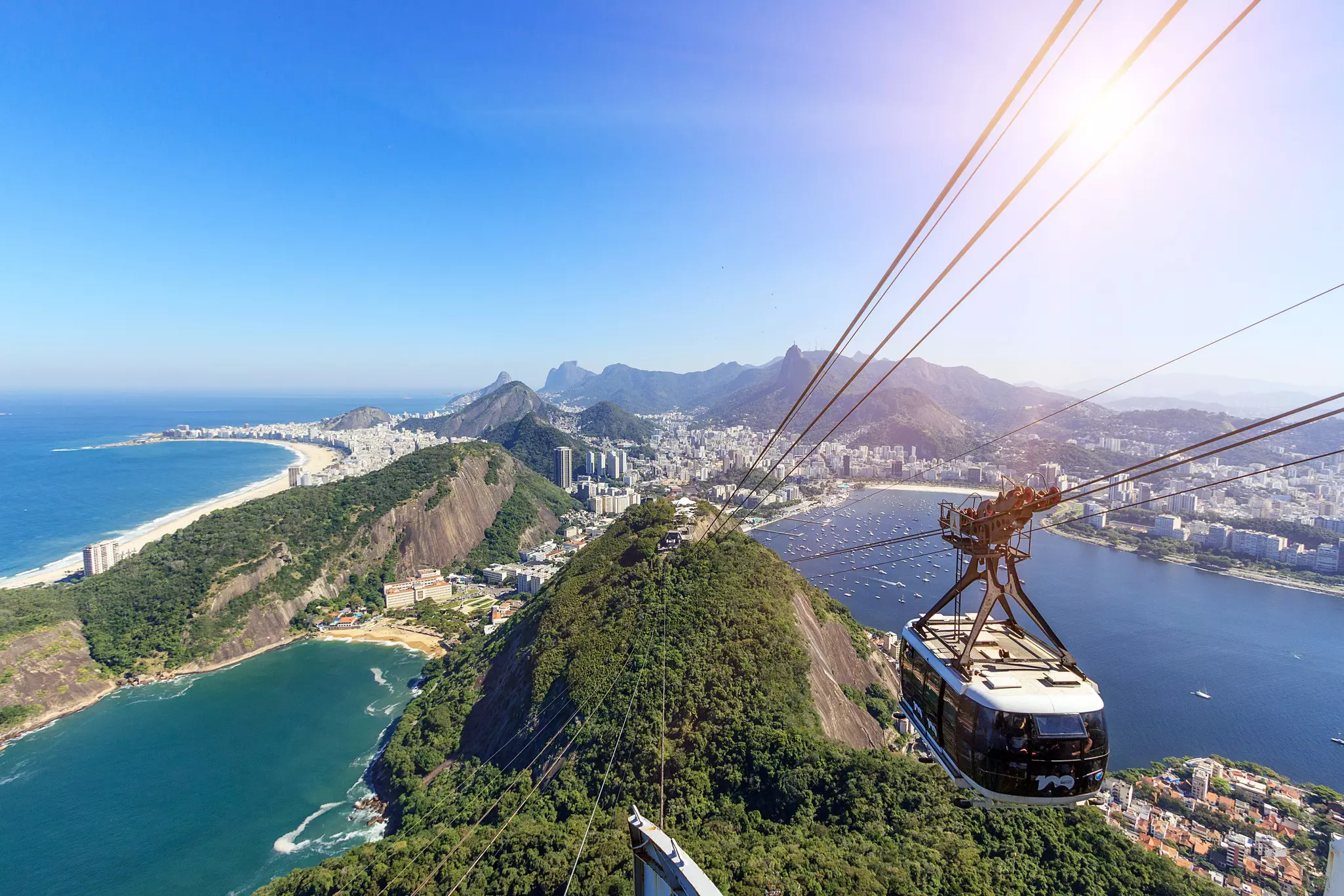
Everyone loves this paved 2km trail winding along the southern contour of Morro do Urca. It's a lush treed area, with the waves crashing on the rocks below. Look out for families of capuchin monkeys with their gray fur, striped tails and tiny faces. To get there, walk 100m north along the edge of Praia Vermelha (with your back to the cable-car station) and you'll see the entrance to the path straight ahead, just past the beach. About 300m along the path, there's a small unmarked trail leading off to Morro da Urca. From there you can go up to Pão de Açúcar by cable car, saving a few reais. Pão de Açúcar can also be climbed – but it's not recommended without climbing…
reviewed
-
J
Passeio Público
The oldest park in Rio, the Passeio Público was built in 1783 by Mestre Valentim, a famous Brazilian sculptor, who designed it after Lisbon's botanical gardens. In 1860 the park was remodeled by French landscaper Glaziou. The park features some large trees, a pond with islands and an interesting crocodile-shaped fountain. The entrance gate was built by Valentim. Before the Parque do Flamengo landfill, the sea came right up to the edge of the park.
reviewed
-
K
Escadaria Selarón
An ever-expanding installation, the Escadaria Selarón, leading up from Rua Joaquim Silva, became a work of art when Chilean-born artist Jorge Selarón decided to cover the steps with colorful mosaics. A dedication to the Brazilian people, the 215 steps are a vivid riot of color. In the morning, you can often find him at work, and he welcomes visitors to bring tiles from other countries, which he’ll then add to the Lapa landscape.
reviewed
-
L
Parque Guinle & the Palácio Das Laranjeiras
Designed by French landscaper Gochet, the park has a European air, and has a small lake, lanes and lawns. Overlooking the park is the resplendent Palácio da Laranjeiras, built between 1909 and 1914 by architect Silva Telles. Today it is the official residence in Rio of the state governor, and contains the same artwork, furniture and ornamental objects from when the palace was built. You can tour parts of the palace by guided appointments.
reviewed
-
M
Praça Floriano
The heart of modern Rio, the Praça Floriano comes to life at lunchtime and after work when the outdoor cafés are filled with beer drinkers, samba musicians and political debate. The square is also Rio's political marketplace and is the site of daily speechmaking, literature sales and street theater. Most city marches and rallies culminate here on the steps of the old Câmara Municipal in the northwestern corner of the plaza.
reviewed
-
N
Centro Cultural Oi Futuro
One of Rio's most visually exciting new additions is this modern arts center on the edge of Flamengo. With 2000 sq meters of exhibition space spread across six floors, the center features temporary multimedia installations that run the gamut from architecture and urban design to pop art, to photo-journalism and to eye-catching video art. There's also a permanent exhibition on the history of telecommunications in Brazil. The top floor houses an auditorium where visitors can attend concerts and plays, or catch a documentary.
reviewed
-
O
Museu da República
The Museu da República, located in the Palácio do Catete, has been wonderfully restored. Built between 1858 and 1866 and easily distinguished by the bronze condors on the eaves, the palace was home to the president of Brazil from 1896 until 1954, when President Getúlio Vargas committed suicide here.
He had made powerful enemies in the armed forces and the political right wing, and was attacked in the press as a communist for his attempts to raise the minimum wage and increase taxes on the middle and upper classes. Tensions reached a critical level when one of Vargas' bodyguards fired shots at a journalist. Although the journalist was unharmed, an air force officer…
reviewed
-
P
Centro de Referência do Artesanato Brasileiro
This new museum, which opened in 2009, showcases the craft-making traditions all across Brazil. Changing exhibits feature woodcarvings, ceramics, textiles, jewelry, metal work, basket weaving and even recycled materials in the creation of both popular and sacred art. Although nothing here is for sale, if you're interested in a particular piece, the staff can provide contact information for any of the artists represented.
reviewed
-
Q
Centro Cultural Justiça Federal
The stately building overlooking the Praça Floriano served as the headquarters of the Supreme Court (Supremo Tribunal Federal) from 1909 to 1960. Following its recent restoration, it’s become the Federal Justice Cultural Center, featuring exhibitions focused above all on photography and Brazilian art, though some fascinating exhibits from abroad sometimes make their way here. There’s a pleasant café on the ground floor.
reviewed
Advertisement
-
R
Museu Internacional de Arte Naïf do Brasil
Vivid color and a playful perspective are two of the characteristics of arte naïf paintings; many of the artists of this style came from outside the establishment. Also known as primitivist, the paintings in this permanent collection are extensive: over 8000 pieces, executed by artists from 130 countries, dating from the 15th century to the present. It's the largest museum of its kind in the world.
reviewed
-
S
Ilha de Paquetá
Ilha de Paquetá, in the Baía de Guanabara, was once a popular tourist spot and remains a pleasant escape from the city’s bustle. There are no cars on the island. Transport is by foot, bicycle (with hundreds for rent) or horse-drawn carts. There’s a certain decadent charm to the colonial buildings, unassuming beaches and businesses catering to local tourism. The place gets crowded on weekends.
Go to Paquetá for the boat ride through Rio's famous bay and to see Cariocas at play – especially during the Festa de São Roque, which is celebrated with fireworks, a procession and music on the weekend following 16 August.
Boats leave from near the Praça XV (Quinze) de…
reviewed
-
T
Museu Villa-Lobos
Housed in a century-old building, the modest museum is dedicated to the memory of Brazil's greatest classical composer – and founder of the Brazilian Academy of Music – Heitor Villa-Lobos. In addition to scores, musical instruments – including the piano on which he composed – and personal items, the museum contains an extensive sound archive. Classical concerts are sometimes held in the adjoining courtyard.
reviewed
-
U
Museu do Arte Contemporânea
Designed by Brazil’s most famous architect, Oscar Niemeyer, the Museu do Arte Contemporânea is a curvilinear building with breathtaking views, but the exhibitions inside aren’t always very notable. To get here from the Niterói ferry terminal, turn right as you leave and walk about 50m across to the bus stop in the middle of the road; a 47B minibus will drop you at the museum door.
reviewed
-
V
Museu do Índio
Featuring multimedia exhibitions on Brazil's northern tribes, the small Museu do Índio provides an excellent introduction to the economic, religious and social life of Brazil's indigenous people. Next to native food and medicinal plants, the four life-size dwellings in the courtyard were actually built by four different tribes. As a branch of Funai (the National Indian Foundation), the museum contains an excellent archive of more than 14,000 objects, 50,000 photographs and 200 sound recordings. Its indigenous ethnography library containing 16,000 volumes by local and foreign authors is open to the public during the week.
reviewed